Astaxanthin: Benefits for Cholesterol, Inflammation, and Heart Health
Plant compound
Track the foods that fit your goals. Track it free with Ration →
Key takeaways
- Astaxanthin is a carotenoid pigment found in salmon, shrimp, and algae, prized for its antioxidant activity.
- Trials and meta-analyses link it to modest drops in LDL cholesterol and C-reactive protein, both graded A in our database.
- It may support cholesterol efflux from artery cells and dial down inflammatory and oxidative stress markers.
- Evidence is encouraging but still early for many other claimed benefits, and doses in studies vary widely.
What is astaxanthin?
Astaxanthin is a bright red pigment that belongs to the carotenoid family, the same group that gives us beta-carotene and lutein.
It is produced by microalgae, especially Haematococcus pluvialis, and accumulates up the food chain.
That is why salmon, trout, shrimp, and krill all have that characteristic pink to red color.
Unlike some carotenoids, astaxanthin does not convert into vitamin A in the body. Its main claim to fame is a very strong antioxidant capacity, often described as stronger than vitamin E or beta-carotene in lab comparisons.
How does it work in the body?
Astaxanthin sits inside cell membranes in a way that lets it neutralize free radicals across both the water facing and fat facing parts of the membrane.
This unique positioning may explain why it shows up in research on oxidative stress, inflammation, and lipid metabolism all at once.
At a cellular level, astaxanthin appears to activate the Keap1-Nrf2/HO-1 pathway, a master switch for the body's own antioxidant defenses[2].
In cholesterol metabolism, laboratory work suggests astaxanthin can help macrophages offload cholesterol rather than turning into artery-clogging foam cells, via a pathway involving ABCA1, a transporter protein that shuttles cholesterol out of cells[5].
Does astaxanthin lower cholesterol?
This is where the evidence is strongest. Our database grades astaxanthin's effect on LDL cholesterol as A, based on 6 sources, with a consistent direction toward decrease.
A randomized trial in people with prediabetes and dyslipidemia found that astaxanthin supplementation lowered LDL cholesterol and other cardiovascular risk markers compared with placebo[6].
A systematic review and meta-analysis of antioxidant lipid supplements, including astaxanthin, reported favorable shifts in cardiovascular risk factors[3].
Mechanistic work in cell models backs this up, showing astaxanthin promotes cholesterol efflux from cholesterol-loaded immune cells, a key early step in preventing atherosclerosis[5].
Reviews focused specifically on atherosclerosis point to similar anti-atherosclerotic properties, including effects on lipid handling and vascular inflammation[11].
What about inflammation and CRP?
Astaxanthin's effect on C-reactive protein, a standard blood marker of systemic inflammation, is also graded A in our database, with 6 sources pointing toward a decrease.
A meta-analysis of randomized controlled trials found that astaxanthin supplementation mildly reduced oxidative stress and inflammation biomarkers overall[8].
Broader reviews describe astaxanthin's role across inflammation-associated diseases, from metabolic conditions to gastric inflammation linked to Helicobacter pylori[9][10].
Older foundational research first tied astaxanthin's antioxidant activity to lower oxidative stress and inflammation markers relevant to cardiovascular disease, laying the groundwork for later trials[12].
A separate randomized, triple-blind placebo-controlled trial in patients with endometriosis found astaxanthin improved markers of inflammation and oxidative stress alongside reproductive outcomes, suggesting effects may extend beyond the cardiovascular system[7].
How much evidence is there, really?
It helps to see the full picture of what has been studied and in what direction the effects trend.
- LDL CholesterolAHuman trials
Research may lower LDL Cholesterol · strong agreement · 6 studies
View 5 studies on PubMed
- Antioxidant Lipid Supplement on Cardiovascular Risk Factors: A Systematic Review and Meta-Analysis (2024)
- Antioxidant addition improves cholesterol and astaxanthin stability in dry salted shrimp (2023)
- Astaxanthin, a natural antioxidant, lowers cholesterol and markers of cardiovascular risk in individuals with prediabetes and dyslipidaemia (2023)
- Protective Effects of Astaxanthin on PFOS-Induced Liver Injury via Fatty Acid and Cholesterol Metabolic Pathways (2026)
- Potential Anti-Atherosclerotic Properties of Astaxanthin (2016)
- C-Reactive ProteinAHuman trials
Research may lower C-Reactive Protein · strong agreement · 6 studies
View 5 studies on PubMed
- Astaxanthin supplementation mildly reduced oxidative stress and inflammation biomarkers: a systematic review and meta-analysis of randomized controlled trials (2022)
- Astaxanthin ameliorates inflammation, oxidative stress, and reproductive outcomes in endometriosis patients undergoing assisted reproduction: A randomized, triple-blind placebo-controlled clinical trial (2023)
- Astaxanthin and β-carotene in Helicobacter pylori-induced Gastric Inflammation: A Mini-review on Action Mechanisms (2017)
- Astaxanthin ameliorates benzalkonium chloride-induced dry eye disease through suppressing inflammation and oxidative stress via Keap1-Nrf2/HO-1 signaling pathways (2025)
- Astaxanthin and its Effects in Inflammatory Responses and Inflammation-Associated Diseases: Recent Advances and Future Directions (2020)
Most of the strongest human evidence centers on lipid and inflammatory markers rather than hard outcomes like heart attacks or strokes.
Some research is emerging from unexpected corners, such as a 2026 study on liver injury and cholesterol metabolic pathways in the context of chemical exposure[1], and food science work on astaxanthin's own stability in stored shrimp[4]. These add mechanistic color but are not direct evidence of benefit in typical supplement users.
Food and supplement sources
Astaxanthin occurs naturally in a handful of foods, mostly from the sea.
- Wild sockeye salmon, which tends to have the highest natural concentration
- Farmed salmon and trout
- Shrimp and krill
- Crab and lobster
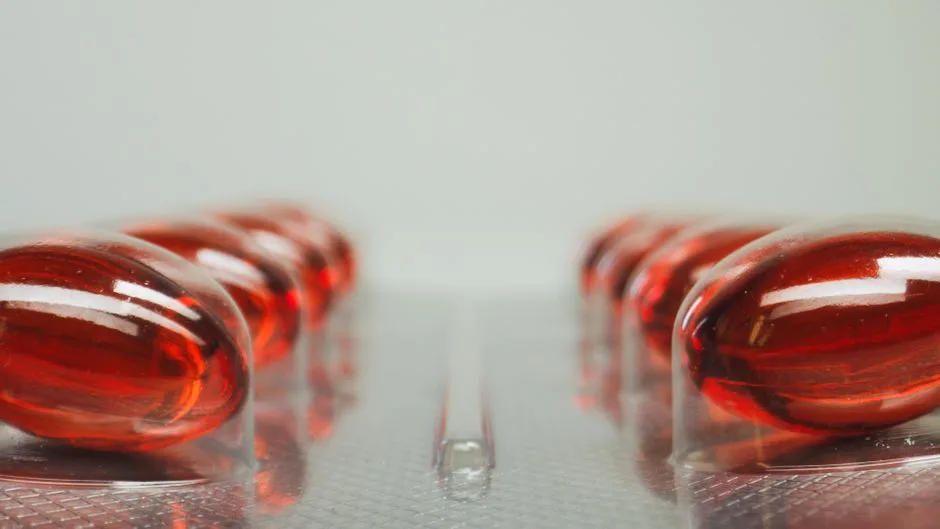
- Certain algae, like Haematococcus pluvialis, used to make supplements
Supplement forms are typically derived from algae oil and sold as softgels, ranging from about 4 mg to 12 mg per dose in the trials cited here[6][7][8].
Because it is fat-soluble, astaxanthin is generally taken with a meal containing some fat, similar to other carotenoids like lutein or beta-carotene.
Is astaxanthin safe?
Across the trials reviewed here, astaxanthin has generally been well tolerated at studied doses[3][6][7][8].
Mild digestive discomfort has been the most commonly reported issue in some trials.
Long-term safety data at high doses is limited, since most trials run for weeks to a few months rather than years.
People taking blood thinners, managing blood pressure, or pregnant should treat any new supplement, astaxanthin included, as a conversation for a healthcare provider rather than a decision to make alone.
Who might consider it?
- People with mildly elevated LDL cholesterol looking for adjunct lifestyle strategies
- People with prediabetes and dyslipidemia, the population studied directly in one key trial[6]
- Those interested in general antioxidant support for oxidative stress
- People already eating little seafood who want a concentrated source of this carotenoid
Astaxanthin is not a replacement for established cholesterol-lowering approaches like dietary fiber, statins, or exercise, but current evidence suggests it may offer a modest complementary effect.
Bottom line
Astaxanthin has some of the more consistent human trial evidence among trendy antioxidant supplements, particularly for LDL cholesterol and CRP[3][6][8].
The effect sizes reported are generally modest rather than dramatic.
For most people, getting astaxanthin through salmon, shrimp, or other seafood is a reasonable way to include it in a broader healthy diet, while supplement decisions are best made with a clinician who knows your full health picture.
Frequently asked questions
Does astaxanthin actually lower LDL cholesterol?
Trial and meta-analysis data suggest a modest LDL-lowering effect, with our database grading this evidence as A across 6 sources[3][6].
Can astaxanthin reduce inflammation markers like CRP?
Yes, multiple studies report reductions in CRP and related inflammatory markers, though the meta-analysis describes the effect as mild[8][9].
What foods naturally contain astaxanthin?
Wild salmon, trout, shrimp, krill, and crab are the richest natural sources, since the pigment comes originally from algae in the marine food chain.
Is astaxanthin safe to take long term?
Short-term trials suggest good tolerability[6][7][8], but long-term safety data beyond a few months is still limited.
How does astaxanthin compare to other antioxidants?
Its unique position within cell membranes lets it act on both water-soluble and fat-soluble compartments, which some researchers argue gives it broader antioxidant reach than vitamin E or beta-carotene[12].
Sources
- Protective Effects of Astaxanthin on PFOS-Induced Liver Injury via Fatty Acid and Cholesterol Metabolic Pathways · PMID 41848228
- Astaxanthin ameliorates benzalkonium chloride-induced dry eye disease through suppressing inflammation and oxidative stress via Keap1-Nrf2/HO-1 signaling pathways · PMID 40045550
- Antioxidant Lipid Supplement on Cardiovascular Risk Factors: A Systematic Review and Meta-Analysis · PMID 39064656
- Antioxidant addition improves cholesterol and astaxanthin stability in dry salted shrimp · PMID 36426798
- Astaxanthin Alleviates Foam Cell Formation and Promotes Cholesterol Efflux in Ox-LDL-Induced RAW264.7 Cells via CircTPP2/miR-3073b-5p/ABCA1 Pathway · PMID 36838686
- Astaxanthin, a natural antioxidant, lowers cholesterol and markers of cardiovascular risk in individuals with prediabetes and dyslipidaemia · PMID 36999233
- Astaxanthin ameliorates inflammation, oxidative stress, and reproductive outcomes in endometriosis patients undergoing assisted reproduction: A randomized, triple-blind placebo-controlled clinical trial · PMID 37020589
- Astaxanthin supplementation mildly reduced oxidative stress and inflammation biomarkers: a systematic review and meta-analysis of randomized controlled trials · PMID 35091276
- Astaxanthin and its Effects in Inflammatory Responses and Inflammation-Associated Diseases: Recent Advances and Future Directions · PMID 33207669
- Astaxanthin and β-carotene in Helicobacter pylori-induced Gastric Inflammation: A Mini-review on Action Mechanisms · PMID 28698858
- Potential Anti-Atherosclerotic Properties of Astaxanthin · PMID 26861359
- Astaxanthin, oxidative stress, inflammation and cardiovascular disease · PMID 19656058