Beetroot Juice: Benefits for Blood Pressure and Exercise Performance
Botanical / supplement
Track the foods that fit your goals. Track it free with Ration →
Key takeaways
- Beetroot juice is rich in dietary nitrate, which the body converts into nitric oxide, a molecule that relaxes blood vessels.
- Strong evidence supports beetroot juice for modestly lowering systolic blood pressure and improving VO2max and endurance performance.[2][4][1]
- Effects on strength or power sports are less consistent than effects on endurance and blood pressure.[1][3]
- Generally well tolerated, though it can turn urine or stool pink or red and isn't a substitute for blood pressure treatment.
What is beetroot juice?
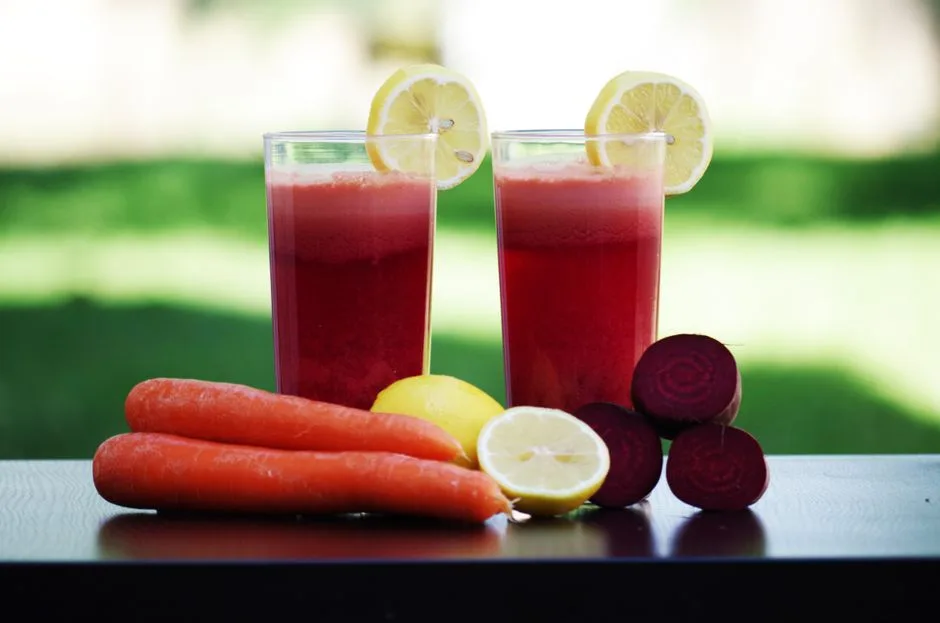
Beetroot juice is made from pressed or blended beets, the deep red root vegetable also known as beetroot.
It has become popular in sports nutrition and heart health circles mainly because of one compound: dietary nitrate.
Beets are one of the richest food sources of nitrate, alongside leafy greens like spinach and arugula.
How does it work?
Nitrate from beetroot juice is absorbed and concentrated in saliva, where oral bacteria convert some of it into nitrite.[6]
Swallowed nitrite is then converted into nitric oxide in the stomach and bloodstream, especially in low oxygen conditions like intense exercise.[6][9]
Nitric oxide relaxes and widens blood vessels, which can lower blood pressure and may improve blood flow to working muscles.[9][10]
In muscle, nitrate and nitric oxide may also improve the efficiency of mitochondria, potentially reducing the oxygen cost of exercise.[7][11]
Does beetroot juice improve exercise performance?
VO2max, a measure of how much oxygen the body can use during intense exercise, tends to improve with beetroot juice supplementation across multiple trials, earning a strong evidence grade in our database.
Early research found that dietary nitrate supplementation reduced the oxygen cost of submaximal exercise and improved time to exhaustion.[11]
Later reviews confirmed benefits for endurance performance, particularly in less trained individuals and in exercise lasting roughly 5 to 30 minutes.[7][6]
A 2017 randomized trial in trained soccer players found beetroot juice improved high intensity intermittent exercise performance, suggesting benefits extend beyond steady state cardio.[8]
That said, a 2024 review cautions that beetroot juice's ergogenic effect may not come from nitrate alone, and results are more mixed in highly trained athletes.[1]
A separate 2024 review of top sports supplements lists beetroot juice among the more evidence backed options, though it ranks below creatine and caffeine in consistency.[3]
Does beetroot juice lower blood pressure?
Systolic blood pressure, the top number in a blood pressure reading, is the effect with the most consistent supporting evidence for beetroot juice.
A 2022 systematic review and meta-analysis found that nitrate from beetroot juice significantly lowered blood pressure in people with hypertension.[4]
A more recent 2024 meta-analysis using current European Society of Hypertension guidelines confirmed meaningful systolic blood pressure reductions with regular beetroot juice intake.[2]
Interestingly, some of the blood pressure lowering effect appears to be independent of nitrate content alone, pointing to other bioactive compounds in beets like betalains and antioxidants.[10]
Reviews describe dietary nitrate as an emerging nutrient of interest for blood pressure regulation, though researchers note effect sizes are modest compared to medication.[9]
What does the evidence show overall?
- VO2maxAHuman trials
Research may raise VO2max · strong agreement · 6 studies
View 5 studies on PubMed
- Beetroot Juice Supplementation Improves High-Intensity Intermittent Type Exercise Performance in Trained Soccer Players (2017)
- Dietary nitrate supplementation and exercise performance (2014)
- Dietary Nitrate and Physical Performance (2018)
- The Top 5 Can't-Miss Sport Supplements (2024)
- Beetroot juice supplementation and exercise performance: is there more to the story than just nitrate? (2024)
- Systolic Blood PressureAHuman trials
Research may lower Systolic Blood Pressure · strong agreement · 6 studies
View 5 studies on PubMed
- The Nitrate-Independent Blood Pressure-Lowering Effect of Beetroot Juice: A Systematic Review and Meta-Analysis (2017)
- Effects of beetroot juice on blood pressure in hypertension according to European Society of Hypertension Guidelines: A systematic review and meta-analysis (2024)
- The benefits and risks of beetroot juice consumption: a systematic review (2021)
- Nitrate Derived From Beetroot Juice Lowers Blood Pressure in Patients With Arterial Hypertension: A Systematic Review and Meta-Analysis (2022)
- Dietary nitrate supplementation and exercise performance (2014)
Taken together, the strongest, most consistent effects of beetroot juice are on VO2max and systolic blood pressure, both graded A in the available trials and meta-analyses.
Effects on other outcomes, like muscular power, recovery, or performance in elite endurance athletes, are less consistent and still being worked out.[1][5]
How much beetroot juice do you need?
Most performance trials use doses that supply roughly 300 to 600 mg of nitrate, often as 70 to 140 mL of concentrated beetroot juice shots, taken 2 to 3 hours before exercise.[7][11]
Blood pressure studies often use similar or somewhat higher daily doses, sometimes over multiple days to weeks, to see sustained reductions.[2][4]
Beetroot juice is available as fresh juice, bottled juice, concentrated shots, and powdered forms mixed with water.
- Fresh or bottled beetroot juice
- Concentrated beetroot juice shots
- Beetroot powder or crystals
- Beetroot juice blended with other vegetables like carrot or apple for taste
Is beetroot juice safe?
Beetroot juice is generally considered safe for most healthy adults when consumed in food amounts or typical supplemental doses.[5]
A harmless and well known side effect is beeturia, a pink or red tint to urine or stool caused by pigments called betalains.
Some people experience mild gastrointestinal discomfort, and those prone to kidney stones should be mindful of beets' oxalate content.[5]
- People on blood pressure medication, since effects may be additive
- People with a history of kidney stones, due to oxalate content
- People with low blood pressure or a tendency toward lightheadedness
- Anyone using nitrate containing medications, due to possible interactions
Who might consider beetroot juice?
- Endurance athletes and recreational exercisers interested in VO2max and stamina[7][8]
- Adults with elevated blood pressure looking for diet based support alongside standard care[2][4]
- People who enjoy beets and want an easy way to include more nitrate rich vegetables in their diet
Bottom line
Beetroot juice has some of the more consistent evidence in sports and cardiovascular nutrition, particularly for boosting VO2max and modestly lowering systolic blood pressure.
Its effects come largely from dietary nitrate's conversion into nitric oxide, though other beet compounds likely contribute too.[10]
It works best as an addition to an already healthy diet and training routine, not a replacement for medical treatment or structured exercise.
Frequently asked questions
Does beetroot juice really lower blood pressure?
Yes, multiple meta-analyses show beetroot juice can modestly lower systolic blood pressure, especially in people with hypertension.[2][4]
How long before exercise should you drink beetroot juice?
Most performance studies used beetroot juice about 2 to 3 hours before exercise to allow nitrate conversion into nitric oxide.[7][11]
Can beetroot juice improve VO2max?
Research consistently shows improvements in VO2max and exercise efficiency with beetroot juice supplementation.[7][6]
Is beetroot juice safe to drink daily?
It appears safe for most people in typical amounts, though it can cause harmless pink urine or stool and may interact with blood pressure medication.[5]
Sources
- Beetroot juice supplementation and exercise performance: is there more to the story than just nitrate? · PMID 38445207
- Effects of beetroot juice on blood pressure in hypertension according to European Society of Hypertension Guidelines: A systematic review and meta-analysis · PMID 39069465
- The Top 5 Can't-Miss Sport Supplements · PMID 39408214
- Nitrate Derived From Beetroot Juice Lowers Blood Pressure in Patients With Arterial Hypertension: A Systematic Review and Meta-Analysis · PMID 35369064
- The benefits and risks of beetroot juice consumption: a systematic review · PMID 32292042
- Dietary Nitrate and Nitric Oxide Metabolism: Mouth, Circulation, Skeletal Muscle, and Exercise Performance · PMID 32735111
- Dietary Nitrate and Physical Performance · PMID 30130468
- Beetroot Juice Supplementation Improves High-Intensity Intermittent Type Exercise Performance in Trained Soccer Players · PMID 28327503
- Dietary nitrate and blood pressure: evolution of a new nutrient? · PMID 28511731
- The Nitrate-Independent Blood Pressure-Lowering Effect of Beetroot Juice: A Systematic Review and Meta-Analysis · PMID 29141968
- Dietary nitrate supplementation and exercise performance · PMID 24791915