Capsaicin: Does the Compound That Makes Peppers Hot Actually Burn Fat?
Plant compound
Track the foods that fit your goals. Track it free with Ration →
Key takeaways
- Capsaicin is the compound responsible for the heat in chili peppers, and it appears to modestly boost calorie burning and fat oxidation[2][4].
- Human trials link capsaicin or capsiate supplementation to small reductions in body fat and possibly lean body mass over time[1][5].
- Evidence is strongest for short term thermogenesis, weaker and more mixed for long term weight loss[4][5].
- Effects are generally small, and gastrointestinal side effects are the main practical limit[1].
What is capsaicin?
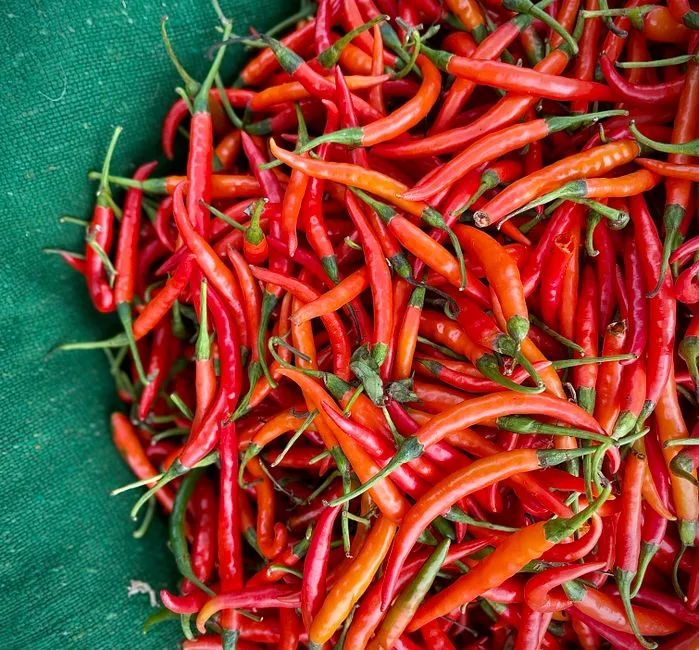
Capsaicin is the active compound in chili peppers that produces their characteristic burning sensation.
It belongs to a family of related compounds called capsaicinoids. A gentler, less pungent relative called capsiate is found in some sweet pepper varieties and is often used in supplements because it causes less irritation.
Capsaicin binds to a receptor called TRPV1, which is normally activated by heat. This is why the compound feels hot even though nothing is actually burning.
How might it affect weight or fat?
Activating TRPV1 receptors appears to stimulate the sympathetic nervous system, which can increase energy expenditure and fat oxidation, a process broadly called thermogenesis[2].
This is the same general pathway explored for other thermogenic compounds like green tea catechins and caffeine, though capsaicin works through a distinct receptor.
Animal research also suggests capsaicinoids may improve markers of fatty liver disease in the context of a high fat diet, though this has not been confirmed in humans[3].
What does the evidence show?
A 2021 systematic review and meta-analysis of human trials found that capsaicinoids and capsinoids modestly increase thermogenesis and energy expenditure in healthy adults[2].
An earlier meta-analysis concluded that capsaicin and capsiate could be reasonable adjunct agents for obesity management, citing small but consistent effects on fat oxidation and appetite across pooled human studies[4].
A 2016 review described capsaicinoids as a plausible, if modest, tool for obesity management, noting effects on satiety and energy balance alongside limitations in study duration and dosing consistency[5].
A 2024 randomized, double-blind, placebo-controlled trial using a sustained-release capsaicinoid formulation (Capsifen) reported safe modulation of energy balance and improved endurance performance, suggesting effects may extend beyond simple calorie burning[1].
Our database tracks a graded effect on lean body mass across five sources, with a consensus direction toward decrease and a grade of A, meaning the pattern is fairly consistent across the available studies.
- Lean Body MassAHuman trials
Research may lower Lean Body Mass · strong agreement · 5 studies
View 5 studies on PubMed
- The effect of Capsaicinoids or Capsinoids in red pepper on thermogenesis in healthy adults: A systematic review and meta-analysis (2021)
- Capsaicin and capsiate could be appropriate agents for treatment of obesity: A meta-analysis of human studies (2018)
- Capsaicinoid nonivamide improves nonalcoholic fatty liver disease in rats fed a high-fat diet (2020)
- A natural sustained-intestinal release formulation of red chili pepper extracted capsaicinoids (Capsifen®) safely modulates energy balance and endurance performance: a randomized, double-blind, placebo-controlled study (2024)
- Capsaicinoids: a spicy solution to the management of obesity? (2016)
It is worth being direct about what this means. A decrease in lean body mass is not necessarily desirable on its own, and it is not yet clear whether this reflects genuine muscle loss, water shifts, or measurement artifacts tied to overall weight loss. Researchers have not fully disentangled fat loss from lean mass changes in these trials.
Food and supplement sources
- Fresh and dried chili peppers, including cayenne, jalapeno, and habanero
- Hot sauces and chili powders made from capsaicin-containing peppers
- Sweet pepper varieties bred for capsiate rather than capsaicin, used in some supplements
- Standardized capsaicinoid or capsinoid extract capsules, including sustained release formulations like Capsifen[1]
- Topical capsaicin creams and patches, used mainly for pain rather than metabolism
Dietary amounts from spicy food vary enormously and are hard to standardize, which is part of why supplement studies tend to use extracted, measured doses of capsaicinoids or capsinoids rather than relying on diet alone.
How much do you need?
Human trials on thermogenesis and weight have used a range of doses, and there is no single agreed upon effective amount[2][4].
Sustained release formulations, like the one used in the 2024 trial, are designed to deliver capsaicinoids more gradually through the intestine, which may reduce stomach irritation compared with immediate release capsules[1].
Capsiate based products are generally dosed higher than capsaicin products because capsiate is far less pungent and better tolerated at higher intakes.
Is it safe?
The 2024 randomized controlled trial reported that its sustained release capsaicinoid formulation was safe over the study period[1].
That said, capsaicin commonly causes gastrointestinal discomfort, heartburn, or a burning sensation in the mouth and stomach, especially at higher doses or in people with sensitive digestive systems.
- People with acid reflux or gastritis may find capsaicin worsens symptoms
- Very high doses have been linked to stomach pain and nausea in some trial participants
- Topical exposure to concentrated capsaicin can cause skin and eye irritation
- Long term effects on lean body mass warrant more research before drawing firm conclusions
Who might consider it?
People specifically interested in modest, adjunct support for energy expenditure alongside diet and exercise are the main group studied in this research[2][4][5].
Athletes exploring endurance performance support may also find the 2024 trial of interest, though this is a single study and not yet a well established use[1].
People with reflux, ulcers, or a generally spice sensitive stomach are less likely to tolerate meaningful doses.
Bottom line
Capsaicin has a real, mechanistically plausible effect on thermogenesis and fat oxidation, supported by multiple meta-analyses of human trials[2][4].
The effects on actual weight and body composition tend to be small, and the consistent signal toward reduced lean body mass across the graded evidence deserves attention rather than dismissal.
Capsaicin looks more like a modest metabolic nudge than a standalone weight loss solution, best considered alongside, not instead of, diet and exercise fundamentals.
Frequently asked questions
Does capsaicin actually burn fat?
Human trials and meta-analyses show capsaicin modestly increases energy expenditure and fat oxidation, but the effect size is generally small[2][4].
Can capsaicin cause muscle loss?
Graded evidence across five sources shows a consistent trend toward decreased lean body mass with capsaicin, though the underlying mechanism is not fully clear.
Is capsaicin safe to take as a supplement?
A recent randomized controlled trial found a sustained release capsaicinoid formulation safe over its study period, though digestive irritation is a common general concern[1].
What is the difference between capsaicin and capsiate?
Capsaicin is the pungent, hot compound in chili peppers, while capsiate is a much milder related compound found in some sweet peppers and often used in supplements to reduce irritation[4].
Does capsaicin help with weight loss long term?
Evidence is stronger for short term thermogenic effects than for sustained long term weight loss, with reviewers describing it as a plausible but modest adjunct[5].
Sources
- A natural sustained-intestinal release formulation of red chili pepper extracted capsaicinoids (Capsifen®) safely modulates energy balance and endurance performance: a randomized, double-blind, placebo-controlled study · PMID 38571755
- The effect of Capsaicinoids or Capsinoids in red pepper on thermogenesis in healthy adults: A systematic review and meta-analysis · PMID 33063385
- Capsaicinoid nonivamide improves nonalcoholic fatty liver disease in rats fed a high-fat diet · PMID 32414691
- Capsaicin and capsiate could be appropriate agents for treatment of obesity: A meta-analysis of human studies · PMID 28001433
- Capsaicinoids: a spicy solution to the management of obesity? · PMID 26686003