Cocoa Flavanols: Do They Really Boost Nitric Oxide and Heart Health?
Botanical / supplement
Track the foods that fit your goals. Track it free with Ration →
Key takeaways
- Cocoa flavanols are polyphenol compounds concentrated in cocoa beans and dark chocolate.
- Early and small trials suggest they raise nitric oxide, a molecule that helps blood vessels relax.[3][4][6]
- Evidence grade is weak (D), based on a handful of small studies, not large outcome trials.
- Effects on platelets and inflammation are also being studied, but findings are preliminary.[1][5]
What are cocoa flavanols?
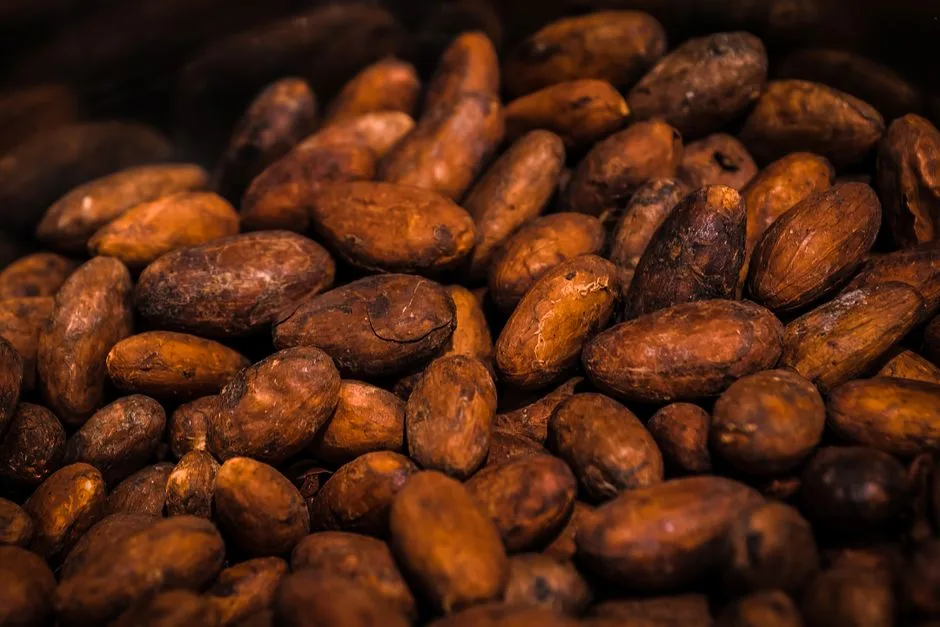
Cocoa flavanols are a class of polyphenols found naturally in the cocoa bean.
They belong to the same broad family as the flavonoids found in tea, berries, and red wine.
Dark chocolate contains more flavanols than milk chocolate, since processing and added milk and sugar dilute the concentration.
Researchers first got interested in these compounds after studying the Kuna, an indigenous population in Panama with a traditionally high cocoa intake and notably low blood pressure.[3]
How do they work?
The leading theory centers on nitric oxide, a signaling molecule that helps blood vessels widen.
Cocoa flavanols appear to support the activity of endothelial cells, the thin layer lining blood vessels, which produce nitric oxide.[4]
When nitric oxide availability increases, blood vessels can relax more easily, a process called vasodilation.[6]
Some research has also looked at effects on platelets, the blood cells involved in clotting, and on inflammatory markers, though these findings are more preliminary.[1][5]
What does the evidence show?
The most consistent finding across studies is a link between cocoa flavanol intake and increased nitric oxide activity.
- Nitric OxideDPreliminary
Research may raise Nitric Oxide · strong agreement · 6 studies
That effect comes from six studies, but the evidence grade is D, meaning the research base is still thin.
A classic 2003 trial found that flavanol-rich cocoa triggered nitric-oxide-dependent vasodilation in healthy adults, an early and often-cited demonstration of the mechanism.[6]
Follow-up work on endothelial function reinforced the idea that flavanols can acutely improve how blood vessels respond.[4]
A broader review of chocolate's cardiovascular effects found generally favorable signals for blood vessel function, but noted that study designs vary widely in flavanol dose, cocoa source, and duration.[2]
Research on platelet activity has explored whether polyphenols like cocoa flavanols might act as a mild anti-platelet nutraceutical, but this remains an open question rather than an established effect.[1]
Similarly, work on inflammatory mediators suggests cocoa polyphenols may influence certain markers, though results are inconsistent and not yet conclusive.[5]
Most of these trials are small, short-term, and often measure surrogate markers like flow-mediated dilation rather than hard outcomes such as heart attacks or strokes.
What foods and supplements contain them?
Cocoa flavanol content varies enormously depending on processing, so the label 'dark chocolate' alone does not guarantee a high dose.
- Raw cocoa powder (non-alkalized, since 'Dutch processing' strips flavanols)
- Dark chocolate with high cocoa percentage (70% or more)
- Cocoa nibs
- Standardized cocoa flavanol supplements, sold as capsules or powders
- Unsweetened baking cocoa
Milk chocolate and white chocolate contain little to no meaningful flavanol content.
Supplement products often list a standardized flavanol dose on the label, since raw cocoa content can vary batch to batch.
How much do you need?
Most of the research studies used doses in the range of a few hundred milligrams of cocoa flavanols per day, often delivered as a flavanol-rich cocoa drink or bar rather than ordinary chocolate.
There is no official recommended daily intake for cocoa flavanols.
Getting an equivalent dose from chocolate alone would typically mean eating more sugar and fat than most people want in their daily diet, which is part of why researchers often use concentrated cocoa extracts in trials.
Is it safe?
Cocoa and cocoa flavanol supplements appear to be well tolerated in the trials conducted so far.
Cocoa naturally contains caffeine and theobromine, stimulant compounds that could matter for people sensitive to stimulants or managing conditions like anxiety or arrhythmia.
People taking blood thinners or with bleeding disorders may want to be cautious given the early signals around platelet activity, and should discuss this with a doctor rather than self-experiment.[1]
Chocolate products high in added sugar and saturated fat can offset any cardiovascular benefit from the flavanols themselves.
Who might consider it?
- People interested in cardiovascular and endothelial health who want a food-based approach
- Those curious about nitric oxide support alongside other lifestyle factors like exercise
- People without bleeding disorders or blood thinner use, given the caution around platelet effects
- Anyone choosing dark chocolate or cocoa as a treat who wants to lean toward higher-flavanol options
Bottom line
Cocoa flavanols have a real, biologically plausible mechanism: supporting nitric oxide and helping blood vessels relax.[3][4][6]
The evidence for this effect is graded D, meaning it comes from a small number of studies and should be considered preliminary rather than settled.
Enjoying dark chocolate or cocoa as part of a varied diet is reasonable, but it should not be treated as a substitute for proven heart health habits like exercise, sleep, and a diet rich in fiber and whole foods.
Frequently asked questions
Do cocoa flavanols really increase nitric oxide?
Several small studies report increased nitric oxide activity after cocoa flavanol intake, but the evidence grade is weak (D), based on just six studies.[3][4][6]
Is dark chocolate as effective as cocoa flavanol supplements?
Dark chocolate contains flavanols, but doses used in research trials are often higher and more standardized than what a typical chocolate bar provides.[2]
Can cocoa flavanols thin the blood?
Some research has explored a mild anti-platelet effect, but this is preliminary and not confirmed as a reliable effect.[1]
Are cocoa flavanols anti-inflammatory?
Cocoa polyphenols have been studied for effects on inflammatory markers, with mixed and inconsistent results so far.[5]
Sources
- Polyphenols: Anti-Platelet Nutraceutical? · PMID 29119922
- The Cardiovascular effects of chocolate · PMID 31064163
- Flavanols, the Kuna, cocoa consumption, and nitric oxide · PMID 20409950
- Endothelial function, nitric oxide, and cocoa flavanols · PMID 16794450
- Cocoa polyphenols and inflammatory mediators · PMID 15640495
- Flavanol-rich cocoa induces nitric-oxide-dependent vasodilation in healthy humans · PMID 14654748