Forskolin: Does This Plant Extract Really Change Body Composition and Testosterone?
Bioactive compound
Track the foods that fit your goals. Track it free with Ration →
Key takeaways
- Forskolin comes from the roots of Coleus forskohlii, a plant used in traditional medicine
- Small trials suggest it may support lean body mass and total testosterone in men, but the evidence base is thin
- Most human data comes from one key study plus mechanistic and animal research
- It is not a proven fat burner despite how it is marketed
What is forskolin?
Forskolin is a compound extracted from the root of Coleus forskohlii, a plant in the mint family native to India.
It has a long history in Ayurvedic medicine, where the root was used for various ailments.
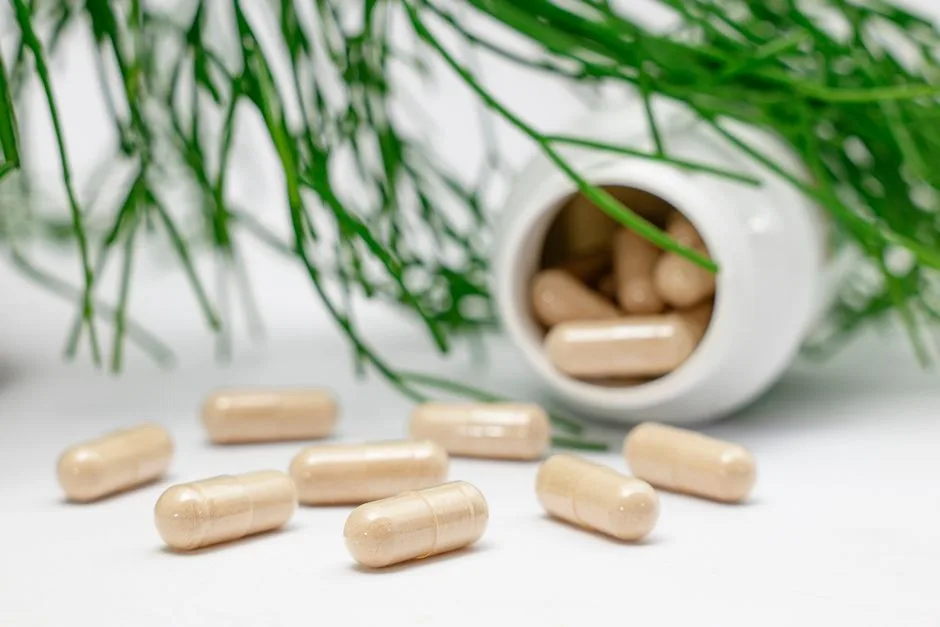
Today, forskolin shows up mostly as a weight loss supplement, often in capsules standardized to a percentage of forskolin content.
How does forskolin work?
Forskolin activates an enzyme called adenylate cyclase, which raises levels of a signaling molecule called cyclic AMP (cAMP) inside cells.
Higher cAMP is thought to stimulate lipolysis, the breakdown of stored fat into free fatty acids, and may influence hormone production pathways as well.[4]
This mechanism is why forskolin gets grouped with other thermogenic ingredients in fat loss supplements, even though the downstream effects in humans are far less clear than the cell biology suggests.[3]
Does forskolin build lean muscle or raise testosterone?
The most cited human study on forskolin is a randomized controlled trial in overweight and obese men, which reported increases in lean body mass and total testosterone alongside forskolin use, without significant changes in body weight itself.[6]
That trial is small and dated, and it remains essentially the sole direct human source for the testosterone finding, which is why the evidence should be read as suggestive rather than settled.[6]
- Total TestosteroneAHuman trials
Research may raise Total Testosterone · strong agreement · 2 studies
- Lean Body MassAHuman trials
Research may raise Lean Body Mass · strong agreement · 6 studies
View 5 studies on PubMed
- Novel Multi-Ingredient Supplement Facilitates Weight Loss and Improves Body Composition in Overweight and Obese Individuals: A Randomized, Double-Blind, Placebo-Controlled Clinical Trial (2023)
- Body composition and hormonal adaptations associated with forskolin consumption in overweight and obese men (2005)
- Sexual dimorphic regulation of body weight dynamics and adipose tissue lipolysis (2012)
- Thermogenic Blend Alone or in Combination with Whey Protein Supplement Stimulates Fat Metabolism and Improves Body Composition in Mice (2018)
- Plasma adiponectin/leptin ratio associates with subcutaneous abdominal and omental adipose tissue characteristics in women (2024)
Supporting mechanistic work in animal models has shown that thermogenic compounds, sometimes including forskolin-related pathways, can shift fat metabolism and body composition, though translating mouse data to humans always carries caveats.[3]
Research on adipose tissue biology also shows that fat depots respond differently by sex and location, which helps explain why forskolin's effects on lipolysis are described as sexually dimorphic in some studies.[4]
Other adipose tissue research, including work on steroid levels in omental and subcutaneous fat, and studies on the adiponectin to leptin ratio, adds context to how hormones and body fat interact, without directly testing forskolin itself.[5] [1]
What about fat loss claims?
Forskolin is frequently sold as a stand-alone fat burner or bundled into multi-ingredient thermogenic blends alongside things like caffeine, green tea extract, or conjugated linoleic acid (CLA).
A randomized trial of a multi-ingredient supplement found improvements in weight loss and body composition, but because multiple compounds were combined, it is not possible to credit forskolin specifically for the result.[2]
Separately, research on CLA found that its fat-lowering effect was not explained by increased lipolysis, a useful reminder that thermogenic-sounding mechanisms do not always translate into measurable fat loss.[7]
Put together, forskolin's reputation as a fat burner outpaces what the trial evidence actually supports.
How much do people use?
In the key clinical trial, men took a standardized Coleus forskohlii extract (10% forskolin) at doses around 250 mg twice daily.[6]
Commercial supplements vary widely in forskolin concentration and total dose, and there is no established optimal dose backed by a robust body of research.
- Standalone Coleus forskohlii capsules, usually standardized to 10% or 20% forskolin
- Multi-ingredient thermogenic or 'fat burner' blends
- Combined with whey protein in some formulations studied in animal models[3]
Is forskolin safe?
Short-term trials in overweight and obese men did not report serious adverse effects at the doses tested.[6]
Because forskolin raises cAMP, a signaling pathway involved in many tissues, people with low blood pressure, bleeding disorders, or those taking blood thinners or blood pressure medications should be especially cautious given the theoretical risk of interactions.
Long-term safety data in humans is limited, since most trials run only a matter of weeks.
Who might consider forskolin?
- Adults interested in body composition changes who understand the evidence is preliminary
- Those already tracking lean mass and testosterone who want to weigh a low-certainty option
- Not a fit for anyone seeking a proven, fast-acting fat loss aid
- Not a substitute for resistance training, protein intake, or sleep, which have far stronger evidence for lean mass and testosterone
Bottom line
Forskolin has a plausible biological mechanism through cAMP signaling and some early human evidence linking it to increases in lean body mass and total testosterone in men.[6]
The human evidence base is small, largely resting on one clinical trial, so these findings deserve replication before being treated as reliable.[6]
Claims that forskolin is a potent fat burner are not well supported once you look past the marketing and into the actual trial data.[2] [7]
Frequently asked questions
Does forskolin increase testosterone?
One small randomized trial in overweight and obese men found increases in total testosterone with forskolin use, but this has not been widely replicated.[6]
Can forskolin help you lose fat?
Direct evidence for fat loss from forskolin alone is weak. Trials showing weight loss benefits typically test multi-ingredient blends, making it hard to isolate forskolin's role.[2]
Is forskolin safe to use?
Short-term studies have not reported serious side effects, but long-term human safety data is limited, so caution is warranted, especially for those on blood pressure medications.[6]
How does forskolin work in the body?
Forskolin activates adenylate cyclase, raising cyclic AMP levels inside cells, which is thought to stimulate fat breakdown and may influence hormone pathways.[4]
Sources
- Plasma adiponectin/leptin ratio associates with subcutaneous abdominal and omental adipose tissue characteristics in women · PMID 38481206
- Novel Multi-Ingredient Supplement Facilitates Weight Loss and Improves Body Composition in Overweight and Obese Individuals: A Randomized, Double-Blind, Placebo-Controlled Clinical Trial · PMID 37686725
- Thermogenic Blend Alone or in Combination with Whey Protein Supplement Stimulates Fat Metabolism and Improves Body Composition in Mice · PMID 29568185
- Sexual dimorphic regulation of body weight dynamics and adipose tissue lipolysis · PMID 22662224
- Omental and subcutaneous adipose tissue steroid levels in obese men · PMID 16762384
- Body composition and hormonal adaptations associated with forskolin consumption in overweight and obese men · PMID 16129715
- Body fat-lowering effect of conjugated linoleic acid is not due to increased lipolysis · PMID 16180334