Fructans: The Hidden FODMAP in Wheat, Onion, and Garlic
FODMAP
Track your food and see where fructan load adds up. Track it free with Ration →
Key takeaways
- Fructans are chains of fructose that humans lack the enzyme to break down, so they ferment in the colon.
- Wheat, onion, and garlic are the biggest dietary sources — which makes fructans hard to avoid.
- In IBS they are a leading symptom trigger, and evidence suggests they, not gluten, explain many wheat reactions.
What fructans are
Fructans are short chains of fructose units with a glucose cap. Humans do not produce the enzyme to break the fructose-fructose bonds, so — unlike most carbohydrates — essentially everyone passes fructans undigested to the colon, where gut bacteria ferment them.[1] In most people that is harmless and even prebiotic. In sensitive guts it is a problem.
Why you might want to limit them
Fructans are one of the FODMAPs, and in irritable bowel syndrome they are among the most common triggers of bloating, gas, and pain.[3] There is a twist worth knowing: in people who report "gluten sensitivity" without celiac disease, a randomized crossover trial found that fructans — not gluten — provoked the gut symptoms, since wheat carries both.[2] So some apparent gluten reactions are really fructan reactions. For anyone without IBS or that sensitivity, fructans are beneficial fiber, not something to cut.
Foods highest in fructans
- Wheat and rye — bread, pasta, couscous (large amounts because of how much is eaten)
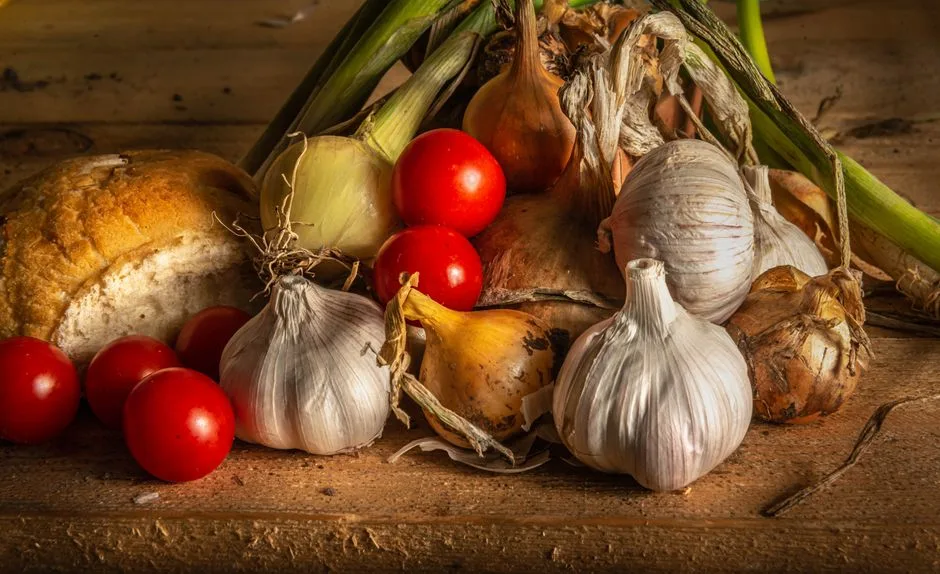
- Onion, garlic, leek, and shallot
- Artichoke, asparagus, and chicory root (inulin)
- Some legumes and dried fruit
How to cut it
The low-FODMAP approach is the evidence-based route: restrict high-fructan foods for a few weeks, then reintroduce to find your tolerance rather than avoiding forever. Practical tricks: garlic-infused oil delivers the flavor without the (water-soluble) fructans; the green tops of scallions and leeks are lower than the bulbs; and sourdough fermentation lowers wheat fructans. Do this with a dietitian where you can — over-restriction has its own costs.
Bottom line
Fructans are a top IBS trigger and the likely culprit behind many "gluten" reactions. If your gut is sensitive, use a structured low-FODMAP reintroduction to find your limit; if it is not, they are healthy fiber. Research summary, not medical advice.
Sources
- Varney J et al. FODMAPs: food composition, defining cutoff values and international application. J Gastroenterol Hepatol. 2017. · PMID 28244665
- Effects of fructan and gluten on gut microbiota in individuals with self-reported non-celiac gluten/wheat sensitivity — a randomised controlled crossover trial. 2024. · PMID 39227818
- Nanayakkara WS et al. The low FODMAP diet in the management of irritable bowel syndrome. Clin Exp Gastroenterol. 2018. · PMID 29336079