Indole-3-Carbinol: Benefits, Estrogen Effects, and Safety
Plant compound
Track the foods that fit your goals. Track it free with Ration →
Key takeaways
- Indole-3-carbinol (I3C) forms when you chew or digest cruciferous vegetables like broccoli and cabbage
- Lab and animal research suggests it shifts how the body metabolizes estradiol, though human evidence is limited
- Most human data comes from small trials in women's health and cancer prevention contexts
- Supplement forms exist, but food sources come with less uncertainty about dosing
What is indole-3-carbinol?
Indole-3-carbinol is a compound found in cruciferous vegetables.
It forms from a precursor molecule called glucobrassicin when these vegetables are chopped, chewed, or digested.
Once in the stomach, I3C is unstable. It quickly converts into other compounds, most notably 3,3'-diindolylmethane (DIM)[2].
Because of this, much of what researchers attribute to I3C may actually reflect the combined activity of I3C and its breakdown products.
How does it work in the body?
I3C is best known for its interaction with estrogen metabolism.
In the liver, it appears to promote a shift toward a less biologically active pathway of estradiol breakdown, essentially nudging the body to favor certain estrogen metabolites over others[5][6].
It also acts on aryl hydrocarbon receptor signaling, a pathway involved in how cells detoxify hormones and other compounds[2][3].
Separately, laboratory studies describe I3C as having anti-proliferative and anti-angiogenic effects, meaning it may slow abnormal cell growth and limit the formation of new blood vessels that feed tissue growth[1][4].
Does it lower estradiol?
This is where most of the research attention has landed.
Across the studies in our database, the consensus points toward a decrease in estradiol activity, though the evidence grade is low (a D), based on six sources[5][6].
- EstradiolDPreliminary
Research may lower Estradiol · strong agreement · 6 studies
View 5 studies on PubMed
- Molecular Targets, Anti-cancer Properties and Potency of Synthetic Indole-3-carbinol Derivatives (2019)
- Indoles Derived From Glucobrassicin: Cancer Chemoprevention by Indole-3-Carbinol and 3,3'-Diindolylmethane (2021)
- Indole-3-Carbinol Inhibits the Growth of Endometriotic Lesions by Suppression of Microvascular Network Formation (2022)
- Indole-3-carbinol as a chemopreventive and anti-cancer agent (2008)
- Indole-3-carbinol is a negative regulator of estrogen (2003)
The proposed mechanism is metabolic rather than a direct hormonal blockade. I3C appears to redirect estradiol metabolism toward the 2-hydroxyestrone pathway, which is considered less estrogenic than the alternative 16-alpha-hydroxyestrone pathway[5][6].
Early human research explored this in the context of conditions linked to estrogen exposure, including endometriosis, where I3C has been studied for its effect on the blood vessel networks that support endometriotic lesions[1].
It is worth being direct about the limits here. Much of this work is preclinical or based on small, older human trials, so the grade D rating reflects real uncertainty rather than a strong, settled finding.
What about cancer prevention claims?
I3C has a long history in chemoprevention research, particularly for hormone-sensitive cancers[2][4][6].
Proposed mechanisms include:
- Shifting estrogen metabolism away from more proliferative pathways[5]
- Inducing detoxification enzymes involved in clearing carcinogens[4]
- Inhibiting the growth of abnormal cells in laboratory models[3]
- Reducing formation of new microvasculature that tumors and lesions rely on[1]
Researchers have also developed synthetic I3C derivatives specifically to improve on the compound's instability and boost its potency in lab settings[3].
None of this translates into a proven cancer prevention strategy in humans. The research base is largely cell studies and animal models, with human trials still limited in size and scope[2][4].
Food and supplement sources
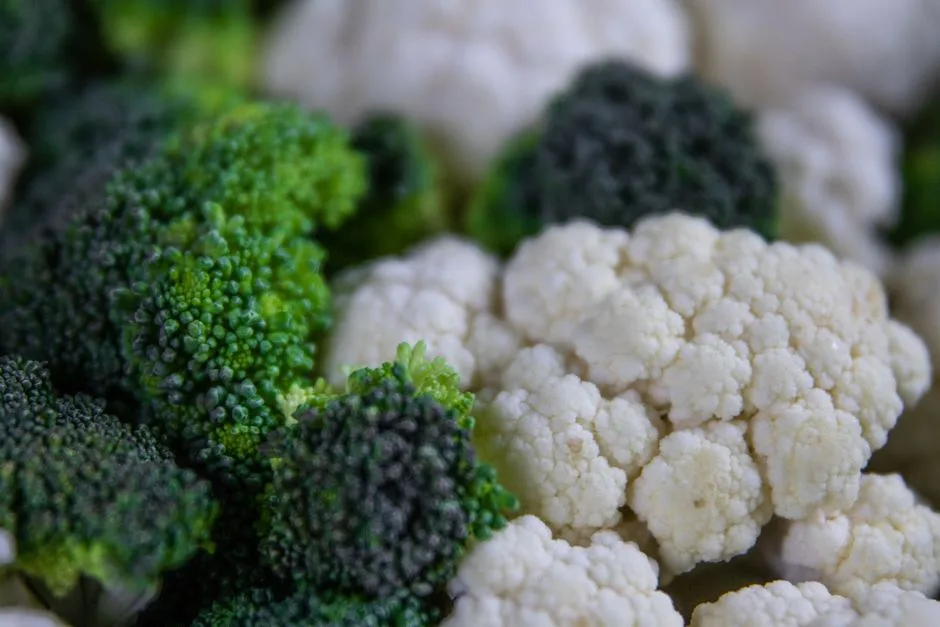
I3C's natural precursor, glucobrassicin, is concentrated in cruciferous vegetables.
- Broccoli
- Brussels sprouts
- Cabbage
- Kale
- Cauliflower
- Bok choy
- Collard greens
Cooking method matters. Lightly cooking or chopping these vegetables helps release the enzyme that converts glucobrassicin into I3C, while overcooking can degrade the compound.
Supplement forms of I3C and DIM are widely sold, often marketed for hormone balance or skin health. Dosing in these products varies considerably, and there is no standardized, well-established human dose backed by large clinical trials.
Is it safe?
Getting I3C through cruciferous vegetables is generally considered safe as part of a normal diet, and these vegetables carry their own well-documented benefits related to fiber, vitamin C, and other plant compounds.
Supplemental, concentrated I3C is a different question. Because it actively alters estrogen metabolism, it is not something to approach casually, particularly for anyone with a hormone-sensitive condition, who is pregnant, or who is taking hormonal medications.
The instability of I3C also means supplement quality and actual delivered dose can vary between products[2].
This is not medical advice, and anyone considering a concentrated supplement should talk with a healthcare provider first, especially given how directly it interacts with hormone pathways.
Who might be interested in it?
Based on the current research, interest in I3C tends to cluster around a few groups:
- People researching diet and estrogen metabolism, often in the context of conditions like endometriosis[1]
- Researchers studying chemoprevention strategies for hormone-related cancers[2][4]
- Anyone simply looking to eat more cruciferous vegetables for general health, where I3C is one of many beneficial compounds involved
It is not a substitute for medical treatment of any hormone-related condition, and the current evidence does not support using concentrated supplements as a treatment on their own.
Bottom line
Indole-3-carbinol is a genuinely interesting compound with a plausible, well-studied mechanism for shifting estradiol metabolism[5][6].
The human evidence behind that effect remains thin, reflected in the low grade attached to its estradiol-lowering consensus.
Eating more broccoli, cabbage, and other cruciferous vegetables is a reasonable, low-risk way to get I3C along with fiber and other nutrients. Relying on concentrated supplements for hormone effects is a bigger leap than the current research supports.
Frequently asked questions
Does indole-3-carbinol lower estrogen?
Research suggests I3C shifts estradiol metabolism toward less active pathways, but the evidence is graded low confidence and comes mostly from smaller or preclinical studies[5][6].
What foods contain indole-3-carbinol?
Cruciferous vegetables like broccoli, cabbage, kale, and Brussels sprouts contain the precursor that converts to I3C when chopped or digested.
Is indole-3-carbinol the same as DIM?
No, DIM (3,3'-diindolylmethane) forms from I3C after digestion, and much of I3C's studied activity may actually reflect DIM's effects[2].
Can indole-3-carbinol help with endometriosis?
Early research suggests I3C may limit blood vessel formation that supports endometriotic lesions, but this comes from a single study and is not established as a treatment[1].
Is indole-3-carbinol safe to take as a supplement?
Getting I3C from vegetables is considered safe, but concentrated supplements interact directly with hormone metabolism and warrant a conversation with a healthcare provider first.
Sources
- Indole-3-Carbinol Inhibits the Growth of Endometriotic Lesions by Suppression of Microvascular Network Formation · PMID 36432626
- Indoles Derived From Glucobrassicin: Cancer Chemoprevention by Indole-3-Carbinol and 3,3'-Diindolylmethane · PMID 34660663
- Molecular Targets, Anti-cancer Properties and Potency of Synthetic Indole-3-carbinol Derivatives · PMID 30444199
- Indole-3-carbinol as a chemopreventive and anti-cancer agent · PMID 18314259
- Indole-3-carbinol is a negative regulator of estrogen · PMID 12840226
- The micronutrient indole-3-carbinol: implications for disease and chemoprevention · PMID 11201294