Naringenin: Benefits, Evidence, and What It May Do to IGF-1
Plant compound
Track the foods that fit your goals. Track it free with Ration →
Key takeaways
- Naringenin is a flavonoid concentrated in citrus fruits, especially grapefruit and orange peel/pith.
- Early research links it to changes in IGF-1, a growth hormone related pathway tied to tissue repair and aging.
- Most evidence so far comes from animal and cell studies, not human trials.
- Considered generally safe from food sources, but supplement forms lack robust human safety data.
What is naringenin?
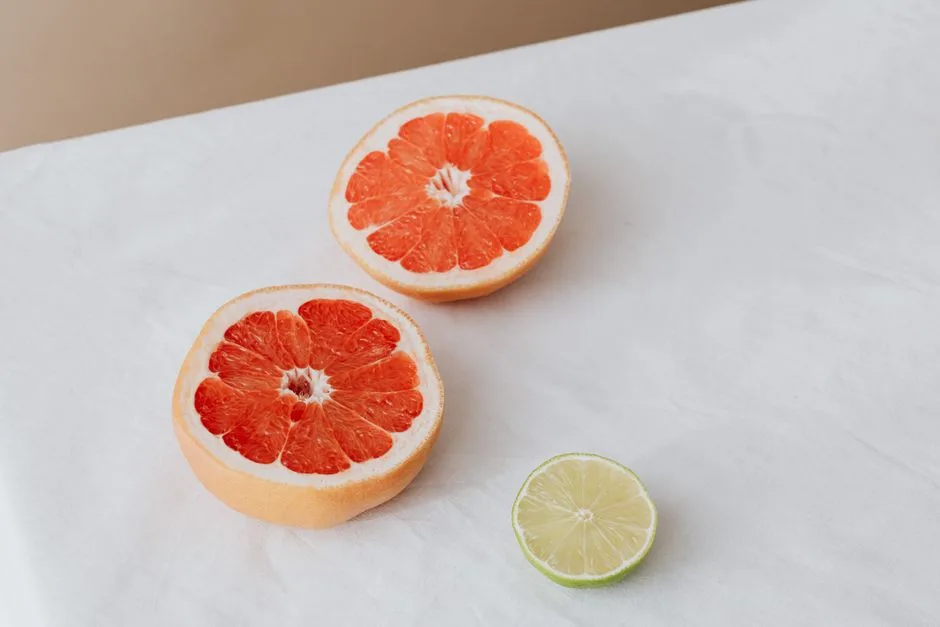
Naringenin is a flavanone, a subclass of flavonoids found abundantly in citrus fruits.
It is largely responsible for the bitter taste of grapefruit and grapefruit juice.
Like other polyphenols, naringenin has antioxidant and anti-inflammatory properties in laboratory studies.
Researchers have also studied it alongside related compounds like hesperidin and quercetin for potential metabolic effects.
How does naringenin work in the body?
Naringenin is thought to act on multiple cellular pathways at once, rather than a single target.
In animal and cell models, it has been shown to modulate inflammatory signaling, including interleukin-6, and to influence growth related pathways such as insulin like growth factor-1 (IGF-1)[1].
It has also been studied for effects on insulin/IGF-1 signaling (IIS) and MAPK pathways, both of which are involved in cellular stress responses and longevity in model organisms[3].
Does naringenin affect IGF-1?
Our database tracks a consensus signal for naringenin and IGF-1 based on the available studies.
- IGF-1DPreliminary
Research may raise IGF-1 · strong agreement · 3 studies
View 3 studies on PubMed
- Naringenin prolongs lifespan and delays aging mediated by IIS and MAPK in Caenorhabditis elegans (2021)
- Naringenin protects hepato-renal tissues against antituberculosis drugs induced toxic manifestations by modulating interleukin-6, insulin like growth factor-1, biochemical and ultra-structural integrity (2023)
- Naringenin Promotes Myotube Formation and Maturation for Cultured Meat Production (2022)
The direction reported across these studies is an increase in IGF-1, but the evidence grade is low (D), based on just three studies.
In one study, naringenin was shown to help modulate IGF-1 alongside interleukin-6 in the context of protecting liver and kidney tissue from drug-induced toxicity in an animal model[1].
In cultured muscle cell research, naringenin promoted myotube formation and maturation, a process relevant to muscle growth and to cultured meat production, which may relate to growth factor signaling like IGF-1[2].
In the roundworm Caenorhabditis elegans, naringenin prolonged lifespan and delayed aging markers, with effects linked to insulin/IGF-1 signaling and MAPK pathways[3].
These are mechanistic and animal findings only. Whether naringenin meaningfully changes IGF-1 levels in humans has not been established.
What foods contain naringenin?
Naringenin is most concentrated in citrus peel and pith, though it is present in the flesh and juice too.
- Grapefruit and grapefruit juice
- Oranges, especially the peel and white pith
- Bergamot
- Tomatoes and tomato skin
- Some herbs, in smaller amounts
Grapefruit is generally considered the richest common dietary source.
Is naringenin available as a supplement?
Naringenin is sold as a standalone supplement and is sometimes included in citrus bioflavonoid blends.
There is no established effective or safe dose for humans based on clinical trial data.
Doses used in animal studies do not translate directly to human doses, since absorption and metabolism differ substantially by species.
Anyone considering a supplement form should know that most of what we know about naringenin's specific effects, including on IGF-1, comes from cell and animal research rather than human trials.
Is naringenin safe?
As part of whole citrus fruits, naringenin has a long history of safe dietary consumption.
Grapefruit and grapefruit juice are well known to interact with certain medications by affecting liver enzymes that metabolize drugs. This is generally attributed to furanocoumarins in grapefruit, though flavonoids like naringenin have also been studied for enzyme interactions.
People taking prescription medications, especially those with known grapefruit interactions, should be cautious with concentrated naringenin supplements.
Long-term human safety data for isolated, high-dose naringenin supplements is lacking.
Who might be interested in naringenin?
- People interested in polyphenol-rich diets for general antioxidant intake
- Researchers studying aging and IIS/MAPK pathways in model organisms[3]
- Those following early research on flavonoids and growth factor signaling[1][2]
- People who already enjoy citrus fruits as part of a balanced diet
Bottom line
Naringenin is a citrus flavonoid with interesting effects in cell and animal studies, including a possible link to increased IGF-1[1][2][3].
The evidence behind this IGF-1 connection is still graded low, resting on just three studies, none of which are human trials.
Eating citrus fruits remains a reasonable way to get naringenin along with fiber, vitamin C, and other beneficial compounds.
Supplement forms should be approached cautiously until more human research clarifies effective doses and safety.
Frequently asked questions
Does naringenin increase IGF-1?
Some animal and cell studies suggest naringenin may increase IGF-1 related activity, but this is based on only three studies and graded as low-strength evidence[1][2][3].
What foods are highest in naringenin?
Grapefruit, including its peel and pith, is the richest common dietary source, with oranges and bergamot also contributing meaningful amounts.
Is naringenin the same as grapefruit extract?
Naringenin is one specific flavonoid found in grapefruit, but grapefruit extract contains many other compounds, including furanocoumarins that affect drug metabolism.
Can naringenin help with aging?
In the roundworm C. elegans, naringenin prolonged lifespan and delayed aging markers by acting on insulin/IGF-1 and MAPK signaling, but this has not been shown in humans[3].
Is it safe to take naringenin supplements with medication?
Because naringenin comes from citrus sources known for drug interactions, anyone on prescription medication should be cautious with concentrated supplements.
Sources
- Naringenin protects hepato-renal tissues against antituberculosis drugs induced toxic manifestations by modulating interleukin-6, insulin like growth factor-1, biochemical and ultra-structural integrity · PMID 36383336
- Naringenin Promotes Myotube Formation and Maturation for Cultured Meat Production · PMID 36496566
- Naringenin prolongs lifespan and delays aging mediated by IIS and MAPK in Caenorhabditis elegans · PMID 34787618