S-Allyl Cysteine: The Garlic Compound Linked to Lower Blood Pressure
Plant compound
Track the foods that fit your goals. Track it free with Ration →
Key takeaways
- S-allyl cysteine (SAC) is a stable, odorless sulfur compound formed as garlic ages, and it is considered a key active ingredient in aged garlic extract.
- Randomized trials consistently link aged garlic extract, standardized for SAC, to reductions in systolic blood pressure, especially in people with hypertension.
- Doses used in trials generally range from about 1 to 4 grams of aged garlic extract per day, standardized to deliver a set amount of SAC.
- It appears to be well tolerated, though mild garlic breath and GI upset are possible, and anyone on blood pressure or blood thinning medication should be thoughtful about combining it with supplements.
What is S-allyl cysteine?
S-allyl cysteine, often abbreviated SAC, is a sulfur containing amino acid derivative found in garlic.
Fresh garlic contains very little of it. SAC forms gradually as garlic cloves are aged in a process that produces aged garlic extract, a specific supplement form sold under brands like Kyolic.
Unlike the allicin in raw garlic, which is unstable and responsible for garlic's pungent smell, SAC is water soluble, stable, and largely odorless. This makes aged garlic extract easier to standardize and study than raw garlic or garlic powder.
How might it lower blood pressure?
Researchers have proposed several mechanisms, largely from animal and mechanistic work.
- Promoting the release of nitric oxide, which relaxes and widens blood vessels[3]
- Inhibiting angiotensin converting enzyme (ACE), a target shared by many prescription blood pressure drugs[3]
- Improving peripheral circulation and reducing vascular resistance, shown in spontaneously hypertensive rats given S-1-propenylcysteine, a related aged garlic compound[2]
- Antioxidant effects that may protect the vascular lining from oxidative stress[3]
These mechanisms are plausible but come mostly from animal models and cell studies. Human trials are what ultimately support the blood pressure claim, and that is where the evidence gets more interesting.
What does the human evidence show?
Several randomized controlled trials have tested aged garlic extract, standardized for SAC content, specifically in people with elevated blood pressure.
An early trial found that aged garlic extract lowered systolic blood pressure in patients whose hypertension was being treated but remained uncontrolled on medication[5]. A later dose response trial in people with hypertension confirmed reductions in systolic pressure and suggested a dose dependent effect, with higher doses of aged garlic extract producing larger drops[4].
A more recent 2023 triple blind randomized controlled trial tested an optimized aged garlic extract in people with Grade I hypertension who were already on antihypertensive drug therapy. It found a meaningful additional reduction in systolic blood pressure compared with placebo[1].
A broader review of garlic's cardiovascular effects laid out the proposed mechanisms and concluded that clinical evidence, while still limited in size, is reasonably consistent for systolic blood pressure specifically[3].
- Systolic Blood PressureAHuman trials
Research may lower Systolic Blood Pressure · strong agreement · 5 studies
View 5 studies on PubMed
- Aged garlic extract reduces blood pressure in hypertensives: a dose-response trial (2013)
- Antihypertensive Effects of an Optimized Aged Garlic Extract in Subjects with Grade I Hypertension and Antihypertensive Drug Therapy: A Randomized, Triple-Blind Controlled Trial (2023)
- Aged garlic extract lowers blood pressure in patients with treated but uncontrolled hypertension: a randomised controlled trial (2010)
- Potential of garlic (Allium sativum) in lowering high blood pressure: mechanisms of action and clinical relevance (2014)
- Effects of S-1-propenylcysteine, a sulfur compound in aged garlic extract, on blood pressure and peripheral circulation in spontaneously hypertensive rats (2018)
Taken together, five studies in our database point the same direction for systolic blood pressure, decrease, with a grade A evidence rating. That is a relatively strong signal for a food derived compound, though the trials are still modest in size and mostly involve aged garlic extract rather than isolated SAC.
Does it affect diastolic blood pressure too?
The evidence base is notably stronger and more consistent for systolic blood pressure, the top number, than for diastolic pressure.
Some trials have reported diastolic improvements alongside systolic ones[4][5], but the effect size and consistency across studies is less uniform. Researchers tend to describe SAC and aged garlic extract as primarily a systolic pressure intervention based on the current data[3].
Food and supplement sources
SAC is not something you get in meaningful amounts from raw garlic cloves.
- Aged garlic extract, the supplement form used in nearly all the clinical trials, sold as capsules, tablets, or liquid extract
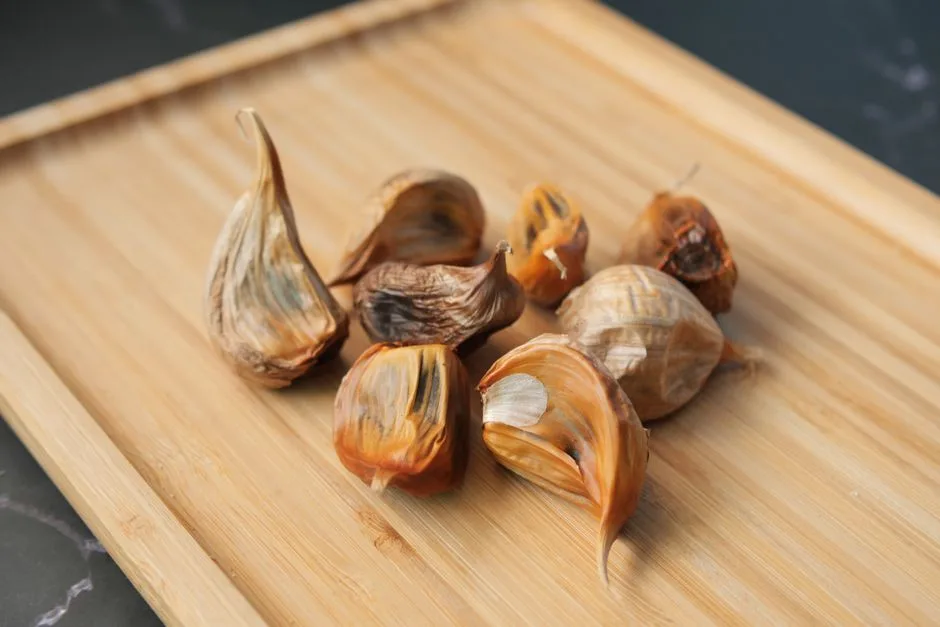
- Long fermented or aged garlic preparations, such as black garlic, which contain some SAC though typically less standardized than commercial extracts
- Raw garlic and garlic powder, which contain other sulfur compounds like allicin but very little SAC itself
If someone wanted to approximate what was used in the trials, they would be looking at a standardized aged garlic extract product rather than culinary garlic.
How much was used in the studies?
Trial doses of aged garlic extract have generally ranged from about 1 gram to 4 grams per day, taken for periods of 8 to 12 weeks or longer.
The dose response trial found that higher doses within this range tended to produce greater systolic blood pressure reductions[4], which suggests the effect is not simply on or off but may scale somewhat with intake.
Because SAC content varies by product and extraction method, doses are usually described in terms of the aged garlic extract itself rather than milligrams of SAC alone. This makes it hard to translate trial results directly to any single supplement bottle without checking its standardization.
Is it safe?
Aged garlic extract has been used in clinical trials lasting up to several months without serious safety signals reported[1][4][5].
- Mild garlic odor or aftertaste, though far less than raw garlic
- Occasional gastrointestinal upset, such as bloating or heartburn
- Theoretical interaction with blood thinning medications, since garlic compounds can affect platelet function
- Possible additive effect with blood pressure medications, which is actually the point in some trials but worth being mindful of if combining supplements with prescribed drugs
Anyone taking antihypertensive medication or anticoagulants should be thoughtful about adding a garlic supplement on top, simply because the combined blood pressure or bleeding effects have not been extensively mapped out.
Who might consider it?
- People with diagnosed hypertension, particularly those whose systolic pressure remains elevated despite treatment[5]
- People interested in food based or adjunct approaches to blood pressure management alongside standard care, not in place of it
- People already using aged garlic extract for other reasons, such as cholesterol or general cardiovascular support, who may see blood pressure benefits as a secondary effect
Bottom line
S-allyl cysteine, delivered through aged garlic extract, has one of the more consistent human trial records among garlic derived compounds for lowering systolic blood pressure.
Five studies point the same direction, and the effect shows up even in people already on antihypertensive drugs. Evidence for diastolic pressure and for other health claims tied to SAC is thinner.
It is reasonable to view aged garlic extract as a supported adjunct for blood pressure support, discussed with a clinician rather than used to replace prescribed treatment.
Frequently asked questions
Is S-allyl cysteine the same as garlic supplements?
Not exactly. It is a specific sulfur compound concentrated in aged garlic extract, which is why most of the human trials use that specific supplement form rather than raw garlic or garlic powder[1][4].
How long does it take to see blood pressure changes?
Trials showing reductions in systolic blood pressure generally ran 8 to 12 weeks or longer, so effects were measured over months, not days[4][5].
Can it replace blood pressure medication?
No trial has tested it as a replacement for medication. The strongest results come from studies where it was added on top of existing antihypertensive drug therapy[1][5].
Does raw garlic have the same effect?
Raw garlic contains very little S-allyl cysteine since it forms during the aging process, so the clinical evidence here does not directly apply to eating raw garlic cloves[3].
Sources
- Antihypertensive Effects of an Optimized Aged Garlic Extract in Subjects with Grade I Hypertension and Antihypertensive Drug Therapy: A Randomized, Triple-Blind Controlled Trial · PMID 37686723
- Effects of S-1-propenylcysteine, a sulfur compound in aged garlic extract, on blood pressure and peripheral circulation in spontaneously hypertensive rats · PMID 29380376
- Potential of garlic (Allium sativum) in lowering high blood pressure: mechanisms of action and clinical relevance · PMID 25525386
- Aged garlic extract reduces blood pressure in hypertensives: a dose-response trial · PMID 23169470
- Aged garlic extract lowers blood pressure in patients with treated but uncontrolled hypertension: a randomised controlled trial · PMID 20594781