Shilajit and Testosterone: What the Research Actually Shows
Botanical / supplement
Track the foods that fit your goals. Track it free with Ration →
Key takeaways
- Small human trials suggest purified shilajit may modestly raise total testosterone in healthy men[5][1], though it's grouped with other 'testosterone boosters' that show mixed overall support[2]
- Animal research points to protective effects on sperm and testicular tissue via antioxidant pathways like Nrf-2/Keap-1[3][4]
- A small oligospermia trial found improved sperm parameters after 90 days of processed shilajit[6]
- Shilajit is generally well-tolerated in short trials, but long-term safety data and independent replication are limited[1][5]
What Is Shilajit?
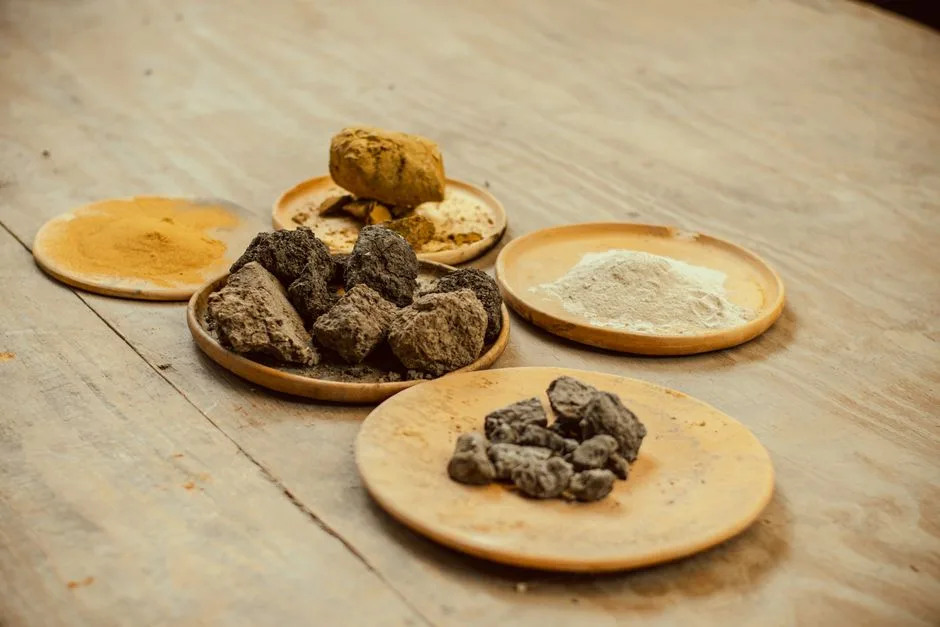
Shilajit is a sticky, tar-like substance that oozes from rock crevices in mountain ranges such as the Himalayas, formed over centuries from the slow decomposition of plant matter compressed under rock layers. It has long been used in traditional Ayurvedic medicine as a general tonic and is now sold in resin, powder, and capsule form. Chemically, shilajit is a complex mixture of humic and fulvic acids, minerals, and small organic molecules called dibenzo-alpha-pyrones, which researchers believe contribute to its purported effects.
In modern supplement markets, shilajit is most often marketed for energy, physical performance, and male reproductive health, including testosterone support. Purification is an important detail: raw shilajit can contain heavy metals and other contaminants, so clinical studies have focused on purified or processed versions rather than material collected directly from rock surfaces.
How It Might Work
The proposed mechanisms center on fulvic acid's antioxidant and mitochondrial-supporting properties. In animal models, shilajit has been shown to modulate the Nrf-2/Keap-1 signaling pathway, a key cellular defense system against oxidative stress, which in turn appears to protect testicular germ cells and support steroidogenesis (the process by which cells produce testosterone and other steroid hormones)[3]. This antioxidant action may help explain why shilajit has shown protective effects against chemically induced testicular damage in rodent studies[3][4].
Beyond direct effects on the testes, shilajit's mineral content and purported influence on cellular energy production (via coenzyme Q10-related pathways, though this is less directly studied in the cited trials) is often cited as a rationale for its use in physical performance contexts. It's worth noting that most mechanistic evidence comes from animal or cellular models, so how directly these pathways translate to humans remains an open question.
What the Evidence Shows
The most directly relevant human evidence comes from a small randomized controlled trial in healthy volunteers, which found that purified shilajit supplementation was associated with increased total testosterone levels compared to baseline or placebo over the study period[5]. A more recent 28-day open-label pilot study using a specific shilajit resin formulation similarly reported favorable changes in blood biomarkers alongside physical performance measures, though the open-label, uncontrolled design limits how much weight can be placed on the findings[1].
Zooming out, a 2024 systematic review examining a broad category of supplements marketed as 'testosterone boosters' found that the evidence base for many such ingredients, shilajit included, is inconsistent, with some studies showing benefit and others showing no meaningful effect, often due to small sample sizes, short durations, or lack of rigorous blinding[2]. This context matters: while the two shilajit-specific human trials in our review lean positive[5][1], the overall category has a mixed track record, and shilajit hasn't been tested at the scale needed for high-confidence conclusions.
Separately, an older clinical trial in men with oligospermia (low sperm count) found that 90 days of processed shilajit was associated with improvements in sperm count and other semen parameters[6]. Animal studies reinforce a fertility-protective theme, showing shilajit could mitigate cadmium-induced infertility[4] and chemotherapy-induced testicular toxicity[3] in mice, primarily through antioxidant mechanisms. These fertility-focused findings are a different endpoint than testosterone itself, but they align with the broader narrative that shilajit may support male reproductive physiology.
Evidence Summary
Our database currently grades the consensus direction for shilajit's effect on total testosterone as an increase, with a grade of A based on six data points, reflecting relatively consistent directional findings across the available studies, even though individual trial sizes remain small.
- Total TestosteroneAHuman trials
Research may raise Total Testosterone · strong agreement · 6 studies
View 5 studies on PubMed
- Do "testosterone boosters" really increase serum total testosterone? A systematic review (2024)
- Clinical evaluation of purified Shilajit on testosterone levels in healthy volunteers (2016)
- Clinical evaluation of spermatogenic activity of processed Shilajit in oligospermia (2010)
- Profertility effects of Shilajit on cadmium-induced infertility in male mice (2018)
- Safety and Efficacy of TruBlk™ Shilajit Resin Supplementation on Physical Performance and Blood Biomarkers in Healthy Adults: A 28-Day Open-Label Pilot Study (2026)
Sources, Dosing, and Forms Studied
Shilajit is not naturally present in food; it is sourced from mineral deposits and sold specifically as a supplement, most commonly as a purified resin meant to be dissolved in warm water or milk, though capsules and powders are also widely available. The clinical trials reviewed here used purified or 'processed' shilajit, a distinction the researchers emphasized because raw, unpurified shilajit can carry contamination risks[5][6].
Dosing in the studies varied: the testosterone-focused RCT and the oligospermia trial used regimens lasting around 90 days[5][6], while the more recent pilot study evaluated a 28-day supplementation period[1]. There isn't yet a standardized 'proven' dose across the literature, and label recommendations from commercial products don't always match what's been studied in trials, so anyone curious about specific amounts should look closely at product labeling and third-party purification testing.
Safety and Side Effects
In the short-term trials reviewed, purified shilajit was generally reported as well-tolerated, with the 28-day pilot study monitoring blood biomarkers without flagging major safety concerns[1]. However, these studies are small and short in duration, so rare or long-term side effects wouldn't necessarily be captured.
A key safety consideration specific to shilajit is sourcing: unpurified or poorly processed shilajit has historically been associated with contamination by heavy metals like lead and mercury, since it's a naturally mined substance. This is why the clinical research specifically uses purified formulations, and it's a meaningful reason to be cautious about unregulated or unverified shilajit products in the broader marketplace.
Who Might Consider It
Based on the current evidence, shilajit may be of interest to healthy adult men curious about natural approaches to supporting testosterone levels or physical performance, given the modestly positive signals from small trials[5][1]. Men dealing with low sperm counts might also find the oligospermia research relevant to discuss with a clinician[6], though this is a narrow, dated study.
That said, shilajit is not a substitute for medical evaluation of low testosterone or fertility issues, and people with underlying health conditions, kidney disease, or those on other medications should be especially cautious given limited safety data and potential contamination risks in poorly sourced products.
Bottom Line
Shilajit has more direct human testosterone data than many trendy 'T-booster' ingredients, with two small trials showing increases in total testosterone[5][1] and supportive fertility-related findings from both human and animal research[6][3][4]. Still, the broader systematic review of testosterone-boosting supplements reminds us that positive individual trials don't always hold up at scale[2], so shilajit's testosterone effects should be considered promising but not definitively established.
Frequently asked questions
Does shilajit raise testosterone?
Small human trials suggest purified shilajit supplementation may increase total testosterone levels compared to baseline[5][1], and our database rates the consensus direction as an increase with a grade of A. However, this is based on a limited number of studies, and a broader review of testosterone-boosting supplements found inconsistent results across the category[2].
How much shilajit per day is used in studies?
Clinical trials have generally used purified shilajit over periods of about 90 days for testosterone and fertility outcomes[5][6], or 28 days in a more recent pilot study[1], but there isn't a single standardized daily dose established across the research.
Is shilajit safe to use?
In the short-term trials reviewed, purified shilajit was reported as well-tolerated[1], but long-term safety data is limited. A key concern is that unpurified shilajit sourced from unverified suppliers can contain heavy metal contaminants, so purified, tested products are important.
Can shilajit help with fertility or sperm count?
A small clinical trial in men with oligospermia found improvements in sperm parameters after 90 days of processed shilajit[6], and animal studies show shilajit can protect against toxin- and chemotherapy-induced testicular damage[3][4], though this research is still preliminary.
Is shilajit better than other testosterone-boosting supplements?
It's hard to say definitively; shilajit has two positive human trials on testosterone[5][1], which is more direct evidence than many other marketed 'boosters,' but a systematic review of the broader category found mixed results overall[2], so caution is warranted.
Sources
- Safety and Efficacy of TruBlk™ Shilajit Resin Supplementation on Physical Performance and Blood Biomarkers in Healthy Adults: A 28-Day Open-Label Pilot Study · PMID 41613504
- Do "testosterone boosters" really increase serum total testosterone? A systematic review · PMID 37697053
- Shilajit mitigates chemotherapeutic drug-induced testicular toxicity: Study on testicular germ cell dynamics, steroidogenesis modulation, and Nrf-2/Keap-1 signaling · PMID 39121783
- Profertility effects of Shilajit on cadmium-induced infertility in male mice · PMID 29947420
- Clinical evaluation of purified Shilajit on testosterone levels in healthy volunteers · PMID 26395129
- Clinical evaluation of spermatogenic activity of processed Shilajit in oligospermia · PMID 20078516