Urolithin A: Does This Gut Metabolite Actually Boost Muscle Mitochondria?
Bioactive compound
Track the foods that fit your goals. Track it free with Ration →
Key takeaways
- Urolithin A is a compound your gut bacteria make from ellagitannins found in pomegranates, berries, and walnuts
- Human trials link it to improved mitochondrial health and, in some studies, muscle strength and endurance in older and middle-aged adults[2][3]
- Not everyone produces enough urolithin A naturally, which is part of why supplement forms exist
- It appears generally well tolerated in trials so far, though long-term safety data is still limited[1]
What is urolithin A?
Urolithin A is not something you eat directly. It is a metabolite, meaning your gut bacteria produce it after you consume ellagitannins, a class of polyphenols.
Foods rich in ellagitannins include:
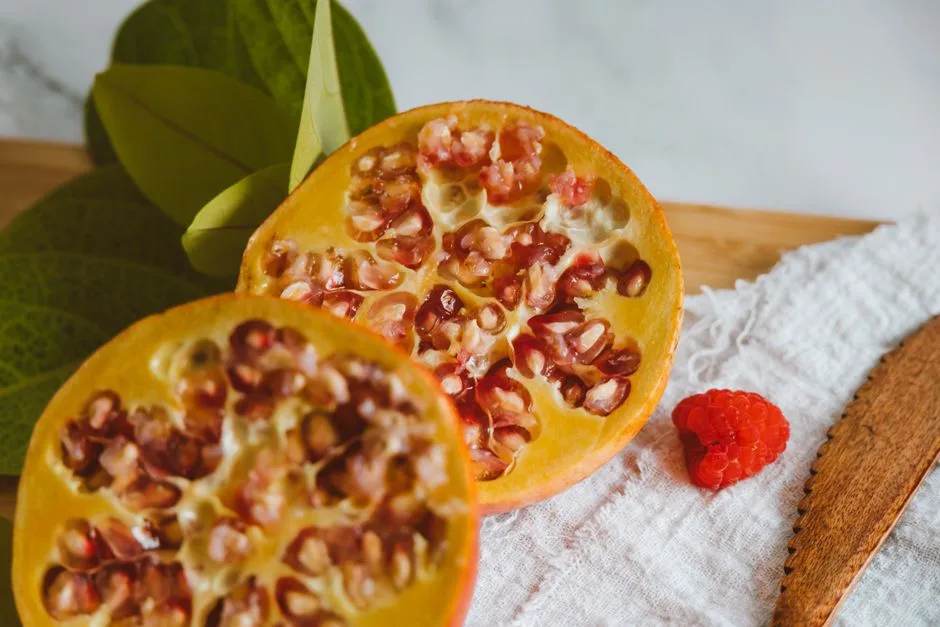
- Pomegranates and pomegranate juice
- Raspberries and strawberries
- Walnuts
- Some teas
Here is the catch. Not everyone's gut microbiome can make this conversion efficiently. Research suggests only about a third of people harbor the right bacterial mix to reliably produce meaningful amounts of urolithin A after eating these foods[5].
That gap is the main argument for taking urolithin A directly as a supplement, bypassing the gut conversion step entirely.
How does it work in the body?
The leading theory centers on mitophagy, the process cells use to clear out damaged mitochondria so healthier ones can take their place.
As we age, mitophagy slows down, and damaged mitochondria accumulate in muscle tissue. This is thought to contribute to declining muscle strength and endurance over time.
In early animal work, urolithin A induced mitophagy and extended lifespan in C. elegans, and improved muscle function in rodents[6]. It has also shown promise for muscle function in models of muscular dystrophy by triggering this same mitochondrial cleanup process[4].
The idea is that by supporting mitochondrial quality control, urolithin A helps muscle cells generate energy more efficiently, which could translate into better endurance and strength.
What does the human evidence show?
Human data on urolithin A is still fairly young, but it is more developed than for many trendy longevity compounds.
A randomized clinical trial in older adults found that urolithin A supplementation improved muscle endurance and markers of mitochondrial health compared to placebo[2].
A separate randomized trial in middle-aged adults reported improvements in muscle strength, exercise performance, and mitochondrial health biomarkers after supplementation[3].
A 2024 systematic review pulling together the human trials on aging outcomes concluded that urolithin A shows consistent effects on mitochondrial health markers, with muscle related benefits being the most reproducible finding so far[1].
- Muscle Protein SynthesisAHuman trials
Research may raise Muscle Protein Synthesis · strong agreement · 6 studies
View 5 studies on PubMed
- Targeting aging with urolithin A in humans: A systematic review (2024)
- Urolithin A improves muscle strength, exercise performance, and biomarkers of mitochondrial health in a randomized trial in middle-aged adults (2022)
- Effect of Urolithin A Supplementation on Muscle Endurance and Mitochondrial Health in Older Adults: A Randomized Clinical Trial (2022)
- Urolithin A improves muscle function by inducing mitophagy in muscular dystrophy (2021)
- Impact of the Natural Compound Urolithin A on Health, Disease, and Aging (2021)
Taken together, the graded evidence points to a consistent increase in markers tied to muscle protein synthesis, based on a handful of controlled human trials. That is a meaningfully stronger evidence base than most supplements marketed for muscle aging currently have.
Still, this is a small number of trials, mostly funded or run in collaboration with the compound's manufacturer, which is worth keeping in mind when weighing how much confidence to place in the results.
Who might consider it?
The trial populations so far have mostly been older and middle-aged adults, which lines up with the rationale that mitochondrial decline is more relevant later in life.
- Older adults interested in supporting muscle endurance and mitochondrial function[2]
- Middle-aged adults looking to maintain strength and exercise performance[3]
- People whose gut microbiome does not efficiently convert dietary ellagitannins into urolithin A[5]
There is no evidence yet supporting its use in younger, already healthy and highly active adults, since none of the major trials have tested that group specifically.
How much do you need, and in what form?
Supplement trials have generally used doses in the range of 500 mg to 1,000 mg per day, taken as a standalone urolithin A supplement rather than through pomegranate or berry consumption[2][3].
Getting an equivalent dose from food alone is impractical, given that gut conversion efficiency varies so much from person to person[5].
There is no established consensus dose outside of what individual trials have tested, and optimal duration of use has not been well defined.
Is it safe?
Across the human trials conducted so far, urolithin A has been reported as generally well tolerated, with no serious safety signals flagged in the systematic review of human studies[1].
That said, these trials have been relatively short in duration and modest in size, so long-term safety over years of use has not been established.
As with any supplement, people who are pregnant, breastfeeding, or managing a chronic condition should be cautious given the limited data available.
The bottom line
Urolithin A has one of the more promising early human evidence bases among mitochondria focused supplements, with randomized trials showing benefits for muscle strength, endurance, and mitochondrial health markers in older and middle-aged adults[1][2][3].
The mechanistic story, centered on mitophagy, is backed by solid preclinical work in animal models[4][6].
Still, the human trial base remains small, and more independent, longer term research would help confirm how meaningful and durable these muscle benefits really are.
Frequently asked questions
Can I get enough urolithin A from pomegranates alone?
Probably not reliably. Only about a third of people have gut bacteria that efficiently convert dietary ellagitannins from pomegranates and berries into urolithin A[5].
Does urolithin A actually build muscle?
Human trials show it can improve muscle strength, endurance, and mitochondrial health markers, particularly in older and middle-aged adults[2][3], though this reflects a small number of studies so far.
Is urolithin A safe to take long term?
Short to medium term trials suggest it is generally well tolerated[1], but long-term safety data beyond these trial periods is still limited.
Sources
- Targeting aging with urolithin A in humans: A systematic review · PMID 39002645
- Effect of Urolithin A Supplementation on Muscle Endurance and Mitochondrial Health in Older Adults: A Randomized Clinical Trial · PMID 35050355
- Urolithin A improves muscle strength, exercise performance, and biomarkers of mitochondrial health in a randomized trial in middle-aged adults · PMID 35584623
- Urolithin A improves muscle function by inducing mitophagy in muscular dystrophy · PMID 33827972
- Impact of the Natural Compound Urolithin A on Health, Disease, and Aging · PMID 34030963
- Urolithin A induces mitophagy and prolongs lifespan in C. elegans and increases muscle function in rodents · PMID 27400265