Ursolic Acid for Muscle: What the Research Actually Shows
Plant compound
Track the foods that fit your goals. Track it free with Ration →
Key takeaways
- Ursolic acid is a compound found in apple peels, rosemary, and other plants, studied mainly for its effects on muscle mass
- Animal research links it to preserved or increased lean body mass, especially in models of muscle wasting
- Our database grades this effect a D, meaning direction is consistent but evidence quality is still low
- Human trials are scarce, so dosing and real world benefit remain uncertain
What is ursolic acid?
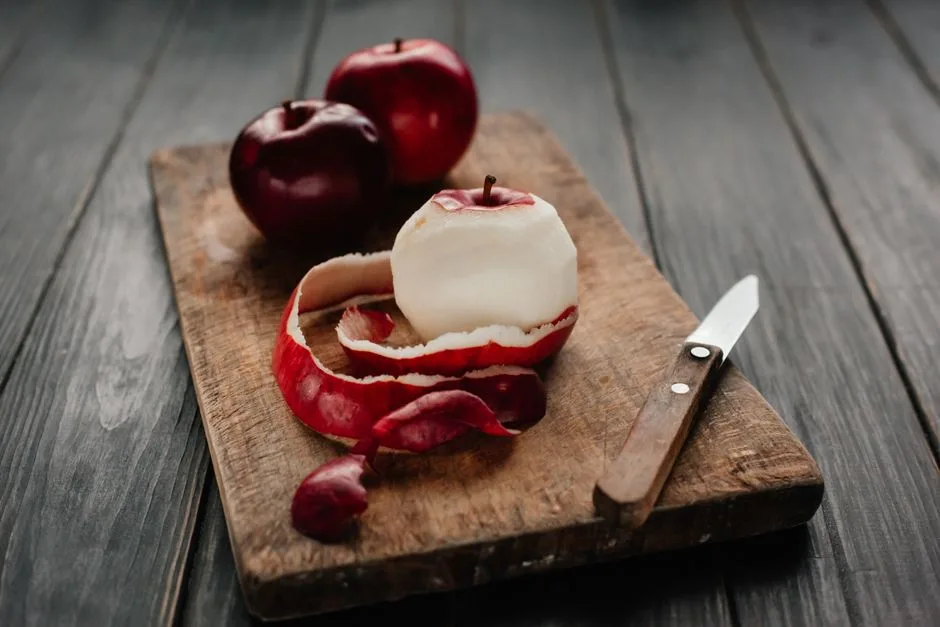
Ursolic acid is a waxy, pentacyclic triterpenoid compound found in the peels of apples.
It also occurs in rosemary, holy basil, cranberries, and prunes.
For centuries these plants were used in traditional remedies, but modern interest in ursolic acid centers on one specific area: skeletal muscle.
How is it supposed to work?
Muscle mass is a balance between protein synthesis and protein breakdown.
When people lose muscle, whether from aging, illness, or inactivity, that balance tips toward breakdown.
Ursolic acid appears to nudge that balance back, largely through effects on cell signaling pathways involved in muscle growth and repair.
- Activating SIRT1, a protein tied to cellular energy regulation and linked to reduced muscle wasting in cancer cachexia models[5]
- Influencing IL-17a signaling along a proposed gut-muscle axis in aging, diabetic animal models[2]
- Shifting gene expression patterns in skeletal muscle tissue toward growth and repair[4]
- Supporting mitochondrial and metabolic pathways relevant to exercise capacity[3]
These are mechanistic threads pulled from animal and cell studies, not confirmed pathways in humans.
Does ursolic acid actually build muscle?
The evidence so far comes almost entirely from animal models, not human trials.
In mouse models of cancer cachexia, a severe wasting syndrome, dietary ursolic acid supplementation preserved skeletal muscle mass and strength compared to untreated animals[1].
A separate cachexia model found ursolic acid alleviated muscle wasting and cancer related weight loss through activation of SIRT1[5].
In aging, diabetic mice, a model meant to mimic sarcopenia, the muscle loss common with aging, ursolic acid supplementation was linked to protected muscle tissue through effects on gut and muscle signaling[2].
A mouse model of peripheral neuropathy found that an ursolic acid based formulation reduced muscle atrophy and improved exercise performance[3].
Interestingly, one of the more real-world studies here was not in rodents at all. Older dogs with age-related muscle atrophy given ursolic acid showed favorable changes in muscle gene expression along with increased willingness to exercise and better exercise performance[4].
- Lean Body MassDPreliminary
Research may raise Lean Body Mass · strong agreement · 5 studies
View 5 studies on PubMed
- Ursolic Acid-Based Nutraceutical Mitigates Muscle Atrophy and Improves Exercise Performance in Mouse Model of Peripheral Neuropathy (2025)
- Ursolic acid attenuates sarcopenia through IL-17a-related gut-muscle axis in senile diabetic mice and myotube model (2025)
- Dietary supplementation with ursolic acid preserves skeletal muscle mass and strength in mouse models of cancer cachexia (2026)
- Ursolic Acid Alleviates Cancer Cachexia and Prevents Muscle Wasting via Activating SIRT1 (2023)
- Ursolic Acid Induces Beneficial Changes in Skeletal Muscle mRNA Expression and Increases Exercise Participation and Performance in Dogs with Age-Related Muscle Atrophy (2024)
Taken together, these five studies point in a consistent direction: preserved or increased lean body mass across several different models of muscle loss.
That consistency is why the effect earns a directional consensus in our database.
The evidence grade is still a D, though, because these are animal and companion-animal studies rather than randomized human trials, and sample sizes in this kind of research tend to be small.
Food and supplement sources
Ursolic acid concentrates in the peels and skins of certain fruits and herbs rather than the flesh.
- Apple peel, one of the richest natural sources
- Rosemary leaves and rosemary extract
- Holy basil (tulsi)
- Cranberries
- Prunes and plums
- Bilberries
Because the compound is concentrated in peels, whole apples eaten with the skin on contribute meaningfully more than peeled apples or apple juice.
Supplement versions are typically sold as standalone capsules or as part of muscle-support or apple peel extract blends, often alongside compounds like ellagic acid or quercetin.
How much do you need?
There is no established human dose for ursolic acid, since the studies behind its muscle effects were conducted in mice and dogs, not people.
Animal studies have used doses scaled to body weight that do not translate cleanly to a human supplement label, and formulations tested vary from purified ursolic acid to nutraceutical blends[3].
Anyone considering a supplement will find product labels vary widely in dose and form, reflecting how unsettled the human dosing question still is.
Is it safe?
Ursolic acid occurs naturally in commonly eaten foods, which is reassuring at food-level exposure.
Concentrated supplement doses have not been well studied for long-term safety in humans.
The available research so far has focused on animal models of disease, cancer cachexia, diabetes-related sarcopenia, and peripheral neuropathy, rather than on healthy people[1][2][3].
People with existing health conditions, or those taking other medications, should be especially cautious given how little human safety data exists.
Who might consider it?
Given the current evidence, interest in ursolic acid centers on situations involving muscle wasting rather than general fitness.
- Researchers studying cancer cachexia and other wasting conditions[1][5]
- Those interested in the biology of age-related muscle loss, or sarcopenia[2]
- People curious about compounds that may support muscle during neuropathy or metabolic disease[3]
- Veterinary researchers exploring options for aging companion animals[4]
For a healthy adult simply looking to build muscle through training and diet, protein intake, resistance exercise, and adequate calories remain far better supported strategies than ursolic acid supplementation.
Bottom line
Ursolic acid has a genuinely interesting and consistent story in animal research: across cancer cachexia, diabetic sarcopenia, neuropathy, and aging dog models, it tends to preserve or increase lean body mass[1][2][3][4][5].
That consistency is notable, but the evidence grade of D reflects real limits: no large human randomized trials yet exist.
Eating apples with the skin on is a reasonable, low-risk way to get some ursolic acid through diet.
Supplementing with concentrated ursolic acid for muscle building remains an open, unproven bet rather than an established strategy.
Frequently asked questions
Does ursolic acid build muscle in humans?
The strongest evidence so far comes from mice and dogs, not humans, so any muscle-building effect in people remains unconfirmed[1][4].
What foods contain ursolic acid?
Apple peel is the richest common source, along with rosemary, holy basil, cranberries, and prunes.
Is ursolic acid the same as apple cider vinegar?
No, ursolic acid is a compound concentrated in apple skins, while apple cider vinegar is a fermented liquid made from apple juice; they are distinct.
Sources
- Dietary supplementation with ursolic acid preserves skeletal muscle mass and strength in mouse models of cancer cachexia · PMID 42117587
- Ursolic acid attenuates sarcopenia through IL-17a-related gut-muscle axis in senile diabetic mice and myotube model · PMID 40294722
- Ursolic Acid-Based Nutraceutical Mitigates Muscle Atrophy and Improves Exercise Performance in Mouse Model of Peripheral Neuropathy · PMID 40508225
- Ursolic Acid Induces Beneficial Changes in Skeletal Muscle mRNA Expression and Increases Exercise Participation and Performance in Dogs with Age-Related Muscle Atrophy · PMID 38254356
- Ursolic Acid Alleviates Cancer Cachexia and Prevents Muscle Wasting via Activating SIRT1 · PMID 37190306