Does Microwaving Plastic Really Increase Chemical Leaching Into Food?
Key takeaways
- Heating plastic in the microwave can release tiny plastic particles and chemicals into food, especially with fat or acidic foods.[1]
- Chemicals like phthalates and bisphenols can act like hormones in the body and are linked to fertility and other health concerns.[7]
- Not all plastic reacts the same way, but any container that is cracked, scratched, or old is more likely to leach.[1]
- Simple swaps, like using glass or ceramic for reheating, can cut your exposure without much effort.
What does 'microwave safe' actually mean?
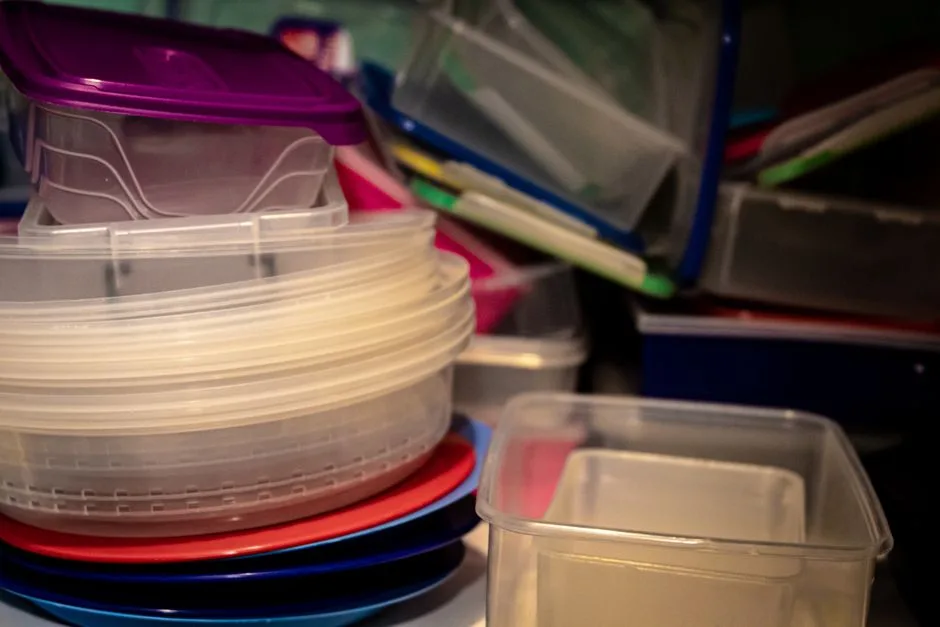
Plastic containers are everywhere in kitchens.
Many food storage containers, takeout boxes, and yogurt tubs are made of plastic.
Some of these are labeled 'microwave safe.'
That label mostly means the container will not melt or warp at normal microwave temperatures.
It does not always mean zero chemicals will move into your food.
Plastics are made from polymers, which are long chains of repeating molecules.
To make plastic flexible, clear, or heat resistant, manufacturers add smaller chemicals to the polymer mix.
These smaller chemicals are not always locked in place.
Heat, fat, and acidity can all help them break free and move into food.
What happens to plastic when you microwave it?
Heating plastic speeds up chemical reactions inside the material.
A 2023 lab study looked at polypropylene containers, a common type used for microwavable food, baby food, and takeout.[1]
Researchers found that microwaving these containers formed a brand new chemical substance that was not there before heating.[1]
They also measured a jump in the migration of polypropylene polymer fragments into a fatty food simulant.[1]
This means microwaving did not just release existing additives.[1]
It actually created new compounds through the heating process itself.[1]
Fat matters here because many plastic chemicals are fat soluble, meaning they dissolve more easily into oily or fatty foods.
Foods like leftover pasta with sauce, cheese, or fatty meats may pull more chemicals out of plastic than plain water would.
Repeated heating over time can also matter.
A separate study on denture plastics, which are also polymer based, found that long term microwaving changed the material's dimensions, color, and clarity over repeated cycles.[2]
This suggests plastic breaks down gradually with repeated heat exposure, not just in one use.[2]
Which chemicals are people worried about?
Two groups of chemicals get the most attention in plastic research.
- Phthalates, used to make plastic soft and flexible
- Bisphenols, like BPA, used to make hard, clear plastic
- Microplastics, tiny plastic fragments smaller than 5 millimeters
- Nanoplastics, even smaller fragments that can potentially cross cell barriers
Phthalates are known as endocrine disruptors, which means they can interfere with hormones in the body.
A 2023 study measured phthalate biomarkers in women in Jordan and looked at links to infertility outcomes.[7]
Higher phthalate exposure was associated with infertility in that study population.[7]
This does not prove plastic in food alone causes infertility, since phthalates come from many sources, including cosmetics and packaging.[7]
Still, it shows why researchers take phthalate exposure from any source seriously.
Microplastics are a newer concern and researchers are still building tools to measure how much we actually eat.
A 2024 study developed a dietary survey called the Dietary Plastics Score to estimate a person's daily plastic exposure from food and drink.[6]
This kind of tool suggests scientists now view plastic exposure as a measurable part of a normal diet, not a rare accident.[6]
Is plastic exposure only from microwaving?
Microwaving is not the only way plastic gets into food.
Everyday products can shed plastic even without heat.
- Plastic cutting boards, which shed tiny particles with each knife scrape
- Tea bags, some of which contain plastic sealing material even when they look like paper[4]
- Bottled water and packaged drinks
- Plastic wrap touching fatty or acidic foods
- Reheated takeout containers made of thin plastic
A study using spectral imaging found plastic components in several branded tea bags, showing plastic can hide in products people assume are natural.[4]
This means the microwave is just one entry point among many for plastic exposure.
Reducing microwave use of plastic helps, but it is one piece of a bigger picture.
What does the bigger picture on plastic waste tell us?
Plastic that ends up in the environment does not disappear.
It breaks into smaller and smaller pieces called microplastics.
Researchers are studying how microbes might help break down microplastics from sources like medical waste.[5]
Others are exploring materials like algae based charcoal, called biochar, to help filter plastic pollution out of water and soil.[3]
Scientists are also developing plant based packaging alternatives, such as one made from linseed mucilage, a gel found in flaxseed.[8]
These efforts show the food and packaging industry is actively looking for ways to reduce reliance on plastic.[8]
None of this means plastic will disappear from kitchens soon.
It does mean the science is taking plastic exposure, from the microwave and beyond, seriously.
What should you actually do?
You do not need to panic about every plastic container in your kitchen.
Small, consistent habits make the biggest difference over time.
- Reheat food in glass, ceramic, or other labeled microwave safe dishes instead of plastic
- Avoid microwaving plastic containers that are cracked, cloudy, warped, or scratched, since damaged plastic tends to leach more[1]
- Move fatty or oily leftovers, like sauces and cheesy dishes, to a non plastic dish before microwaving
- Skip plastic wrap touching food directly in the microwave, and use a paper towel or vented lid instead
- Do not reuse single use plastic containers, like takeout tubs or yogurt cups, for repeated microwave use
- Let hot food cool slightly before storing it in plastic containers in the fridge
- Choose loose leaf tea or paper only tea bags when possible[4]
- Replace an old, scratched plastic cutting board with wood or bamboo
None of these steps require throwing out every plastic item you own.
They simply reduce how often hot, fatty food touches plastic directly.
Who should be most careful?
Some groups may want to be extra mindful of plastic exposure.
- Pregnant people, since hormone disrupting chemicals may affect fetal development
- Infants and young children, who eat and drink more relative to their body weight
- People preparing baby food or infant formula in plastic containers
- Anyone reheating fatty or acidic leftovers frequently in old plastic containers
- People undergoing fertility treatment or with a history of fertility concerns[7]
For most healthy adults, occasional plastic use is unlikely to cause harm on its own.
The goal is lowering overall, repeated exposure over months and years, not eliminating every trace.
Put this to work in your own food log. Track it free with Ration →
Sources
- Cooking food in microwavable plastic containers: in situ formation of a new chemical substance and increased migration of polypropylene polymers · PMID 36924723
- Long-term microwaving of denture base materials: effects on dimensional, color and translucency stability · PMID 29898184
- Research advances on production and application of algal biochar in environmental remediation · PMID 38537803
- Spectral imaging for characterization and detection of plastic substances in branded teabags · PMID 34118538
- Microbial strategies for degradation of microplastics generated from COVID-19 healthcare waste · PMID 36179880
- Plastics in human diets: development and evaluation of the 24-h Dietary Recall - Plastic Exposure and the Dietary Plastics Score · PMID 39360279
- Screening for phthalates biomarkers and its potential role in infertility outcomes in Jordan · PMID 36593351
- Unveiling the potential of linseed mucilage, its health benefits, and applications in food packaging · PMID 38385008