Does Rosemary Oil Work as Well as Minoxidil for Thinning Hair?
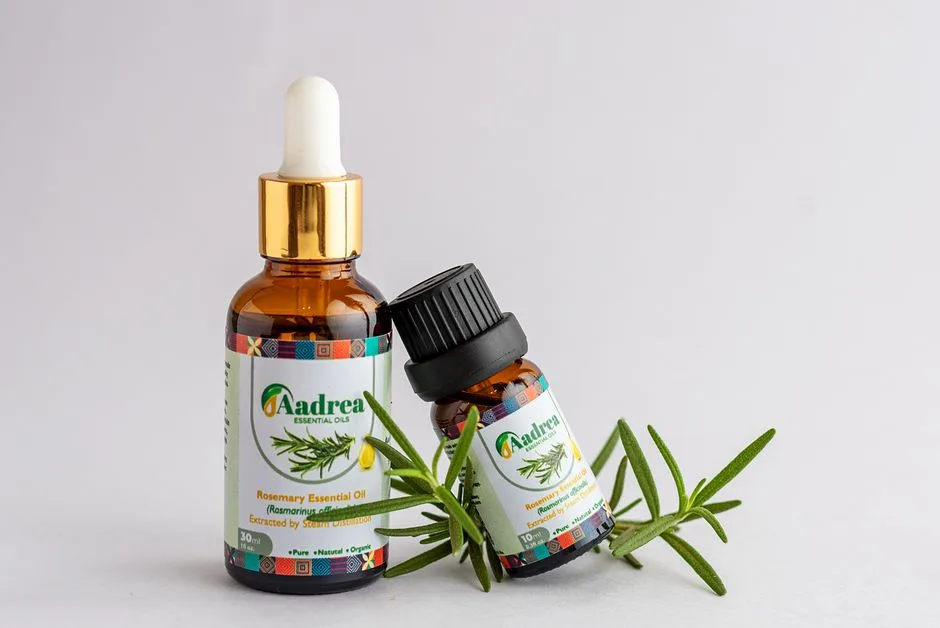
Key takeaways
- A small trial found rosemary oil worked about as well as 2 percent minoxidil after six months[19]
- Rosemary oil has not been well tested against 5 percent minoxidil, the stronger and more common formula
- Rosemary oil may cause less scalp irritation than minoxidil for some people
- Evidence for rosemary oil remains limited, so it should not be assumed to replace proven treatments
Does rosemary oil work as well as minoxidil?
The short answer is that rosemary oil may work about as well as low strength minoxidil in some studies, but the research is thin. Only a small number of trials have compared the two directly, and most of them are small.
One often cited trial found that rosemary oil produced hair count increases similar to 2 percent minoxidil after six months of daily use[19].
That sounds promising, but it does not mean rosemary oil beats or matches stronger minoxidil formulas, like the 5 percent version many people use for androgenetic alopecia.
Androgenetic alopecia is the medical term for pattern hair thinning. It is driven partly by a hormone called dihydrotestosterone, or DHT, which shrinks hair follicles over time.
What does the rosemary oil research actually show?
Most of what we know about rosemary oil for hair comes from a single well known trial and a handful of reviews[19]. That trial compared topical rosemary oil to 2 percent minoxidil in people with androgenetic alopecia over six months.
Both groups saw meaningful increases in hair count. The rosemary group reported less scalp itching than the minoxidil group, which is a notable side benefit[19].
This trial is encouraging, but it has real limits.
- It is a single study, not a body of repeated trials
- It compared rosemary oil to 2 percent minoxidil, not the stronger 5 percent formula most people use today
- The sample size was small, which makes results less reliable
- It did not include a true placebo group, which makes it hard to know how much of the effect was from the oil itself
A broader review of natural alternatives for androgenetic alopecia lists rosemary oil alongside other options like saw palmetto extract, but notes that high quality, large scale trials are still lacking across this whole category[19].
How might rosemary oil help hair growth?
Rosemary extract contains compounds thought to have antioxidant and anti-inflammatory properties.
Scalp inflammation is believed to play a role in some types of hair thinning, so calming that inflammation is one proposed mechanism[19].
Some researchers also suspect rosemary oil may improve blood flow to the scalp, similar to how minoxidil is thought to work. Minoxidil widens blood vessels, which may deliver more oxygen and nutrients to hair follicles.
It is worth noting that most of the detailed research on plant compounds and inflammation comes from other areas of the body, not the scalp specifically.
For example, compounds like baicalein[4][13][14] and rutin[9][15][17] have documented anti-inflammatory effects in skin, gut, and other tissue, which supports the general idea that plant extracts can calm inflammation.
But these studies were not done on scalp tissue or hair follicles.
This means the inflammation reducing theory behind rosemary oil is plausible, but not proven for hair specifically.
How does minoxidil compare?
Minoxidil has decades of research behind it and is an approved treatment for androgenetic alopecia in both 2 percent and 5 percent strengths.
It works by extending the growth phase of hair follicles and may improve scalp blood flow.
Minoxidil is not without downsides.
- Scalp itching, dryness, or irritation are common complaints
- Some people notice unwanted facial hair growth
- Results fade if use stops, since minoxidil does not cure the underlying cause
- It can take four to six months to see visible change
Rosemary oil's main appeal seems to be a gentler side effect profile, at least in the one trial that tested it head to head[19].
But since that comparison only used 2 percent minoxidil, it is not clear how rosemary oil would stack up against the stronger, more commonly prescribed 5 percent version.
Should you choose rosemary oil over minoxidil?
This is a personal decision that depends on your goals, how much hair thinning you have, and your tolerance for side effects. It is not a simple either or choice with one clear winner.
A few things are worth considering.
- Minoxidil has far more research behind it, including at higher strengths than rosemary oil has been tested at
- Rosemary oil may be a reasonable option for people who cannot tolerate minoxidil's irritation
- Some people use both together, though this combination has not been well studied
- Natural does not automatically mean equally effective, and more research is needed before rosemary oil can be called an equivalent treatment
Other natural extracts, like saw palmetto, are sometimes mentioned in the same conversation because they may interact with hormones linked to hair loss[8][19].
As with rosemary oil, the evidence for these alternatives is still developing.
Anyone dealing with noticeable hair thinning may want to talk with a dermatologist before choosing between these options, especially since underlying causes of hair loss can vary widely from person to person.
Frequently asked questions
Is rosemary oil FDA approved for hair loss?
No. Rosemary oil is not an approved drug for hair loss. Minoxidil is an approved over the counter treatment for androgenetic alopecia, while rosemary oil is sold as a cosmetic or supplement without the same regulatory review.
How long does it take to see results from rosemary oil?
In the trial that tested it, results were measured after six months of daily use[19]. Hair growth is a slow process in general, so most treatments, natural or otherwise, need several months before changes become visible.
Can you use rosemary oil and minoxidil together?
Some people do combine them, but this combination has not been studied in trials. Anyone considering mixing treatments should talk with a healthcare provider first, since interactions and skin irritation are possible.
Put this to work in your own food log. Track it free with Ration →
Sources
- Anti-inflammatory and antioxidant effects of baicalein: targeting Nrf2, and NFĸB in neurodegenerative disease · PMID 40014253
- Saw Palmetto Extract Ameliorates Benign Prostatic Hyperplasia by Regulating 5α-Reductase and Apoptosis In Vitro and In Vivo · PMID 40395126
- Influence of rutin on lipopolysaccharide-induced inflammation, oxidative stress, and autophagy in bovine mammary epithelial cells · PMID 40685133
- Baicalin and baicalein in modulating tumor microenvironment for cancer treatment: A comprehensive review with future perspectives · PMID 38061594
- Therapeutic efficacy and anti-inflammatory mechanism of baicalein on endometriosis progression in patient-derived cell line and mouse model · PMID 38824821
- Rutin Promotes Wound Healing by Inhibiting Oxidative Stress and Inflammation in Metformin-Controlled Diabetes in Rats · PMID 39100330
- Rutin Ameliorates Inflammation and Oxidative Stress in Ulcerative Colitis by Inhibiting NLRP3 Inflammasome Signaling Pathway · PMID 39138797
- An Overview of Commonly Used Natural Alternatives for the Treatment of Androgenetic Alopecia, with Special Emphasis on Rosemary Oil · PMID 39524109