Boswellia Serrata: Benefits, Evidence, and Dosage
Botanical / supplement
Track the foods that fit your goals. Track it free with Ration →
Key takeaways
- Boswellia serrata is a tree resin extract traditionally used in Ayurvedic medicine for inflammatory conditions.
- Its boswellic acids appear to block enzymes involved in inflammatory signaling, and human trials show it can lower C-reactive protein.
- The strongest evidence is for knee osteoarthritis, where it may ease pain and slow cartilage breakdown.
- It is generally well tolerated, though gut upset is the most common complaint.
What is Boswellia serrata?
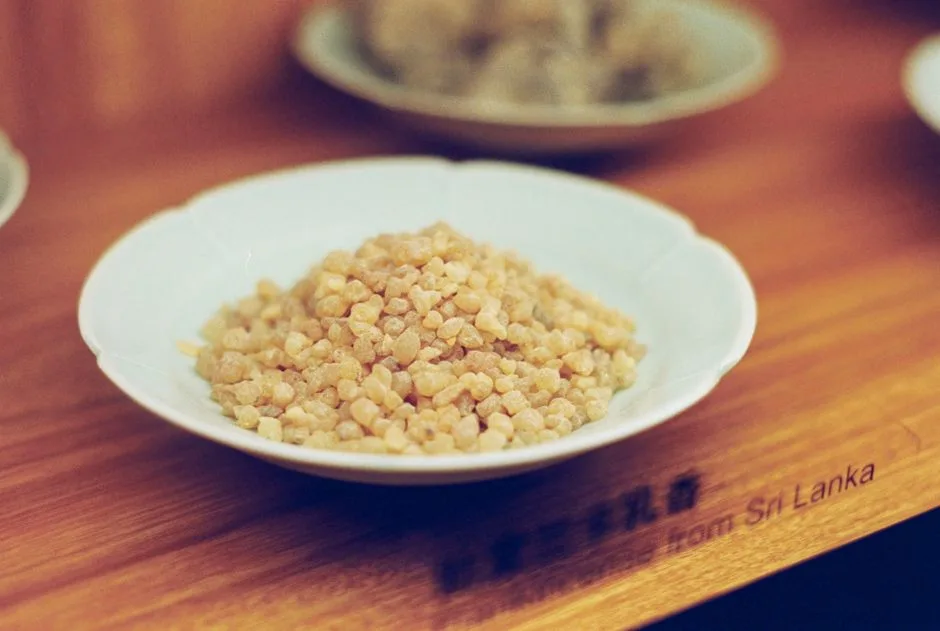
Boswellia serrata is a tree native to India, the Middle East, and parts of Africa. Its resin, sometimes called Indian frankincense, has been used in Ayurvedic medicine for centuries to treat joint pain and inflammatory conditions.
Modern supplements extract and concentrate the resin's active compounds, known as boswellic acids. These are the components researchers believe drive most of the plant's biological effects.
Today Boswellia serrata is sold as a standalone supplement and is also combined with other botanicals like turmeric or Apium graveolens (celery seed extract) in joint health formulas.
How does it work?
Boswellic acids are thought to inhibit 5-lipoxygenase, an enzyme that helps produce leukotrienes, which are inflammatory signaling molecules involved in conditions like arthritis and inflammatory bowel disease[6][7].
Laboratory research also suggests boswellia extracts can reduce inflammatory and fibrotic activity in human intestinal epithelial cells and fibroblasts, hinting at a broader anti-inflammatory mechanism beyond joints[4].
In animal models, boswellia extract applied to oral ulcers promoted tissue healing and helped resolve local inflammation, another sign that its effects extend to soft tissue repair[1].
Does the evidence hold up?
The most consistent human finding across trials is a reduction in C-reactive protein (CRP), a standard blood marker of systemic inflammation.
- C-Reactive ProteinAHuman trials
Research may lower C-Reactive Protein · strong agreement · 7 studies
View 5 studies on PubMed
- Efficacy and Safety of Boswellia serrata and Apium graveolens L. Extract Against Knee Osteoarthritis and Cartilage Degeneration: A Randomized, Double-blind, Multicenter, Placebo-Controlled Clinical Trial (2025)
- Phytomedicine in Joint Disorders (2017)
- Mitigating Traumatic Brain Injury: A Narrative Review of Supplementation and Dietary Protocols (2024)
- Boswellia Extract Promotes Healing and Resolving Inflammation in Oral Ulcers of Rat (2025)
- Inhibition of intestinal inflammation and fibrosis by Scutellaria Baicalensis georgi and Boswellia serrata in human epithelial cells and fibroblasts (2024)
That CRP-lowering effect has been graded A across seven sources in our database, meaning it is one of the more reliably observed effects of this supplement.
The clinical trial evidence is strongest for knee osteoarthritis. A randomized, double-blind, placebo-controlled multicenter trial combining Boswellia serrata with Apium graveolens found improvements in knee pain and reduced markers of cartilage degeneration compared to placebo[2].
Older review literature on phytomedicines for joint disorders similarly points to boswellia extracts easing pain and improving function in osteoarthritis and rheumatoid arthritis, though many of these earlier studies were small[5].
There is also early interest in boswellia as part of broader supplementation protocols for recovery after traumatic brain injury, based on its anti-inflammatory profile, though this remains a narrative discussion rather than a body of controlled trials[3].
Foundational pharmacology work from the late 1990s and early 2010s laid out boswellia's anti-inflammatory mechanisms and set the stage for the clinical trials that followed[6][7].
What forms and doses are used?
Boswellia serrata supplements are typically standardized to a percentage of boswellic acids, often in the range of 30 to 65 percent, since raw resin content varies.
- Capsules or tablets of standardized resin extract, the most common form in clinical trials
- Combination joint formulas pairing boswellia with turmeric, curcumin, or Apium graveolens extract
- Topical creams or gels marketed for localized joint or skin discomfort
- Raw resin or powder, used traditionally but far less standardized
Clinical trials investigating joint health have generally used daily doses in the range of a few hundred milligrams of standardized extract, though exact amounts vary by product and boswellic acid concentration[2][5].
Because standardization differs so much between brands, the dose on a label does not always translate directly to the doses used in research.
Is it safe?
Boswellia serrata is generally considered well tolerated in the doses used in clinical trials.
- Mild gastrointestinal upset, including nausea, diarrhea, or stomach discomfort, is the most commonly reported side effect
- Allergic reactions are possible, particularly in people sensitive to other resins or plants
- Long-term safety data beyond several months of use is still limited
- Interactions with anti-inflammatory medications or blood thinners have not been thoroughly studied in humans
People who are pregnant, breastfeeding, or managing chronic health conditions should be especially cautious, since safety data for these groups is sparse.
Who might consider it?
- People with knee osteoarthritis looking for an add-on option alongside standard care[2][5]
- Those interested in supplements that may help lower inflammatory markers like CRP
- People exploring options for inflammatory gut conditions, based on early cell-based research[4]
- Anyone researching adjunct approaches to inflammation-related recovery, such as after injury[3]
Boswellia is not a substitute for prescribed arthritis or inflammatory bowel disease treatment, and the research so far supports it as a complementary option at best, not a replacement.
Bottom line
Boswellia serrata has one of the more consistent evidence bases among joint-health botanicals, particularly for lowering CRP and easing knee osteoarthritis symptoms[2][5][6].
Its effects on other conditions, from gut inflammation to brain injury recovery, remain promising but early, resting mostly on lab and animal studies rather than large human trials[1][3][4].
For people with joint pain who tolerate it well, it is a reasonably well-studied option to discuss with a healthcare provider alongside other treatments.
Frequently asked questions
Does Boswellia serrata reduce inflammation markers?
Yes, across multiple studies it consistently lowers C-reactive protein, a common marker of systemic inflammation, earning a grade A consensus in our database.
Can Boswellia serrata help with arthritis?
Clinical trials, including a randomized placebo-controlled study combining it with Apium graveolens, show improvements in knee osteoarthritis pain and cartilage markers[2][5].
What are the side effects of Boswellia serrata?
The most common issue is mild digestive upset, such as nausea or diarrhea; serious side effects appear uncommon in trials to date.
Sources
- Boswellia Extract Promotes Healing and Resolving Inflammation in Oral Ulcers of Rat · PMID 39871413
- Efficacy and Safety of Boswellia serrata and Apium graveolens L. Extract Against Knee Osteoarthritis and Cartilage Degeneration: A Randomized, Double-blind, Multicenter, Placebo-Controlled Clinical Trial · PMID 39875757
- Mitigating Traumatic Brain Injury: A Narrative Review of Supplementation and Dietary Protocols · PMID 39125311
- Inhibition of intestinal inflammation and fibrosis by Scutellaria Baicalensis georgi and Boswellia serrata in human epithelial cells and fibroblasts · PMID 39377749
- Phytomedicine in Joint Disorders · PMID 28275210
- Boswellia serrata, a potential antiinflammatory agent: an overview · PMID 22457547
- Boswellia serrata · PMID 9734240