Are Broccoli Sprouts Riskier to Eat Raw Than Mature Broccoli?
Key takeaways
- Raw sprouts grow in warm, wet conditions that favor bacterial growth, unlike field-grown mature broccoli
- Health agencies specifically warn children, older adults, pregnant people, and those with weak immune systems about raw sprouts
- Cooking sprouts lowers the infection risk but may also reduce some of their sulforaphane-related compounds
- None of the studies here test food safety directly, they focus on sulforaphane and glucoraphanin, the compounds that make sprouts nutritionally interesting
Are raw broccoli sprouts riskier than mature broccoli?
Yes, raw broccoli sprouts carry a different and generally higher food safety risk than mature broccoli. This is not about the plant itself.
It is about how sprouts are grown.
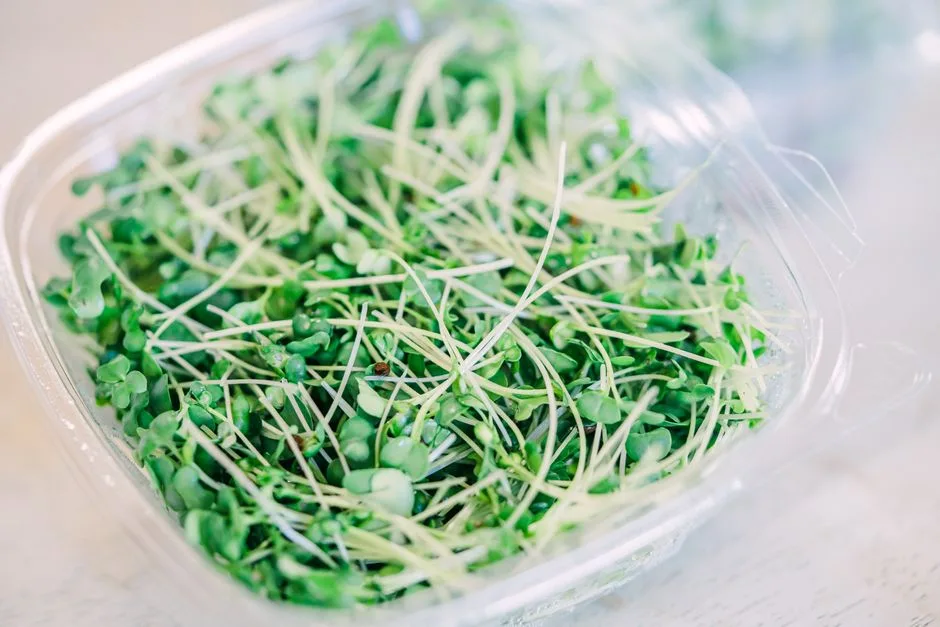
Sprouts grow in warm, humid conditions for several days. Seeds sit in water and sit close together.
Bacteria like Salmonella, E. coli, and Listeria thrive in exactly these conditions.
Mature broccoli grows in a field over months, gets rinsed, and often gets cooked before eating. That gives fewer chances for bacteria to multiply to dangerous levels.
Why are sprouts more prone to contamination?
Seeds can carry bacteria on their surface before sprouting even begins. Farmers cannot always fully sanitize a seed without harming its ability to germinate.
Once soaked in water and kept warm, any bacteria present multiply fast. A small number of contaminated seeds can spread bacteria through an entire batch.
- Warm temperatures, usually 68 to 86°F, speed bacterial growth
- High humidity keeps conditions favorable for pathogens
- Sprouts are eaten whole, root and all, with no peel or outer layer removed
- Washing sprouts at home does not reliably remove bacteria embedded in the tissue
Mature broccoli has a tougher outer surface and is usually cooked, which kills most bacteria. This is the main structural reason its risk profile looks different.
Who should be more careful with raw sprouts?
Public health guidance generally singles out a few groups for extra caution around raw sprouts of any kind, including broccoli, alfalfa, and clover sprouts.
- Young children
- Older adults
- Pregnant people
- People with weakened immune systems, such as those undergoing chemotherapy or organ transplant
These groups face a higher chance of severe illness if exposed to Salmonella or E. coli. This is a general food safety principle, not something tested in the sulforaphane research cited here.
Does cooking reduce the benefits people seek from sprouts?
People eat broccoli sprouts mainly for glucoraphanin, a compound that converts into sulforaphane. This conversion depends on an enzyme called myrosinase, which sits in plant cells.
Sulforaphane has been studied for its role in activating a cellular pathway called Nrf2, which helps cells manage oxidative stress.[8] Research has looked at this pathway in relation to chronic kidney disease[2], non-alcoholic fatty liver disease[5], obesity-related inflammation[7], and cancer biology[6][10].
Myrosinase is heat sensitive.
Cooking, especially boiling, can reduce the amount of active enzyme available, which may lower how much sulforaphane the body ends up absorbing.[4][9]
This creates a real tradeoff.
Raw sprouts may deliver more active glucoraphanin conversion, but they also carry more bacterial risk than cooked sprouts or cooked mature broccoli.
Research on sulforaphane dosing notes that the source of the compound, whether from broccoli, broccoli sprouts, or supplements, and the amount consumed both affect outcomes.[4] None of this research measures food safety, only the compound's fate once eaten.
Can you lower the risk without losing all the benefit?
A few practical steps can reduce, though not eliminate, the bacterial risk of raw sprouts.
- Buy sprouts that have been kept refrigerated in the store
- Check for a fresh smell and crisp texture, and avoid sprouts that look slimy or smell sour
- Rinse sprouts under running water, though this does not guarantee removal of bacteria
- Store sprouts in the refrigerator and eat them within the timeframe on the package
- Cook sprouts lightly, such as a quick saute, if you are in a higher risk group
Light cooking, such as steaming for a short time, may preserve some myrosinase activity while still reducing bacterial load, though this specific tradeoff has not been directly measured in the studies cited here.
Most of the available research focuses on sulforaphane's biological effects[1][3][11] rather than on food safety outcomes of raw versus cooked sprouts.
Frequently asked questions
Are broccoli sprouts more nutritious than mature broccoli?
Sprouts contain a more concentrated amount of glucoraphanin, the precursor to sulforaphane, packed into a small amount of food. This is a nutrient density question, separate from the food safety question of eating them raw.
Does washing broccoli sprouts make them safe to eat raw?
Washing can remove some surface debris, but it does not reliably eliminate bacteria that may be embedded in the sprout tissue. This is why sprouts carry a different risk profile than a rinsed head of mature broccoli.
Is cooked broccoli safer than cooked broccoli sprouts?
Both are generally considered lower risk than eating either one raw, since cooking kills most bacteria. The research here does not compare cooked sprouts against cooked mature broccoli directly for safety, only for sulforaphane content differences.
Put this to work in your own food log. Track it free with Ration →
Sources
- Exploring sulforaphane as neurotherapeutic: targeting Nrf2-Keap & Nf-Kb pathway crosstalk in ASD · PMID 37249861
- Eat Your Broccoli: Oxidative Stress, NRF2, and Sulforaphane in Chronic Kidney Disease · PMID 33477669
- Emerging promise of sulforaphane-mediated Nrf2 signaling cascade against neurological disorders · PMID 31784171
- Broccoli or Sulforaphane: Is It the Source or Dose That Matters? · PMID 31590459
- Impact of Glucoraphanin-Mediated Activation of Nrf2 on Non-Alcoholic Fatty Liver Disease with a Focus on Mitochondrial Dysfunction · PMID 31775341
- Nrf2 targeting by sulforaphane: A potential therapy for cancer treatment · PMID 28001083
- Glucoraphanin: a broccoli sprout extract that ameliorates obesity-induced inflammation and insulin resistance · PMID 29898626
- KEAP1 and Done? Targeting the NRF2 Pathway with Sulforaphane · PMID 29242678
- Sulforaphane and Other Nutrigenomic Nrf2 Activators: Can the Clinician's Expectation Be Matched by the Reality? · PMID 26881038
- Frugal chemoprevention: targeting Nrf2 with foods rich in sulforaphane · PMID 26970133
- Sulforaphane: translational research from laboratory bench to clinic · PMID 24147970