Arsenic in Rice: How Much Is Dangerous and Which Types Have Less
Key takeaways
What is arsenic and why is it in rice?
Arsenic is a natural element found in soil, water, and rock.
It comes in two main forms, organic and inorganic.
Inorganic arsenic is the more harmful form for humans.
Rice takes up more arsenic than other grains because it grows in flooded fields[2].
The flooded soil lets arsenic dissolve more easily into the water the plant absorbs.
This means rice can carry more arsenic than wheat, oats, or corn grown in the same region[2].
Scientists have also found a gene called ScACR3 that can be added to rice plants to help push arsenic out of the roots.
In lab studies, rice with this gene built up less arsenic in the grain, which could lead to lower-arsenic rice varieties in the future[11].
Why does this matter for health?
Rice is a staple food for billions of people around the world.
Many babies also eat rice cereal as one of their first solid foods[3].
Because rice is eaten so often, even small amounts of arsenic can add up over time.
Long-term exposure to inorganic arsenic has been linked to a higher risk of cardiovascular disease[1].
A large US study found that higher rice intake was linked to signs of subclinical cardiovascular disease, meaning early changes that show up on tests before symptoms appear[6].
Other research links chronic arsenic exposure to skin lesions, certain cancers, and developmental issues in children[7][8].
Regions with naturally high arsenic in groundwater, such as parts of Uruguay and the Middle East, face extra exposure from both water and food[7][8].
How does arsenic get into your body from rice?
Arsenic in soil and irrigation water moves into the rice plant through its roots.
It then collects in the grain itself, not just the outer husk.
Milling removes the bran layer to make white rice, which also removes some arsenic[2].
This is one reason brown rice often has higher arsenic levels than white rice[5].
Cooking method also matters, because rice absorbs the water it is cooked in.
Cooking rice in a large amount of water and draining the extra water can reduce arsenic content[5].
A review of how rice is handled from harvest to the plate found that the amount of arsenic your body actually absorbs, called bioavailability, depends on the cooking water, the rice variety, and even how the rice is stored before cooking[10].
What does the research show?
A review of rice-growing regions found that inorganic arsenic levels vary widely depending on soil type, irrigation water, and rice variety[2].
A risk assessment among adolescents in China estimated that rice was a major source of daily arsenic intake, especially for people who eat rice at most meals[4].
An Australian study measured arsenic in rice-based infant foods and found levels high enough to raise concern for regular use in baby diets[3].
The MESA study, a large cohort of US adults, linked higher rice consumption with markers of early cardiovascular disease[6].
A broader review of arsenic and cardiovascular disease found consistent associations across many types of exposure, not just rice[1].
Reviews from the Middle East and Uruguay show that dietary arsenic exposure is a global concern, not limited to one region[7][8].
Together, these studies suggest that arsenic exposure from rice is measurable and worth managing, though it does not mean rice must be avoided entirely.
Which types of rice have less arsenic?
Arsenic levels can vary a lot depending on where and how the rice was grown.
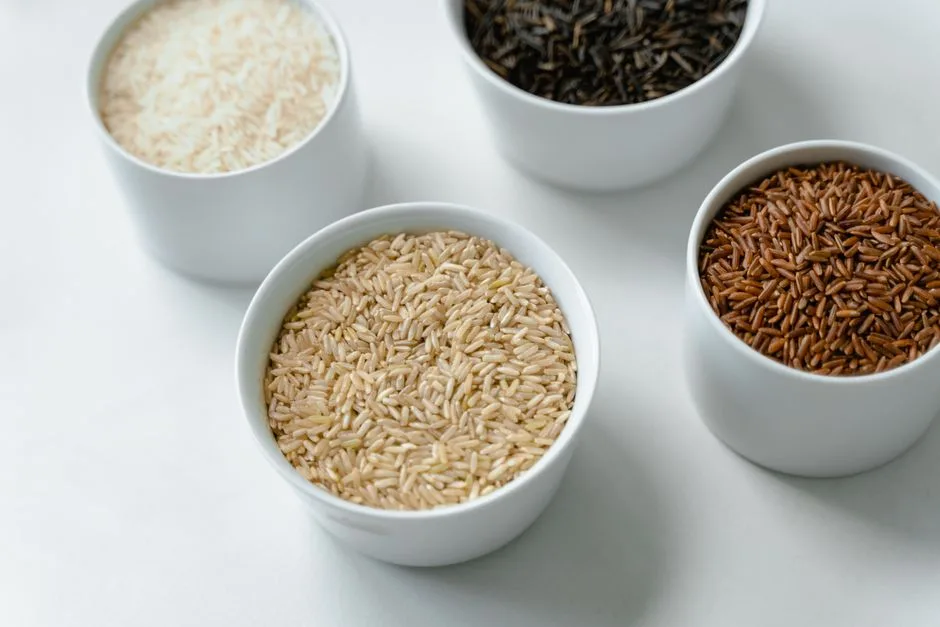
- White rice generally has less arsenic than brown rice, since milling removes the bran layer[5].
- Basmati rice, especially from India and Pakistan, tends to have lower arsenic levels than other varieties[2].
- Rice grown in California often has less arsenic than rice grown in some southern US states, due to differences in soil history[2].
- Sushi rice and jasmine rice fall in the middle range in most testing.
- Rice grown in regions with high natural arsenic in groundwater, such as some parts of South Asia, tends to have higher levels[4].
What can you do to lower your exposure?
You do not need to cut out rice completely to lower your risk.
- Rinse rice well before cooking to wash away some surface arsenic.
- Cook rice in extra water, like pasta, using a ratio of about 6 to 10 cups of water per cup of rice, then drain the excess[5].
- Choose white basmati rice more often, since it tends to test lower for arsenic[2].
- Vary your grains by rotating in quinoa, oats, barley, or farro instead of eating rice every day.
- Limit how often infants and young children eat rice cereal as their main first food[3].
- If you drink well water, consider having it tested, since water is another source of arsenic exposure[8].
A study comparing cooking methods found that cooking rice in extra water and draining it, similar to boiling pasta, removed more arsenic than the common method of absorbing all the water, though this also lowered some minerals in the rice[9].
Farming practices can also change how much arsenic ends up in the rice you buy.
One study found that inoculating rice plants with a soil bacterium called Achromobacter xylosoxidans GD03 helped oxidize arsenite in the soil, which lowered arsenic buildup in the grain while also improving grain yield[12].
Separate research shows that water management during growing matters too, since keeping fields less flooded and adding sulfur to the soil reduced how much arsenic moved from soil into the rice plant[13].
These farming changes are outside a shopper's control, but they suggest arsenic levels in rice may improve over time as growers adopt them.
Who should pay closer attention to this?
Some groups may benefit more from paying attention to arsenic in rice.
- Infants and toddlers, since their bodies are smaller and rice cereal is often a big part of early diets[3].
- People who eat rice at nearly every meal, such as in some Asian diets, where daily intake adds up[4].
- People with existing heart disease risk factors, given the link between arsenic and cardiovascular disease[1][6].
- People living in regions with high natural arsenic in groundwater, such as parts of Uruguay or the Middle East[7][8].
For most people who eat a varied diet with moderate rice intake, the overall risk appears manageable with simple precautions.
Frequently asked questions
Is brown rice always worse than white rice for arsenic?
Brown rice tends to have more arsenic than white rice because the bran layer, which is removed during milling, holds more of it[5]. This does not cancel out the fiber and nutrient benefits of brown rice, but it is worth knowing if you eat rice often.
Can washing rice remove all the arsenic?
Rinsing and cooking rice in extra water can lower arsenic levels somewhat, but it does not remove all of it[5]. Choosing lower-arsenic varieties and eating a variety of grains still helps.
Is it safe to give babies rice cereal?
Rice cereal in moderation is common for infants, but studies have found measurable arsenic in some rice-based infant foods[3]. Many pediatric guidelines suggest offering a variety of grains rather than relying on rice cereal alone.
Put this to work in your own food log. Track it free with Ration →
Sources
- Association Between Arsenic Exposure and Cardiovascular Disease · PMID 32941260
- Inorganic arsenic toxicity and alleviation strategies in rice · PMID 33418521
- Arsenic Concentrations and Dietary Exposure in Rice-Based Infant Food in Australia · PMID 31936289
- A Comprehensive Review of Arsenic Exposure and Risk from Rice and a Risk Assessment among a Cohort of Adolescents in Kunming, China · PMID 30297612
- Arsenic in cooked rice foods: Assessing health risks and mitigation options · PMID 30986740
- Rice Intake, Arsenic Exposure, and Subclinical Cardiovascular Disease Among US Adults in MESA · PMID 32067593
- Arsenic Exposure through Dietary Intake and Associated Health Hazards in the Middle East · PMID 35631276
- An overview of environmental arsenic issues and exposure risks in Uruguay · PMID 31185406
- A comparison of the effects of two cooking methods on arsenic species and nutrient elements in rice · PMID 38176556
- Rice grain arsenic and nutritional content during post harvesting to cooking: A review on arsenic bioavailability and bioaccessibility in humans · PMID 35337583
- Expressing ScACR3 in rice enhanced arsenite efflux and reduced arsenic accumulation in rice grains · PMID 22107880
- Improved grain yield and lowered arsenic accumulation in rice plants by inoculation with arsenite-oxidizing Achromobacter xylosoxidans GD03 · PMID 32889310
- Arsenic transfer and accumulation in the soil-rice system with sulfur application and different water managements · PMID 33143891