Cordyceps Mushrooms: Health Benefits, Uses, and What the Science Says
Key takeaways
- Cordyceps is a type of fungus long used in traditional Chinese medicine, and Cordyceps militaris is the most studied cultivated species today.
- Its polysaccharides, a type of natural carbohydrate, appear to support immune function and antioxidant activity in lab and animal studies[1][2].
- Human clinical evidence is still limited, so most strong claims come from cell and animal research, not large trials in people.
- If you try cordyceps supplements, quality and dosing vary a lot between brands, so talk with a doctor first.
What is cordyceps?
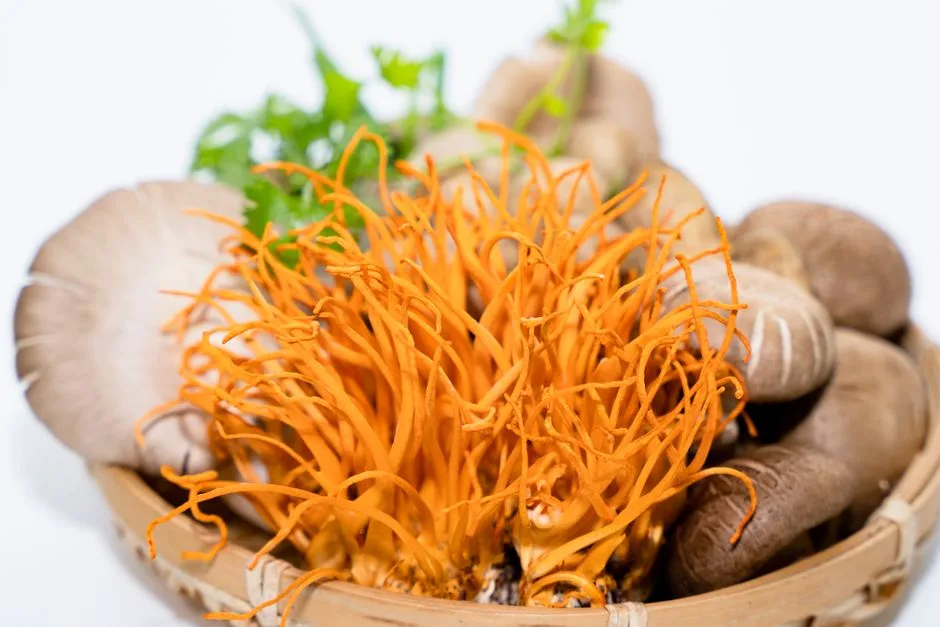
Cordyceps is a genus of fungus that grows on insects in the wild.
For centuries, people in China and Tibet used wild cordyceps as a tonic for energy and vitality.
Wild cordyceps is rare and expensive, so most supplements today use a lab-grown species called Cordyceps militaris.
Cordyceps militaris is grown on grains or liquid broth in a lab, which makes it far cheaper and easier to study than wild cordyceps[1].
Two main types of compounds get most of the research attention.
- Cordycepin, a small molecule similar to a building block of DNA
- Polysaccharides, large chains of sugar molecules found in the mushroom's cell walls
This article focuses mainly on cordyceps polysaccharides, since a recent scientific review gathered the latest evidence on how they are made and what they may do in the body[1].
Why does cordyceps matter for health?
Cordyceps is marketed for energy, exercise performance, immune support, and healthy aging.
Interest in it has grown alongside interest in other functional mushrooms, like reishi, chaga, and lion's mane.
Researchers are drawn to cordyceps polysaccharides because they seem to interact with the immune system and with gut bacteria, two systems tied to many aspects of health[1].
A 2020 review of cordyceps research found consistent immune-modulating effects across its total extracts, polysaccharides, and cordycepin in lab and animal studies[2].
This makes cordyceps a useful case study in how a traditional remedy gets tested by modern nutrition science.
How might cordyceps work in the body?
Cordyceps polysaccharides are large molecules, so they are not absorbed into the blood the way sugar or fat is.
Instead, scientists think much of their activity happens in the gut, where they may feed beneficial bacteria and interact with immune cells lining the intestine[1].
The exact effect of a polysaccharide seems to depend on its structure.
Its molecular weight, its type of sugar building blocks, and how branched its chains are all seem to change how strongly it affects immune cells[1].
For example, one study isolated a specific acidic polysaccharide from Cordyceps militaris and found it activated immune cells called macrophages in lab tests[3].
Another study looked at how the alcohol concentration used during extraction changes the polysaccharide's structure and its activity against tumor cells in lab models[4].
This structure-activity relationship is a key reason why not all cordyceps products are alike, even if the label just says 'polysaccharides.'
What does the research show?
Most of the strongest evidence for cordyceps polysaccharides comes from cell studies and animal studies, not human trials.
In mice, cordyceps polysaccharides boosted markers of immune function and antioxidant activity compared with untreated animals[5].
In another mouse study, animals with a suppressed immune system showed improved immunity and antioxidant status after receiving cordyceps polysaccharides[9].
In poultry research, adding cordyceps polysaccharides to chicken feed improved how well the birds responded to a Newcastle disease vaccine[6].
Animal studies have also looked at gut and inflammatory conditions.
One study found that cordyceps polysaccharides eased signs of ulcerative colitis in a zebrafish model, and that the drying method used on the mushroom changed the polysaccharide's structure and effectiveness[7].
A separate study combined cordyceps polysaccharides with sesame oil in a nanoemulsion and tested it against candidal vaginitis in mice, finding it reduced fungal infection markers[8].
Together, these studies point to antioxidant, immune-supporting, anti-inflammatory, lipid-lowering, and blood sugar related activities in lab and animal models[1].
Antioxidants are substances that help neutralize unstable molecules called free radicals, which can damage cells over time.
Still, the most recent comprehensive review is clear that human clinical trials on cordyceps polysaccharides are lacking, and the compounds' absorption and safety in people over the long term are not well understood[1].
That gap matters, because a promising result in a mouse or a petri dish does not always hold up the same way in humans.
What to do if you want to try cordyceps
If you are curious about cordyceps, a few practical steps can help you use it more safely.
- Talk with a doctor first, especially if you take medications for blood sugar, blood clotting, or immune conditions
- Look for products that list Cordyceps militaris specifically, since this is the most studied cultivated species
- Choose brands that show third-party testing for purity and contaminants
- Start with the lowest labeled dose to see how your body responds
- Avoid combining cordyceps with other immune-stimulating supplements without medical guidance
- Treat it as a complement to a balanced diet, regular exercise, and sleep, not a replacement for any of them
Cordyceps is sold as capsules, powders, teas, and extracts, and dosing is not standardized across brands.
Because of this, it is hard to compare products or to know if a dose used in an animal study translates to a human serving.
Who might cordyceps help, and who should be cautious?
People most curious about cordyceps tend to be athletes, older adults, and those looking for general immune support.
Animal research suggests possible benefits for immune function and antioxidant status, which is why these groups are drawn to it[5][9].
However, people with autoimmune conditions should be especially cautious, since substances that stimulate the immune system could theoretically worsen these conditions.
People who are pregnant, breastfeeding, or scheduled for surgery should also check with a doctor, since cordyceps may affect bleeding risk or immune activity.
Children generally should not be given cordyceps supplements without pediatric guidance, since safety data in this group is very limited.
Is cordyceps safe?
Short-term animal studies have not raised major safety red flags for cordyceps polysaccharides[1].
But the same 2026 review that summarized this evidence points out that long-term safety data in humans is still missing[1].
Researchers also do not fully understand how much of an oral dose of cordyceps polysaccharide actually gets absorbed or how it is processed by the body, a concept called bioavailability[1].
Without this pharmacokinetic data, meaning data on how a substance moves through and is used by the body, it is hard to set a truly evidence-based human dose.
This is a common stage for a traditional remedy to be in as scientists work to translate old use into modern clinical guidance.
Frequently asked questions
Is cordyceps the same as other medicinal mushrooms?
No, cordyceps is its own genus of fungus, distinct from mushrooms like reishi, chaga, or lion's mane, though they are often grouped together in functional food products.
Can cordyceps improve exercise performance?
Some small studies suggest possible effects on energy metabolism, but the clearest evidence so far is for immune and antioxidant activity in lab and animal models, not proven performance gains in people[1][2].
Does cordyceps interact with medications?
It may affect blood sugar, blood clotting, and immune activity, so anyone on related medications should check with a doctor before trying it.
Put this to work in your own food log. Track it free with Ration →
Sources
- Cordyceps militaris polysaccharides: extraction, structure-activity relationships and functional applications · PMID 42521464
- Trends in the Immunomodulatory Effects of Cordyceps militaris: Total Extracts, Polysaccharides and Cordycepin · PMID 33328984
- Isolation and immune activity of a new acidic Cordyceps militaris exopolysaccharide · PMID 34813790
- Structural characteristics and anti-tumor activity of alcohol-precipitated polysaccharides from Cordyceps militaris under different ethanol concentrations · PMID 39151863
- Immunomodulatory and antioxidative activity of Cordyceps militaris polysaccharides in mice · PMID 26853825
- Cordyceps militaris polysaccharides can improve the immune efficacy of Newcastle disease vaccine in chicken · PMID 23587997
- Elucidation of physicochemical properties of polysaccharides extracted from Cordyceps militaris fruiting bodies with different drying treatments and their effects on ulcerative colitis in zebrafish · PMID 36118767
- Preparation and evaluation of Cordyceps militaris polysaccharide- and sesame oil-loaded nanoemulsion for the treatment of candidal vaginitis in mice · PMID 37716120
- Cordyceps militaris polysaccharides can enhance the immunity and antioxidation activity in immunosuppressed mice · PMID 24750744