Is Honey Actually Better Than Sugar?
Key takeaways
- Honey has a similar sugar and calorie profile to table sugar, but it contains small amounts of antioxidants that sugar lacks.
- Honey is mostly fructose and glucose, so it still raises blood sugar and should be counted like any added sugar.
- The antioxidant compounds in honey have not been tested well enough in humans to call honey a health food.
- Swapping sugar for honey may offer tiny extra benefits, but the amount you'd need to eat would add up in calories and sugar fast.
Honey is not clearly better than sugar for your health. It has a few more antioxidants and trace nutrients than table sugar, but it is still mostly sugar.
Both honey and sugar raise blood glucose and add calories with little else to offer your body. Any edge honey has comes down to small amounts of plant compounds, not a different type of sugar.
What is actually in honey versus sugar?
Table sugar is sucrose. Sucrose is one glucose molecule joined to one fructose molecule.
Honey is mostly the same two sugars, but they are already split apart.
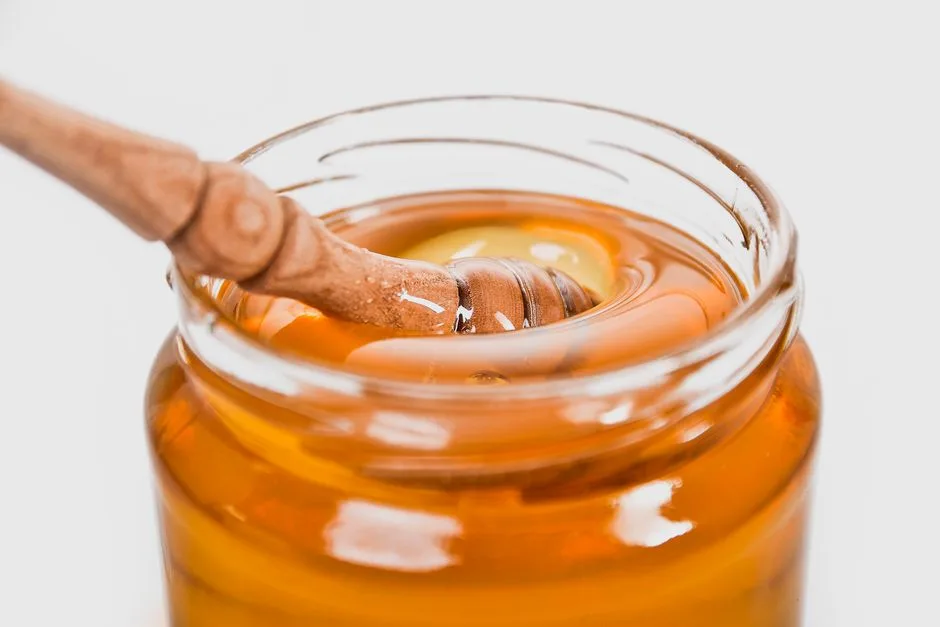
Honey usually has more fructose than glucose, plus a small amount of water and trace amounts of pollen, enzymes, and plant compounds called polyphenols.
These polyphenols include flavonoids like quercetin. Quercetin is an antioxidant that has been studied for its effects on blood vessels and inflammation[2][7].
The amount of quercetin and other antioxidants in a spoonful of honey is very small. It is nowhere near the doses used in research studies.
Does the fructose in honey matter?
Fructose is processed mainly in your liver. Large amounts of fructose over time have been linked to insulin resistance in animal research[7].
Honey and sugar both deliver a meaningful fructose load. Since honey often has a slightly higher fructose percentage than sugar, it does not give you a free pass on this front.
One study found that quercetin, one of the antioxidants found in honey, reduced fructose intake and improved some markers of oxidative stress in an animal model of fructose-induced insulin resistance[7].
This does not mean honey itself protects you from the effects of its own fructose. The quercetin amounts tested were far higher than what you would get from honey.
Do the antioxidants in honey make a real difference?
Honey does contain antioxidants, mainly flavonoids and phenolic acids. These compounds can neutralize free radicals, which are unstable molecules linked to cell damage.
Research on antioxidants in general suggests they may support heart health and reduce oxidative stress markers[8][10].
Antioxidant compounds have also been studied for effects on blood pressure and vascular health, such as coenzyme Q10 and anthocyanins from berries[5][6].
These studies are not about honey directly. They test concentrated antioxidant compounds, often at doses much higher than what you'd get from a tablespoon of honey.
There is no strong human trial showing that honey's antioxidant content leads to measurable health benefits when honey replaces sugar in the diet.
Vitamin E is another antioxidant that has been studied for its role in protecting cells through redox reactions, but honey supplies only trace amounts of it compared to foods like nuts and seeds[8].
The antioxidant angle is promising in theory, but thin in actual honey-specific evidence.
Does honey raise blood sugar differently than sugar?
Honey and table sugar both raise blood glucose after eating.
Honey's glycemic index varies by floral source, but it generally sits in a similar range to sugar, sometimes a bit lower, sometimes similar.
For someone watching blood sugar, this difference is small and inconsistent across honey types. Portion size matters more than the switch from sugar to honey.
Honey is also more calorie-dense by volume in some measures because it is less diluted with water than people expect, and a tablespoon of honey has more calories than a tablespoon of sugar.
What other differences exist between honey and sugar?
- Honey contains trace minerals like manganese and small amounts of B vitamins, sugar contains none
- Honey has natural enzymes and pollen traces, sugar is pure sucrose
- Honey has a stronger flavor, so people may use less of it
- Raw, unheated honey retains more antioxidant compounds than heavily processed honey
- Both honey and sugar should be limited under general added sugar guidelines
None of these differences are large enough to call honey a health food. The trace minerals and vitamins in honey are present in amounts too small to meaningfully add to your daily needs.
So which one should you choose?
If you are choosing between honey and sugar purely for health reasons, the difference is small. Honey offers a few more antioxidant compounds, but not enough to offset the sugar and calories it brings.
Antioxidant research in other contexts, such as exercise recovery or cardiovascular risk, uses concentrated extracts or supplements, not honey itself[1][8].
This gap makes it hard to translate those findings directly to a spoonful of honey in your tea.
A better path to more antioxidants may be an overall dietary pattern like the Mediterranean diet, which pairs foods such as olive oil, fruit, and vegetables to support metabolic health, rather than relying on honey as an antioxidant source[9].
Either way, both honey and sugar count as added sugar. Most health guidelines suggest keeping added sugar intake low regardless of the source.
Frequently asked questions
Is honey lower in calories than sugar?
No. Honey has slightly more calories per tablespoon than table sugar because it is denser and less diluted by water than people assume.
Can people with diabetes use honey instead of sugar?
Honey still raises blood sugar similarly to table sugar. Anyone managing diabetes should treat honey as an added sugar and count it the same way as sugar in their meal planning.
Does raw honey have more benefits than regular honey?
Raw, unheated honey tends to retain more antioxidant compounds like flavonoids than heavily processed honey. The amounts are still small compared to doses used in research studies.
Put this to work in your own food log. Track it free with Ration →
Sources
- International Society of Sports Nutrition position stand: effects of dietary antioxidants on exercise and sports performance · PMID 41701327
- Effects of Quercetin and Citrulline on Nitric Oxide Metabolites and Antioxidant Biomarkers in Trained Cyclists · PMID 39861353
- The protective effects of coenzyme Q10 on blood pressure: a narrative review of anti-inflammatory and antioxidant mechanisms · PMID 40820066
- Blueberries and Honeysuckle Berries: Anthocyanin-Rich Polyphenols for Vascular Endothelial Health and Cardiovascular Disease Prevention · PMID 41470833
- Quercetin decreases fructose drinking in model of fructose-induced insulin resistance. Unexpected uric acid and TBARS lowering effect of methyl cellulose vehicle and fructose combination · PMID 38774922
- Antioxidant Lipid Supplement on Cardiovascular Risk Factors: A Systematic Review and Meta-Analysis · PMID 39064656
- Antioxidant addition improves cholesterol and astaxanthin stability in dry salted shrimp · PMID 36426798
- Vitamin E: Regulatory Redox Interactions · PMID 30681767
- Mediterranean Diet as an Antioxidant: The Impact on Metabolic Health and Overall Wellbeing · PMID 34204057
- High-speed electrospinning of phycocyanin and probiotics complex nanofibrous with higher probiotic activity and antioxidation · PMID 37087274