Lead in Spices: Should You Worry About Turmeric, Cumin, and Other Herbs?
Key takeaways
- Some spices, especially turmeric and certain cumin batches, have tested positive for lead and other heavy metals in multiple countries.[1][3][4]
- Contamination usually comes from soil, water, or added coloring agents during processing, not from the plant itself.
- Spices still offer real health benefits, so the goal is smart sourcing, not avoidance.
- Buying from tested, reputable brands and diversifying your spice sources can lower exposure risk.
What is the concern with spices and heavy metals?
Spices come from roots, seeds, bark, and leaves of plants.
Plants pull up whatever is in the soil and water around them.
If that soil or water has lead, cadmium, or arsenic in it, some of that metal can end up in the plant.
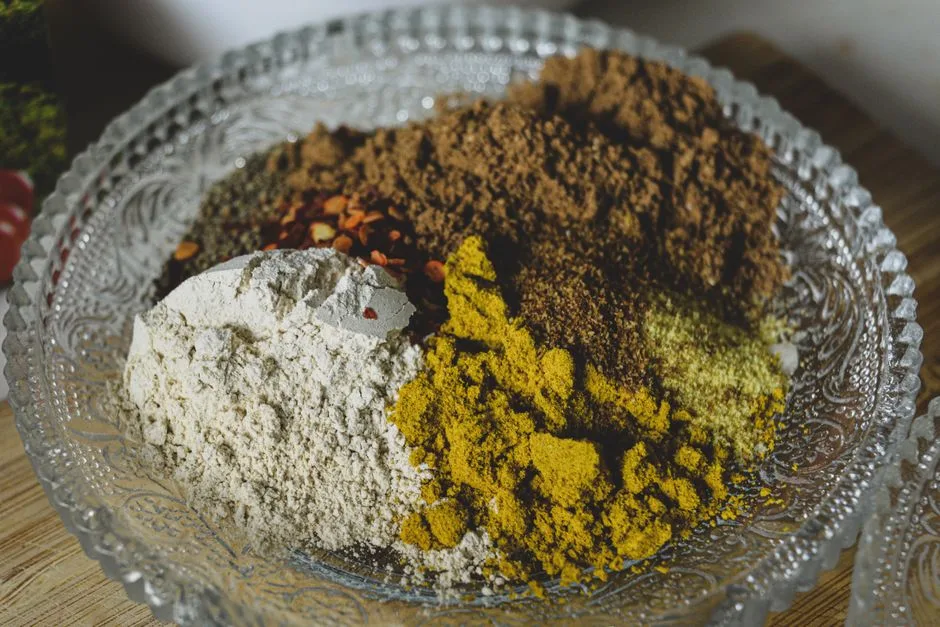
Turmeric has drawn the most attention because some producers add lead chromate to make its yellow color brighter.
Cumin, chili powder, and other ground spices have also tested positive for heavy metals in various studies.[1][3][4]
This does not mean all spices are unsafe.
It means quality varies a lot depending on where and how a spice is grown and processed.
Why does lead in food matter?
Lead is a heavy metal with no known safe level in the body.
It builds up over time in blood, bone, and soft tissue.
In children, even low level lead exposure can affect brain development and lower IQ.
In adults, long term exposure is linked to high blood pressure, kidney damage, and nerve problems.
Because spices are used in small amounts, a single meal is unlikely to cause harm.
The bigger concern is repeated daily exposure over months or years, especially from a contaminated jar used often.[1]
What does the research show?
A study testing branded and non-branded spices found detectable lead levels in several common products, with some exceeding health-based guidance values.[1]
Non-branded and loose spices tended to show more variability and, in some cases, higher contamination than well-known branded products.[1]
Research from Saudi Arabia measured metal contents across a range of spices and herbs and found that levels differed widely by type and source.[3]
A study in the Republic of Korea also measured heavy metals in commonly consumed spices and found that contamination levels varied by spice type and origin.[4]
Together, these studies suggest that geography, farming practices, and processing methods all influence how much lead ends up in the final product.
A review of Indian spices notes their long history as both food and medicine, and points out that quality control challenges have grown alongside global demand.[2]
Are spices still worth eating?
Yes, most research on spices actually points toward benefits, not harm.
Turmeric contains curcumin, a compound studied for its anti-inflammatory and antioxidant effects.
A recent study on mixed spice compounds found protective effects against heart muscle injury in animal models, supporting a long-standing interest in spices for heart health.[5]
Other research has looked at plant compounds from common Indian spices as potential inhibitors relevant to breast cancer cell pathways, using computer modeling methods.[6]
These are early-stage findings and not proof that spices treat or prevent disease.
They do show why spices remain an active area of nutrition research beyond just flavor.
The practical takeaway is to manage contamination risk while still enjoying spices as part of a varied diet.
How can you lower your risk?
You cannot see or taste lead in a spice, so sourcing matters more than appearance.
- Buy spices from established brands that publish or share testing results.
- Choose whole spices like cumin seeds or turmeric root or dried turmeric fingers and grind them yourself when possible, since whole forms are harder to adulterate than powders.
- Avoid unusually bright yellow or orange turmeric powder, which can signal added coloring agents.
- Rotate spice brands and sources instead of relying on one jar for years.
- Store spices in their original containers so you can identify the source if a recall happens.
- Check for recalls periodically, since turmeric and some chili powders have been recalled for lead contamination in various countries.
- Consider growing your own turmeric or herbs in tested, clean soil if you use them often.
For most people eating a normal amount of spices in home cooking, the risk from any single meal is low.
People who consume large amounts of turmeric daily, such as through concentrated supplements, may want to be more selective about sourcing.
Who should be most careful?
Pregnant women and young children are more vulnerable to the effects of lead exposure.
This is because lead can affect a developing brain and nervous system more strongly than a mature one.
People who cook with the same imported spice jar every day for years may also have higher cumulative exposure than occasional users.
If you fall into one of these groups, extra care in choosing tested, reputable spice sources is reasonable.[1][4]
Frequently asked questions
Is turmeric safe to eat?
Turmeric is safe for most people in typical cooking amounts, but quality varies by brand and source. Choosing reputable, tested brands lowers the chance of lead contamination.[1]
Which spices are most likely to contain lead?
Turmeric and cumin have shown contamination in multiple studies, though levels vary widely by country and producer.[1][3][4]
Does cooking remove lead from spices?
No, cooking does not remove heavy metals from food. Lead stays in the spice through cooking, so prevention depends on sourcing, not preparation.
Put this to work in your own food log. Track it free with Ration →
Sources
- Lead Exposure of Four Biologically Important Common Branded and Non-branded Spices: Relative Analysis and Health Implication · PMID 36627477
- Indian spices: past, present and future challenges as the engine for bio-enhancement of drugs: impact of COVID-19 · PMID 35043421
- Assessment of metal contents in spices and herbs from Saudi Arabia · PMID 24097370
- Heavy metals in spices commonly consumed in Republic of Korea · PMID 30466367
- Cardioprotective function of mixed spices against myocardial infarction injury: In-vivo and In-silico study · PMID 40390502
- Natural Phytocompounds from Common Indian Spices for Identification of Three Potential Inhibitors of Breast Cancer: A Molecular Modelling Approach · PMID 36235128