Which Shellfish Carry the Most Heavy Metals, and How Much Is Safe to Eat?
Key takeaways
- Shellfish like mussels, clams, oysters, and crustaceans can absorb heavy metals such as cadmium, lead, mercury, and arsenic from water and sediment[1][2].
- Bivalves, mussels, clams, and oysters, tend to build up more heavy metals than crustaceans like shrimp and crab because they filter large amounts of water[1][7].
- Risk depends on the water where the shellfish grew, so location matters as much as species[3][6][8].
- For most healthy adults, eating shellfish a few times a week is likely safe, but pregnant people and young children should be more cautious about certain species[2][7].
What are heavy metals, and why do they end up in shellfish?
Heavy metals are natural elements like cadmium, lead, mercury, and arsenic.
They occur in soil and rock, but pollution, industry, and runoff can raise their levels in water.
Shellfish live in or near this water, so they can take in these metals as they feed.
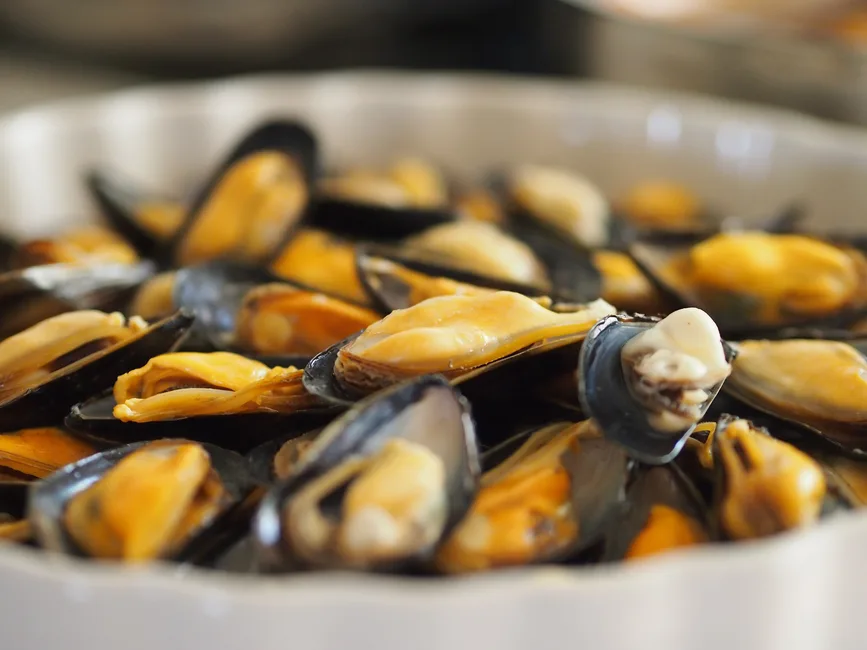
Bivalves, mussels, clams, and oysters, filter many liters of water each day to catch tiny food particles.
This filtering habit means they can also trap heavy metals from the water and sediment[1][2].
Crustaceans, like shrimp, crab, and lobster, do not filter water the same way, so they usually build up fewer metals[3].
Which shellfish have the most heavy metals?
A study of mussels and clams from Faro Lake in Italy found notable levels of cadmium, lead, and other metals in both species[1].
Mussels tended to build up more metals than clams in this same water, likely because of how they feed[1].
A separate review of shellfish sold in central Italy found metal levels that varied a lot by species and by where the animals were harvested[2].
Research from the eastern Mediterranean Sea found some shellfish samples with metal levels high enough to prompt consumption advisories[3].
A market study in southern Nigeria found that certain fish and shellfish carried metal levels that could pose a health risk if eaten often[6].
In general, the shellfish most likely to carry higher heavy metal loads are:
- Mussels
- Oysters
- Clams
- Some bottom-feeding shellfish from polluted coastal waters
- Shellfish harvested near industrial runoff or ports
Crustaceans like shrimp, crab, and lobster usually carry lower metal levels, though this can still vary by region[3][6].
Does location change the risk more than the species?
Yes, where a shellfish grows often matters more than what kind it is.
A study in northeast Italy found that natural events, like storms or shifts in water flow, changed heavy metal levels in local shellfish over time[8].
This means the same species can be lower risk one season and higher risk another, depending on conditions in the water.
Shellfish grown in clean, monitored farms tend to carry fewer contaminants than those from polluted or unregulated waters[2][6].
Buying shellfish from a known, tested source is one of the simplest ways to lower your exposure.
What about bacteria and other contaminants?
Heavy metals are not the only concern with shellfish.
Some shellfish also carry bacteria like Vibrio species, which can cause food poisoning.
Research shows that heavy metal pollution and other contaminants in water can actually help some Vibrio bacteria grow stronger and resist antibiotics[4][5].
This means polluted waters may raise two risks at once, heavy metal buildup and harder to treat bacterial infections[4].
Cooking shellfish thoroughly lowers the bacterial risk, though it does not remove heavy metals, which stay in the tissue even after cooking.
How much shellfish is safe to eat?
For most healthy adults, eating shellfish a few times a week fits within safe intake guidelines used in food safety research[2][7].
A French study on bivalve shellfish consumption estimated typical exposure to heavy metals from normal eating patterns and found it generally stayed within acceptable limits for most people[7].
Risk tends to rise with very frequent, large servings of the same shellfish species from the same waters over a long time[2][3].
People who eat a lot of self-caught or locally sourced shellfish from unmonitored waters may face higher exposure than those buying from tested commercial sources[6][8].
There is no single safe number that fits everyone, since it depends on body weight, the specific metal, and how often you eat shellfish.
What should you actually do?
- Vary your seafood choices instead of eating the same shellfish species every week.
- Choose shellfish from well regulated, tested sources when possible.
- Limit how often you eat shellfish known to come from polluted or unmonitored waters.
- Cook shellfish fully to reduce bacterial risk, keeping in mind this will not remove heavy metals.
- If pregnant, breastfeeding, or feeding young children, ask about local advisories for mercury and other metals in shellfish.
- Balance shellfish with other protein sources like fish, poultry, beans, and eggs for variety.
- Pay attention to local seafood advisories, since heavy metal levels can shift with the seasons[8].
Who should be most careful?
Pregnant people and young children are usually advised to be more careful with heavy metal exposure from seafood.
This is because developing brains and nervous systems are more sensitive to metals like mercury and lead.
People who eat large amounts of self-harvested shellfish from the same local waters may also want to check regional contamination data[6][8].
People with kidney conditions may also want to talk with a doctor about seafood intake, since the kidneys help clear some heavy metals from the body.
Most other healthy adults can enjoy shellfish as part of a varied diet without major concern, based on current exposure research[2][7].
Frequently asked questions
Are mussels or shrimp safer to eat?
Shrimp usually carries fewer heavy metals than mussels, since mussels filter large amounts of water and can build up more contaminants from it[1][3].
Does cooking shellfish remove heavy metals?
No, cooking kills harmful bacteria but does not remove heavy metals, which stay in the tissue of the shellfish[4].
Can heavy metal levels in shellfish change by season?
Yes, research shows natural events like storms can shift heavy metal levels in shellfish over time, so the same spot can vary through the year[8].
Put this to work in your own food log. Track it free with Ration →
Sources
- Heavy Metals Bioaccumulation in Mytilus galloprovincialis and Tapes decussatus from Faro Lake (Messina), Italy · PMID 38430347
- Heavy Metals Contamination in Shellfish: Benefit-Risk Evaluation in Central Italy · PMID 33238443
- Heavy metals concentrations in fish and shellfish from eastern Mediterranean Sea: consumption advisories · PMID 23211443
- Heavy Metal and Petroleum Hydrocarbon Contaminants Promote Resistance and Biofilm Formation in Vibrio Species from Shellfish · PMID 41304208
- Virulence and Antibiotic and Heavy Metal Resistance of Vibrio parahaemolyticus Isolated from Crustaceans and Shellfish in Shanghai, China · PMID 27497124
- Dietary exposure and health risk assessment of metals in fish and shellfish from five markets in Southern Nigeria · PMID 41046066
- Consumption of Bivalve Shellfish in French Coastal Populations: Data for Acute and Chronic Exposure Assessment · PMID 37839552
- Possible influence of natural events on heavy metals exposure from shellfish consumption: a case study in the north-East of Italy · PMID 25699249