Weight & Muscle / Overview
Supplements for Weight and Muscle Goals: What the Research Actually Shows
Foods for fat loss, satiety, and building muscle.
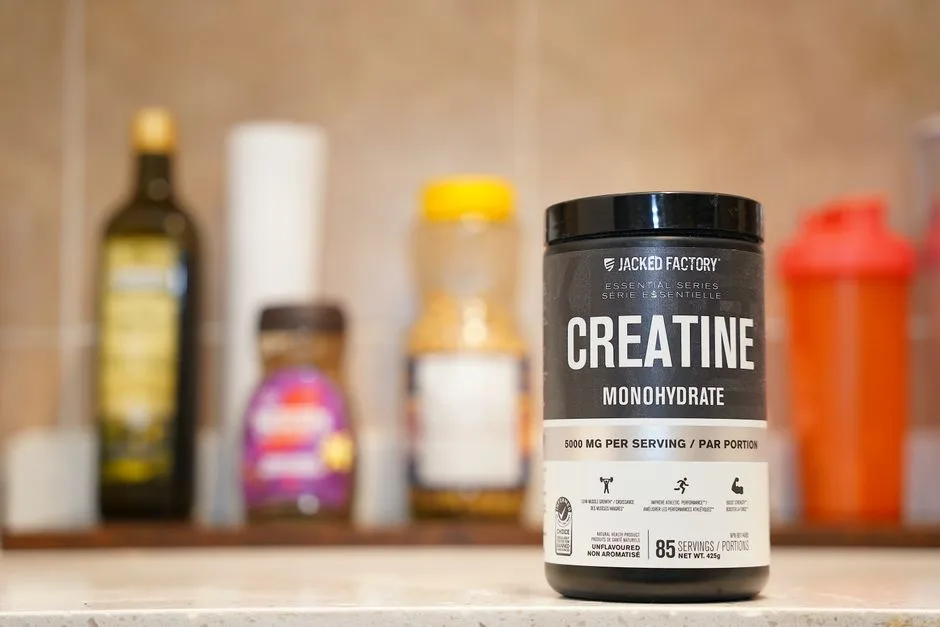
Key takeaways
- Creatine remains the most consistently supported supplement for gains in lean body mass, especially alongside resistance training[9]
- HMB shows promise for preserving muscle, particularly in untrained or metabolically stressed populations[6][8]
- Ursolic acid is an emerging compound with strong animal data for muscle wasting conditions but limited human evidence[5][10]
- Antioxidant compounds like CoQ10, propolis, and adaptogens like ashwagandha and rhodiola have more modest, mixed support[1][2][3][4][7][11][12]
What does 'weight and muscle' actually mean here
This goal covers two related but distinct things. One is building or preserving lean muscle mass, especially with resistance training.
The other is managing body weight or composition, including limiting fat gain or preventing muscle loss during illness, aging, or caloric stress.
Supplements marketed for this goal range from well studied basics like creatine to newer compounds like ursolic acid that are still mostly tested in animals.
Does creatine actually build muscle
Creatine is one of the most researched sports supplements available, and it works primarily by replenishing phosphocreatine stores in muscle, supporting rapid energy production during short bursts of effort.
A recent analysis looked specifically at creatine's effect on lean body mass, comparing outcomes with and without concurrent resistance training[9].
The findings suggest creatine supplementation can increase lean body mass on its own, but the effect is notably larger when paired with a structured resistance training program[9].
This lines up with the general understanding that creatine amplifies training adaptations rather than replacing the need to train.
What about HMB
HMB, or beta-hydroxy-beta-methylbutyrate, is a metabolite of the amino acid leucine. It has been studied for its potential to reduce muscle protein breakdown.
A position stand from the International Society of Sports Nutrition reviewed the evidence on HMB and concluded it may help preserve or increase muscle mass, particularly in situations involving high training stress, immobilization, or in older or untrained individuals[6].
Animal research adds another angle. In high-fat-fed mice, HMB supplementation was associated with increased muscle mass and reduced weight gain compared to controls[8].
Human evidence for HMB's effect on weight specifically is thinner than its evidence for muscle preservation, so the weight-related findings should be read as preliminary.
Is ursolic acid a real muscle supplement
Ursolic acid is a compound found in the waxy skins of apples and in herbs like rosemary and holy basil. It has drawn interest for its effects on muscle signaling pathways.
In a mouse model of cancer cachexia, a condition marked by severe muscle wasting, dietary ursolic acid supplementation helped preserve skeletal muscle mass and strength[5].
Separate research in senile diabetic mice and cultured myotubes found ursolic acid attenuated sarcopenia, the age-related loss of muscle, apparently through effects on inflammatory signaling tied to the gut-muscle axis[10].
These are promising mechanistic findings, but they come from animal and cell models. Human trials testing ursolic acid for muscle mass or strength in people are not yet part of this evidence base.
Do antioxidants and adaptogens help with muscle or performance
Several compounds studied for this goal work less on building muscle directly and more on reducing exercise-induced stress or supporting endurance.
Coenzyme Q10, or CoQ10, is involved in mitochondrial energy production. A meta-analysis of CoQ10 analogs found some benefit for reducing oxidative stress markers after exercise, with more mixed signals for muscle damage and metabolic outcomes[1].
A separate systematic review and meta-analysis focused specifically on exercise-induced muscle damage found CoQ10 supplementation may modestly reduce markers of muscle damage and oxidative stress in athletes[11].
Another review examined CoQ10's role in exercise tolerance and muscle strength, suggesting some potential benefit but noting the evidence remains inconsistent across studies[12].
Propolis, a resin-like substance made by bees, was studied for its effects on endurance exercise and molecular markers of inflammation and oxidative stress, with findings suggesting some protective signaling effects, though evidence in humans is still limited[7].
Rhodiola rosea, an adaptogenic herb, was tested in a randomized controlled trial in football players looking at both physical and decision-making performance, with some positive findings for performance markers[3].
Ashwagandha, another adaptogen, was tested at a low dose in a randomized, placebo-controlled, double-blind trial focused on exercise endurance, with results suggesting a possible benefit for endurance capacity[4].
A broader position stand from the International Society of Sports Nutrition reviewed dietary antioxidants as a category and cautioned that high-dose antioxidant supplementation could, in some cases, blunt beneficial training adaptations, so more is not automatically better[2].
How the evidence stacks up across compounds
- CapsaicinAHuman trials
Research may lower Capsaicin · strong agreement · 5 studies
View 5 studies on PubMed
- The effect of Capsaicinoids or Capsinoids in red pepper on thermogenesis in healthy adults: A systematic review and meta-analysis (2021)
- Capsaicin and capsiate could be appropriate agents for treatment of obesity: A meta-analysis of human studies (2018)
- Capsaicinoid nonivamide improves nonalcoholic fatty liver disease in rats fed a high-fat diet (2020)
- A natural sustained-intestinal release formulation of red chili pepper extracted capsaicinoids (Capsifen®) safely modulates energy balance and endurance performance: a randomized, double-blind, placebo-controlled study (2024)
- Capsaicinoids: a spicy solution to the management of obesity? (2016)
- BerberineAHuman trials
Research may raise Berberine · strong agreement · 6 studies
View 5 studies on PubMed
- The effect of Berberine on weight loss in order to prevent obesity: A systematic review (2020)
- Berberine in Cardiovascular and Metabolic Diseases: From Mechanisms to Therapeutics (2019)
- Metformin and berberine synergistically improve NAFLD via the AMPK-SREBP1-FASN signaling pathway (2025)
- Berberine attenuates nonalcoholic hepatic steatosis through the AMPK-SREBP-1c-SCD1 pathway (2019)
- Multiple target and regulatory pathways of berberine (2025)
- Beetroot JuiceAHuman trials
Research may raise Beetroot Juice · strong agreement · 6 studies
View 5 studies on PubMed
- Beetroot Juice Supplementation Improves High-Intensity Intermittent Type Exercise Performance in Trained Soccer Players (2017)
- Dietary nitrate supplementation and exercise performance (2014)
- Dietary Nitrate and Physical Performance (2018)
- The Top 5 Can't-Miss Sport Supplements (2024)
- Beetroot juice supplementation and exercise performance: is there more to the story than just nitrate? (2024)
- HMBAHuman trials
Research may raise HMB · strong agreement · 6 studies
View 5 studies on PubMed
- Effects of β-hydroxy β-methylbutyrate (HMB) supplementation on muscle mass, function, and other outcomes in patients with cancer: a systematic review (2022)
- Inhibition of prostaglandin-degrading enzyme 15-PGDH rejuvenates aged muscle mass and strength (2021)
- β-Hydroxy-β-methylbutyrate (HMB) increases muscle mass and diminishes weight gain in high-fat-fed mice (2025)
- Personalized nutrition therapy in critical care: 10 expert recommendations (2023)
- International society of sports nutrition position stand: β-hydroxy-β-methylbutyrate (HMB) (2025)
- Panax GinsengAHuman trials
Research may raise Panax Ginseng · strong agreement · 6 studies
View 5 studies on PubMed
- Short-Term Panax Ginseng Extract Supplementation Reduces Fasting Blood Triacylglycerides and Oxygen Consumption during Sub-Maximal Aerobic Exercise in Male Recreational Athletes (2024)
- Anti-Fatigue Effects of Small Molecule Oligopeptides Isolated from Panax ginseng C. A. Meyer in Mice (2016)
- Ginseng ameliorates exercise-induced fatigue potentially by regulating the gut microbiota (2021)
- Changbai Mountain Ginseng (Panax ginseng C.A. Mey) Extract Supplementation Improves Exercise Performance and Energy Utilization and Decreases Fatigue-Associated Parameters in Mice (2017)
- Effects of Antrodia camphorata and Panax ginseng supplementation on anti-fatigue properties in mice (2018)
- L-CarnitineAHuman trials
Research may raise L-Carnitine · strong agreement · 6 studies
View 5 studies on PubMed
- Effect of Acute and Chronic Oral l-Carnitine Supplementation on Exercise Performance Based on the Exercise Intensity: A Systematic Review (2021)
- Effectiveness of Propionyl-L-Carnitine Supplementation on Exercise Performance in Intermittent Claudication: A Systematic Review (2021)
- l-Carnitine Supplementation in Recovery after Exercise (2018)
- Carnitine in Human Muscle Bioenergetics: Can Carnitine Supplementation Improve Physical Exercise? (2020)
- L-carnitine--metabolic functions and meaning in humans life (2011)
- Ecdysterone (20-Hydroxyecdysone)AHuman trials
Research may raise Ecdysterone (20-Hydroxyecdysone) · strong agreement · 6 studies
View 5 studies on PubMed
- How reliable is the labeling of a commercial phytosteroid product? A 12-week randomized double-blind training study (2025)
- Ecdysteroids as non-conventional anabolic agent: performance enhancement by ecdysterone supplementation in humans (2019)
- A Phase 1 study for safety and pharmacokinetics of BIO101 (20-hydroxyecdysone) in healthy young and older adults (2023)
- Ecdysteroids: A novel class of anabolic agents? (2015)
- Poststerone increases muscle fibre size partly similar to its metabolically parent compound, 20-hydroxyecdysone (2019)
- L-GlutamineAHuman trials
Research may lower L-Glutamine · strong agreement · 3 studies
View 3 studies on PubMed
- The Influence of Oral L-Glutamine Supplementation on Muscle Strength Recovery and Soreness Following Unilateral Knee Extension Eccentric Exercise (2015)
- The effects of acute leucine or leucine-glutamine co-ingestion on recovery from eccentrically biased exercise (2018)
- Branched-chain amino acid supplementation does not enhance athletic performance but affects muscle recovery and the immune system (2008)
- CaffeineAHuman trials
Research may raise Caffeine · strong agreement · 5 studies
View 5 studies on PubMed
- Effects of Caffeine Intake on Endurance Running Performance and Time to Exhaustion: A Systematic Review and Meta-Analysis (2022)
- Effects of caffeine chewing gum supplementation on exercise performance: A systematic review and meta-analysis (2023)
- The Effect of Acute Caffeine Ingestion on Endurance Performance: A Systematic Review and Meta-Analysis (2018)
- Wake up and smell the coffee: caffeine supplementation and exercise performance-an umbrella review of 21 published meta-analyses (2020)
- Effect of Pre-Exercise Caffeine Intake on Endurance Performance and Core Temperature Regulation During Exercise in the Heat: A Systematic Review with Meta-Analysis (2022)
- Yerba MateAHuman trials
Research may lower Yerba Mate · strong agreement · 5 studies
View 5 studies on PubMed
- Physiological effects of yerba maté (Ilex paraguariensis): a systematic review (2023)
- Appetite Suppression and Antiobesity Effect of a Botanical Composition Composed of Morus alba, Yerba mate, and Magnolia officinalis (2016)
- In vitro and in vivo antitumor activity of Yerba Mate extract in colon cancer models (2020)
- UP601, a standardized botanical composition composed of Morus alba, Yerba mate and Magnolia officinalis for weight loss (2017)
- A Botanical Composition from Morus alba, Ilex paraguariensis, and Rosmarinus officinalis for Body Weight Management (2017)
Taken together, creatine and HMB have the most direct human evidence tied to muscle mass outcomes[6][9].
Ursolic acid has compelling mechanistic and animal data but needs human trials before firm conclusions are possible[5][10].
CoQ10, propolis, rhodiola, and ashwagandha sit in a middle zone, with some positive findings but effect sizes that are often small or inconsistent across trials[1][3][4][7][11][12].
Food sources versus supplements
- Creatine is naturally found in red meat and fish, though at levels much lower than typical supplemental doses
- Leucine, the amino acid HMB is derived from, is abundant in eggs, dairy, and meat
- Ursolic acid occurs in apple peels, rosemary, and holy basil
- CoQ10 is present in organ meats, fatty fish, and to a lesser extent in nuts and seeds
- Propolis comes from bee hives and is sold as a raw resin, tincture, or capsule
- Rhodiola rosea and ashwagandha are herbal roots typically consumed as standardized extract supplements rather than whole foods
Is it safe to combine these
Creatine and HMB both have long track records of use in sports nutrition research with generally favorable safety profiles at studied doses[6][9].
Adaptogens and antioxidant compounds have shorter track records in rigorous human trials, and the research reviewed here often involves small sample sizes or short durations[3][4][7].
The caution around high-dose antioxidants blunting training adaptations is worth taking seriously if the goal is maximizing strength or muscle gains from a training program[2].
Anyone considering combining several of these compounds, or using them alongside medications or existing health conditions, should bring the conversation to a healthcare provider familiar with their history.
Who might consider these supplements
- People doing regular resistance training who want to support lean mass gains, where creatine has the strongest evidence[9]
- Older adults or those at risk of muscle loss from illness or inactivity, where HMB and ursolic acid research is most relevant[6][5][10]
- Endurance athletes interested in recovery and oxidative stress markers, where CoQ10 and propolis have been studied[1][7][11][12]
- Athletes exploring adaptogens for performance or endurance support, keeping in mind the smaller and more preliminary evidence base[3][4]
Bottom line
Creatine paired with resistance training has the clearest, most replicated evidence for building lean body mass[9].
HMB looks useful for preserving muscle, especially under stress or in less trained individuals[6][8].
Ursolic acid is a genuinely interesting compound worth watching, but its evidence is currently animal based[5][10].
Antioxidants and adaptogens may offer smaller, situational benefits for recovery and endurance, without replacing the fundamentals of training and diet[1][2][3][4][7][11][12].
Frequently asked questions
Does creatine help build muscle without exercise
Creatine appears to modestly increase lean body mass on its own, but the effect is considerably larger when combined with resistance training[9].
Is HMB better than creatine for muscle
They are not directly compared in the same trials here, but HMB evidence leans toward preserving muscle in stressed or untrained states, while creatine has broader evidence for active gains during training[6][9].
Can ursolic acid be taken as a supplement for muscle loss
Ursolic acid has shown benefits for preserving muscle in animal models of cachexia and sarcopenia, but human trials are still lacking, so its real-world effectiveness in people is unknown[5][10].
Sources
- Effects of coenzyme Q10 analogs on oxidative stress, muscle, and metabolism after exercise: A meta-analysis and systematic review · PMID 41657017
- International Society of Sports Nutrition position stand: effects of dietary antioxidants on exercise and sports performance · PMID 41701327
- Effects of Rhodiola rosea on Physical and Decision-Making Performance in Football Players: A Randomised Controlled Trial · PMID 41829897
- Efficacy and Safety of Low-Dose Ashwagandha Supplementation on Exercise Endurance: A Randomized, Placebo-Controlled, Double-Blind, Clinical Trial · PMID 41846233
- Dietary supplementation with ursolic acid preserves skeletal muscle mass and strength in mouse models of cancer cachexia · PMID 42117587
- International society of sports nutrition position stand: β-hydroxy-β-methylbutyrate (HMB) · PMID 39699070
- Effects of propolis intake on endurance exercise and molecular signaling related to inflammation and oxidative stress · PMID 40078415
- β-Hydroxy-β-methylbutyrate (HMB) increases muscle mass and diminishes weight gain in high-fat-fed mice · PMID 40250490
- The Effect of Creatine Supplementation on Lean Body Mass with and Without Resistance Training · PMID 40292479
- Ursolic acid attenuates sarcopenia through IL-17a-related gut-muscle axis in senile diabetic mice and myotube model · PMID 40294722
- Can coenzyme Q10 supplementation reduce exercise-induced muscle damage and oxidative stress in athletes? A systematic review and meta-analysis · PMID 40367843
- The role of coenzyme Q10 in exercise tolerance and muscle strength · PMID 40411469
What the research points to
Compounds and supplements studied for weight & muscle, ranked by evidence quality. Each links to the studies on PubMed. Research associations only, not medical advice.
- CapsaicinAHuman trials
Research may lower Capsaicin · strong agreement · 5 studies
View 5 studies on PubMed
- The effect of Capsaicinoids or Capsinoids in red pepper on thermogenesis in healthy adults: A systematic review and meta-analysis (2021)
- Capsaicin and capsiate could be appropriate agents for treatment of obesity: A meta-analysis of human studies (2018)
- Capsaicinoid nonivamide improves nonalcoholic fatty liver disease in rats fed a high-fat diet (2020)
- A natural sustained-intestinal release formulation of red chili pepper extracted capsaicinoids (Capsifen®) safely modulates energy balance and endurance performance: a randomized, double-blind, placebo-controlled study (2024)
- Capsaicinoids: a spicy solution to the management of obesity? (2016)
- BerberineAHuman trials
Research may raise Berberine · strong agreement · 6 studies
View 5 studies on PubMed
- The effect of Berberine on weight loss in order to prevent obesity: A systematic review (2020)
- Berberine in Cardiovascular and Metabolic Diseases: From Mechanisms to Therapeutics (2019)
- Metformin and berberine synergistically improve NAFLD via the AMPK-SREBP1-FASN signaling pathway (2025)
- Berberine attenuates nonalcoholic hepatic steatosis through the AMPK-SREBP-1c-SCD1 pathway (2019)
- Multiple target and regulatory pathways of berberine (2025)
- Beetroot JuiceAHuman trials
Research may raise Beetroot Juice · strong agreement · 6 studies
View 5 studies on PubMed
- Beetroot Juice Supplementation Improves High-Intensity Intermittent Type Exercise Performance in Trained Soccer Players (2017)
- Dietary nitrate supplementation and exercise performance (2014)
- Dietary Nitrate and Physical Performance (2018)
- The Top 5 Can't-Miss Sport Supplements (2024)
- Beetroot juice supplementation and exercise performance: is there more to the story than just nitrate? (2024)
- HMBAHuman trials
Research may raise HMB · strong agreement · 6 studies
View 5 studies on PubMed
- Effects of β-hydroxy β-methylbutyrate (HMB) supplementation on muscle mass, function, and other outcomes in patients with cancer: a systematic review (2022)
- Inhibition of prostaglandin-degrading enzyme 15-PGDH rejuvenates aged muscle mass and strength (2021)
- β-Hydroxy-β-methylbutyrate (HMB) increases muscle mass and diminishes weight gain in high-fat-fed mice (2025)
- Personalized nutrition therapy in critical care: 10 expert recommendations (2023)
- International society of sports nutrition position stand: β-hydroxy-β-methylbutyrate (HMB) (2025)
- Panax GinsengAHuman trials
Research may raise Panax Ginseng · strong agreement · 6 studies
View 5 studies on PubMed
- Short-Term Panax Ginseng Extract Supplementation Reduces Fasting Blood Triacylglycerides and Oxygen Consumption during Sub-Maximal Aerobic Exercise in Male Recreational Athletes (2024)
- Anti-Fatigue Effects of Small Molecule Oligopeptides Isolated from Panax ginseng C. A. Meyer in Mice (2016)
- Ginseng ameliorates exercise-induced fatigue potentially by regulating the gut microbiota (2021)
- Changbai Mountain Ginseng (Panax ginseng C.A. Mey) Extract Supplementation Improves Exercise Performance and Energy Utilization and Decreases Fatigue-Associated Parameters in Mice (2017)
- Effects of Antrodia camphorata and Panax ginseng supplementation on anti-fatigue properties in mice (2018)
- L-CarnitineAHuman trials
Research may raise L-Carnitine · strong agreement · 6 studies
View 5 studies on PubMed
- Effect of Acute and Chronic Oral l-Carnitine Supplementation on Exercise Performance Based on the Exercise Intensity: A Systematic Review (2021)
- Effectiveness of Propionyl-L-Carnitine Supplementation on Exercise Performance in Intermittent Claudication: A Systematic Review (2021)
- l-Carnitine Supplementation in Recovery after Exercise (2018)
- Carnitine in Human Muscle Bioenergetics: Can Carnitine Supplementation Improve Physical Exercise? (2020)
- L-carnitine--metabolic functions and meaning in humans life (2011)
- Ecdysterone (20-Hydroxyecdysone)AHuman trials
Research may raise Ecdysterone (20-Hydroxyecdysone) · strong agreement · 6 studies
View 5 studies on PubMed
- How reliable is the labeling of a commercial phytosteroid product? A 12-week randomized double-blind training study (2025)
- Ecdysteroids as non-conventional anabolic agent: performance enhancement by ecdysterone supplementation in humans (2019)
- A Phase 1 study for safety and pharmacokinetics of BIO101 (20-hydroxyecdysone) in healthy young and older adults (2023)
- Ecdysteroids: A novel class of anabolic agents? (2015)
- Poststerone increases muscle fibre size partly similar to its metabolically parent compound, 20-hydroxyecdysone (2019)
- L-GlutamineAHuman trials
Research may lower L-Glutamine · strong agreement · 3 studies
View 3 studies on PubMed
- The Influence of Oral L-Glutamine Supplementation on Muscle Strength Recovery and Soreness Following Unilateral Knee Extension Eccentric Exercise (2015)
- The effects of acute leucine or leucine-glutamine co-ingestion on recovery from eccentrically biased exercise (2018)
- Branched-chain amino acid supplementation does not enhance athletic performance but affects muscle recovery and the immune system (2008)
- CaffeineAHuman trials
Research may raise Caffeine · strong agreement · 5 studies
View 5 studies on PubMed
- Effects of Caffeine Intake on Endurance Running Performance and Time to Exhaustion: A Systematic Review and Meta-Analysis (2022)
- Effects of caffeine chewing gum supplementation on exercise performance: A systematic review and meta-analysis (2023)
- The Effect of Acute Caffeine Ingestion on Endurance Performance: A Systematic Review and Meta-Analysis (2018)
- Wake up and smell the coffee: caffeine supplementation and exercise performance-an umbrella review of 21 published meta-analyses (2020)
- Effect of Pre-Exercise Caffeine Intake on Endurance Performance and Core Temperature Regulation During Exercise in the Heat: A Systematic Review with Meta-Analysis (2022)
- Yerba MateAHuman trials
Research may lower Yerba Mate · strong agreement · 5 studies
View 5 studies on PubMed
- Physiological effects of yerba maté (Ilex paraguariensis): a systematic review (2023)
- Appetite Suppression and Antiobesity Effect of a Botanical Composition Composed of Morus alba, Yerba mate, and Magnolia officinalis (2016)
- In vitro and in vivo antitumor activity of Yerba Mate extract in colon cancer models (2020)
- UP601, a standardized botanical composition composed of Morus alba, Yerba mate and Magnolia officinalis for weight loss (2017)
- A Botanical Composition from Morus alba, Ilex paraguariensis, and Rosmarinus officinalis for Body Weight Management (2017)
- L-CitrullineAHuman trials
Research may raise L-Citrulline · strong agreement · 6 studies
View 5 studies on PubMed
- Effects of Citrulline Supplementation on Different Aerobic Exercise Performance Outcomes: A Systematic Review and Meta-Analysis (2022)
- Effects of Citrulline Supplementation on Exercise Performance in Humans: A Review of the Current Literature (2020)
- Effect of food sources of nitrate, polyphenols, L-arginine and L-citrulline on endurance exercise performance: a systematic review and meta-analysis of randomised controlled trials (2021)
- L-Citrulline Supplementation and Exercise in the Management of Sarcopenia (2021)
- A critical review of citrulline malate supplementation and exercise performance (2021)
- Rhodiola RoseaAHuman trials
Research may raise Rhodiola Rosea · strong agreement · 6 studies
View 5 studies on PubMed
- Effects of Rhodiola Rosea Supplementation on Exercise and Sport: A Systematic Review (2022)
- Rhodiola rosea supplementation on sports performance: A systematic review of randomized controlled trials (2023)
- Effects of Rhodiola rosea on Physical and Decision-Making Performance in Football Players: A Randomised Controlled Trial (2026)
- Dose-Response Effects of Short-Term Rhodiola rosea (Golden Root Extract) Supplementation on Anaerobic Exercise Performance and Cognitive Function in Resistance-Trained Athletes: A Randomized, Crossover, Double-Blind, and Placebo-Controlled Study (2025)
- Rhodiola rosea as an adaptogen to enhance exercise performance: a review of the literature (2024)