Are Chickpeas Healthy?
Key takeaways
- Chickpeas are rich in fiber, plant protein, folate, iron, and manganese.
- Their fiber and resistant starch feed gut bacteria and may support blood sugar and heart health.
- Chickpeas contain phytic acid and tannins, compounds that can lower mineral absorption, but soaking, cooking, and sprouting reduce them.
- New fermentation research suggests bacteria like Bacillus subtilis may boost chickpea protein quality and antioxidant power even further.[1]
What are chickpeas?
Chickpeas are a type of legume, also called garbanzo beans.
They grow in pods and come in a few colors, but the round tan variety is most common.
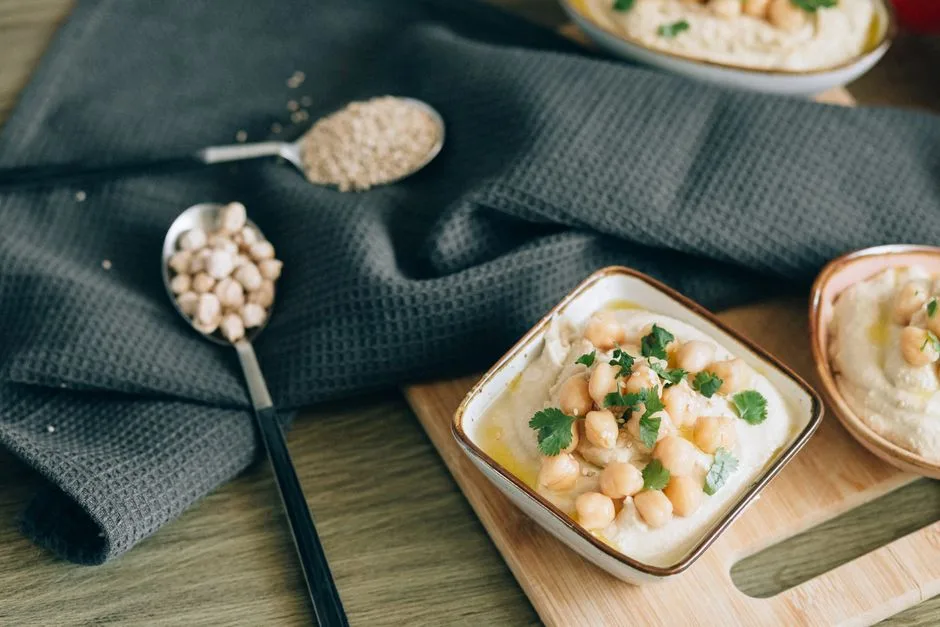
People use chickpeas whole, mashed into hummus, ground into flour, or roasted as a crunchy snack.
They are a staple food across the Mediterranean, Middle East, and South Asia.
What nutrients do chickpeas have?
Chickpeas are known for their fiber and plant protein.
A cooked cup has roughly 15 grams of protein and 12 grams of fiber.
- Folate, important for cell growth and pregnancy health
- Iron, needed to carry oxygen in the blood
- Manganese, involved in bone and metabolism support
- Magnesium, used in muscle and nerve function
- Potassium, which helps balance sodium and support blood pressure
- Small amounts of zinc and vitamin B6
Chickpeas also contain resistant starch, a type of carbohydrate that skips digestion in the small intestine.
Resistant starch travels to the colon, where gut bacteria ferment it into short chain fatty acids.
Fermented plant foods may also help boost folate intake, an important nutrient already found in chickpeas.[2] A review of traditional fermented foods found that fermentation with molds, yeasts, and bacteria can increase folate content in plant based foods, since some microbes produce this B vitamin themselves.[2] This suggests that fermented chickpea products could offer even more folate than unfermented chickpeas, though more research is needed to confirm this specifically for chickpeas.[2]
Why does fiber and plant protein matter?
Fiber slows digestion, which helps you feel full longer.
This can support healthy body weight over time.
Fiber also feeds the good bacteria in your gut microbiome.
A healthy gut microbiome is linked to better digestion, immune function, and even mood.
Plant protein from chickpeas offers an alternative to animal protein.
This makes chickpeas useful for people eating vegetarian, vegan, or flexitarian diets.
Chickpea protein is not a complete protein on its own, since it is lower in the amino acid methionine.
Pairing chickpeas with grains like rice or wheat fills this gap.
Do chickpeas have anti-nutrients?
Like many legumes, chickpeas contain phytic acid and tannins.
Phytic acid can bind to minerals like iron and zinc, making them harder for your body to absorb.
Tannins are plant compounds that can also reduce mineral absorption in large amounts.
These compounds are not dangerous for most healthy people.
But they can matter more for people who rely heavily on plant foods for iron and zinc.
Soaking, sprouting, and cooking chickpeas naturally lowers phytic acid and tannin levels.
A 2026 study on chickpea protein isolate looked at another way to cut these compounds even further, through fermentation.[1]
Researchers fermented chickpea protein using three different microbes, a bacterium called Lactobacillus helveticus, another bacterium called Bacillus subtilis, and a yeast called Kluyveromyces marxianus.[1]
Fermentation with Lactobacillus helveticus cut phytic acid by 70 percent.[1]
The yeast Kluyveromyces marxianus lowered phytic acid by 31 percent, and Bacillus subtilis lowered it by 14 percent.[1]
Tannin levels dropped only slightly across all three methods.[1]
This suggests fermentation could be a useful tool for food makers trying to improve mineral availability in chickpea-based products.[1]
Can fermentation improve chickpea protein?
Fermentation uses live microbes to break down parts of a food.
In the 2026 study, Bacillus subtilis grew the fastest among the three microbes tested.[1]
Fermentation with Bacillus subtilis increased the ratio of essential amino acids to total amino acids in the chickpea protein.[1]
Essential amino acids are the building blocks your body cannot make on its own, so you need them from food.
Bacillus subtilis fermentation also raised antioxidant activity, measured through three separate lab tests called DPPH, ABTS, and CUPRAC assays.[1]
Antioxidants help protect your cells from damage caused by unstable molecules called free radicals.
The other two microbes, Lactobacillus helveticus and Kluyveromyces marxianus, did not raise antioxidant activity in the same way.[1]
Total phenolic content, a broad measure of plant antioxidant compounds, stayed about the same across all fermentation types.[1]
This research is still early and was done on chickpea protein isolate in a lab setting, not on whole chickpeas eaten at the dinner table.
Still, it points to a promising direction for future plant protein products, like fermented chickpea powders or snacks with improved nutrition profiles.
Are chickpeas good for blood sugar and heart health?
Chickpeas have a low glycemic index, meaning they raise blood sugar slowly.
This is due to their fiber, protein, and resistant starch content working together.
Swapping refined carbs for legumes like chickpeas is a common strategy in diets aimed at heart health.
Chickpeas also contain no cholesterol and are low in saturated fat.
Their potassium and magnesium content may support healthy blood pressure levels.
How do you eat more chickpeas?
Chickpeas are simple to add to daily meals.
- Blend cooked chickpeas with tahini, lemon, and garlic for homemade hummus
- Toss canned chickpeas into salads for extra protein and fiber
- Roast chickpeas with olive oil and spices for a crunchy snack
- Simmer chickpeas into soups, stews, or curries
- Use chickpea flour to make flatbreads or fritters
- Soak and cook dried chickpeas from scratch to save money and control texture
Soaking dried chickpeas overnight before cooking helps reduce phytic acid naturally.
Draining and rinsing canned chickpeas can also lower their sodium content.
Pairing chickpeas with a source of vitamin C, like tomatoes or bell peppers, can help your body absorb more iron from the meal.
Who should be careful with chickpeas?
Chickpeas are safe for most people to enjoy regularly.
People with a legume allergy should avoid chickpeas and speak with a doctor about safe alternatives.
People with irritable bowel syndrome may find chickpeas trigger bloating, since chickpeas contain fermentable carbs called FODMAPs.
Starting with small portions can help you see how your body responds.
People managing iron or zinc deficiency may want to combine chickpeas with preparation methods that lower phytic acid, like soaking or sprouting.
Frequently asked questions
Are canned chickpeas as healthy as dried chickpeas?
Canned chickpeas keep most of the fiber, protein, and minerals found in dried chickpeas. Rinsing canned chickpeas can lower their sodium content, making them a convenient and healthy option.
Can chickpeas help with weight management?
Chickpeas are high in fiber and protein, which can help you feel full for longer. This may support healthy eating patterns as part of a balanced diet.
Does fermenting chickpeas change their taste?
Fermentation can change the flavor and texture of chickpea protein, often making it more tangy or savory. Food scientists are studying fermentation partly to improve both nutrition and taste in plant protein products.[1]
Put this to work in your own food log. Track it free with Ration →