Does Beet Juice and Dietary Nitrate Improve Exercise Performance?
Key takeaways
- Dietary nitrate, found in beets and leafy greens, turns into nitric oxide in your body and may widen blood vessels.
- Research shows the strongest benefits for endurance exercise, with newer evidence pointing to gains in strength and power too.
- A 2026 study found nitrate improved knee muscle power and torque at low and moderate speeds, but not during fast, fatiguing effort.
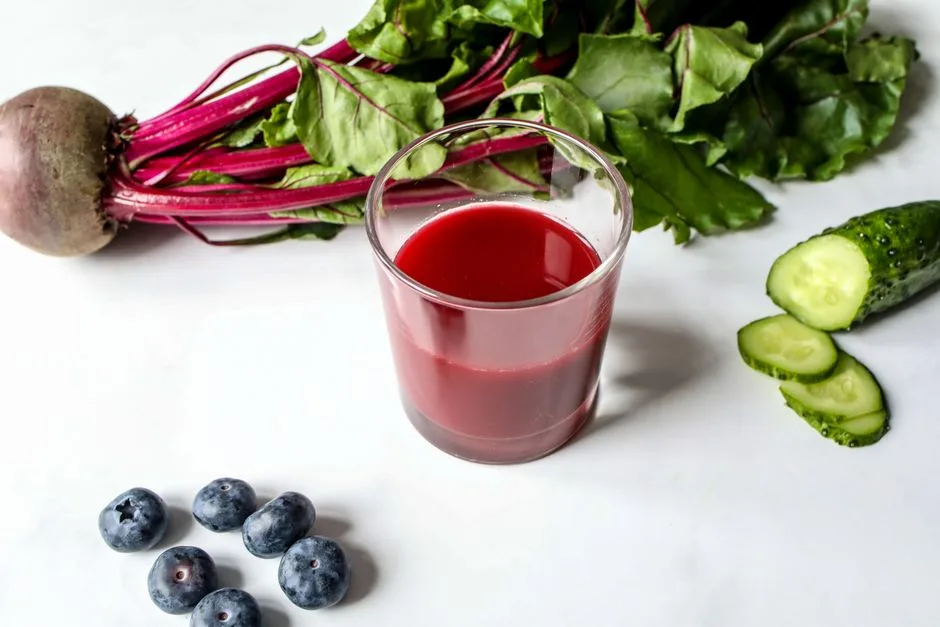
- Beetroot juice is the most studied source, usually taken about two to three hours before exercise.
What is dietary nitrate?
Nitrate is a natural compound found in many vegetables.
Beets, spinach, arugula, and celery have some of the highest amounts.
Once you eat nitrate, your body changes it into nitrite and then into nitric oxide.
Nitric oxide is a gas your blood vessels make to relax and widen.
This process is sometimes called the nitrate to nitrite to nitric oxide pathway.
Many athletes use beetroot juice as a simple way to raise nitrate intake before workouts.
Why does nitrate matter for exercise?
Nitric oxide helps blood vessels open up, which can improve blood flow to working muscles.
Better blood flow may deliver more oxygen and nutrients to muscle during exercise.
Nitric oxide also plays a role inside the muscle cell itself.
It affects mitochondria, the structures that produce energy, and how muscle fibers use calcium to contract.
Because of this, researchers think nitrate could affect both endurance and strength performance.
What does the research show?
Most early research on dietary nitrate focused on endurance activities like running and cycling.
Studies in that area often found small improvements in how long people could exercise before feeling tired.
Less research has looked at nitrate and short, powerful movements like sprinting or weightlifting.
A 2026 randomized, double-blind, placebo-controlled study looked at this gap directly.[1]
Thirteen physically active men drank either beetroot juice with 800 milligrams of nitrate or a placebo drink.
Two hours later, they performed knee extension and flexion tests at three different speeds.[1]
At the slower speeds, 60 and 180 degrees per second, nitrate improved peak torque and relative peak power compared to placebo.[1]
Peak torque reflects how much force a muscle can produce during a single movement.
At the fastest speed, 240 degrees per second, which was used as a fatigue test, there was no difference between nitrate and placebo.[1]
The researchers also measured electrical activity in the thigh muscles and blood lactate levels.
Neither of these measurements changed with nitrate, which means the exact reason for the strength improvement is still unclear.[1]
This suggests nitrate may help with controlled, moderate speed strength efforts more than with fast, fatiguing bursts of power.
What are the possible benefits of dietary nitrate?
- May modestly improve endurance exercise capacity
- May support peak torque and power output during moderate speed strength movements
- Linked to small reductions in resting blood pressure in some studies
- May support healthy blood vessel function over time
- Naturally found in many nutrient-dense vegetables
What foods are high in nitrate?
- Beets and beet juice
- Spinach
- Arugula
- Swiss chard
- Celery
- Bok choy
- Rhubarb
What should you actually do?
If you want to try dietary nitrate for a workout, food sources or beetroot juice are both reasonable options.
Here is a simple approach based on how nitrate studies are typically designed.
- Choose a nitrate-rich food or beetroot juice, since this is the most studied form
- Consume it roughly two to three hours before your workout to allow time for conversion to nitric oxide
- Consider it more for endurance work or steady, moderate-effort strength training
- Do not expect major changes during very fast, high-fatigue efforts like sprinting
- Try it during practice sessions first, not on competition day, to see how your body responds
- Keep an eye on overall vegetable intake as a simpler daily habit, since spinach and beets offer nitrate along with fiber and other nutrients
Nitrate supplements and juices are generally consumed in doses around 300 to 800 milligrams for research purposes.[1]
There is no established need to take large amounts beyond what is used in studies.
Who might benefit most?
Endurance athletes, like runners and cyclists, have the most consistent research support for dietary nitrate.
People doing moderate-speed strength or power training may also see some benefit, based on newer findings.[1]
People with normal or high blood pressure may notice mild blood pressure benefits from regular vegetable nitrate intake.
People doing very fast, explosive, fatigue-based efforts may not notice much difference.[1]
Anyone eating a diet low in vegetables could benefit simply from adding more nitrate-rich produce for general health reasons, separate from exercise performance.
Is dietary nitrate safe?
Nitrate from vegetables and beet juice is generally considered safe for most healthy adults.
Some people notice their urine or stool turn pink or red after drinking beet juice, which is harmless.
People with low blood pressure should be cautious, since nitrate may lower blood pressure further.
People taking blood pressure medications or nitrate-based heart medications should talk with a doctor before adding concentrated nitrate supplements.
Whole food sources like beets and leafy greens are a reasonable starting point for most people.
Frequently asked questions
How long before exercise should you drink beet juice?
Most research has people drink it about two to three hours before exercise, which gives the body time to convert nitrate into nitric oxide.
Does beet juice help with weightlifting?
Some evidence suggests it may help with moderate speed strength movements, but it may not help much during very fast, fatiguing efforts.
Can you get enough nitrate from food instead of supplements?
Yes, vegetables like spinach, arugula, and beets contain meaningful amounts of nitrate and are a reasonable way to increase intake.
Put this to work in your own food log. Track it free with Ration →