Can Probiotics and Gut Health Help Protect Your Muscles?
Key takeaways
- Gut bacteria help control muscle mass through signals like bile acids and short chain fatty acids.
- Animal studies show certain probiotic strains can improve muscle size and strength.
- Fermented dairy and other fermented foods may support muscle health as part of a balanced diet.
- More human research is needed, but eating for gut health is a low risk way to support aging muscles.
What is the gut-muscle connection?
Your gut is home to trillions of bacteria.
These bacteria do more than help digest food.
They make compounds that travel through your blood and affect organs far from your gut, including your muscles.
Scientists call this the gut-muscle axis.
It describes how the balance of bacteria in your intestines can influence muscle mass, strength, and how fast muscle breaks down.
This connection matters most as people age, because muscle loss, called sarcopenia, becomes more common and harder to reverse.
Why does muscle loss matter?
Sarcopenia is the gradual loss of muscle mass and strength that comes with aging.
It raises the risk of falls, fractures, and loss of independence.
There are no strong drug treatments for it yet, which is why researchers are looking at diet and the gut as new tools[3].
Muscle also plays a big role in metabolism.
It helps control blood sugar and burns energy even at rest.
Keeping muscle strong is not just about looking fit, it supports long term health.
How do gut bacteria affect muscle?
Gut bacteria influence muscle through a few key pathways.
- Bile acid signaling: Some bacteria carry an enzyme called bile salt hydrolase. It changes bile acids in the gut. These altered bile acids can turn on a receptor called FXR in the intestine, which triggers a hormone called FGF15/19. This hormone travels to muscle and helps slow down muscle protein breakdown[1].
- Short chain fatty acids: Bacteria ferment fiber into acetate, propionate, and butyrate. Acetate has been shown to affect body weight and insulin sensitivity, which are both tied to muscle health[2].
- Reduced inflammation: A healthier gut lining leaks fewer inflammatory triggers into the blood. Less inflammation means less signal for muscle breakdown.
- Better nutrient absorption: A balanced gut can improve how well you absorb protein and other nutrients needed to build and repair muscle.
In a recent study, two strains of Bifidobacterium animalis with high bile salt hydrolase activity improved muscle mass, muscle fiber size, and physical performance in mice with drug induced muscle loss[1].
The mice given these probiotic strains showed better gut bacteria balance, healthier bile acid patterns, and stronger activation of the FXR-FGF15 pathway in the intestine[1].
This pathway then switched on a muscle receptor called FGFR4/KLB, which helped block the process that breaks down muscle protein[1].
What does the research show?
Most of the direct evidence on probiotics and muscle still comes from animal studies, not large human trials.
Still, the findings are consistent across several different models.
- Bifidobacterium animalis strains with bile salt hydrolase activity improved muscle mass and function in a sarcopenia mouse model[1].
- Bifidobacterium fermented milk improved fat metabolism and boosted muscle metabolism markers in an obesity mouse model[5].
- Lychee fermented with a mix of probiotic strains reduced signs of muscle and gut aging in mice given a compound that speeds up aging[8].
- Heat treated Lactiplantibacillus plantarum fermentation reduced muscle wasting in an animal model of muscular atrophy[9].
- Synbiotics, which combine probiotics and prebiotic fiber, improved gut function and growth performance in turkeys, showing the gut-muscle link applies across species[6].
- A fermented feed treatment improved gut health and muscle development in growing pigs, another sign this pathway is not limited to one species[7].
A review of probiotics, prebiotics, and synbiotics for sarcopenia found promising early signals but called for more human trials before firm conclusions[3].
Dairy foods themselves may add another layer of benefit.
A review on flavonoids and dairy found several plausible pathways by which fermented dairy supports cardiovascular and metabolic health, which overlaps with muscle health[4].
A separate strain, Lacticaseibacillus paracasei Jlus66, was found to reduce hyperuricemia in animal studies by blocking xanthine oxidase activity, adjusting uric acid transporter proteins, and reshaping the gut microbiota[10].
High uric acid levels are linked to inflammation and joint problems that can limit physical activity and speed up muscle loss.
This suggests some probiotic strains may support muscle health indirectly, by lowering uric acid and inflammation rather than acting on muscle tissue directly[10].
What should you eat to support gut and muscle health?
You do not need a specific probiotic strain to start supporting your gut-muscle axis.
Simple, everyday habits can help.
- Eat fermented dairy foods like yogurt, kefir, or fermented milk, which naturally contain live bacteria strains.
- Add more fiber from vegetables, fruits, beans, and whole grains, since fiber feeds the bacteria that make short chain fatty acids.
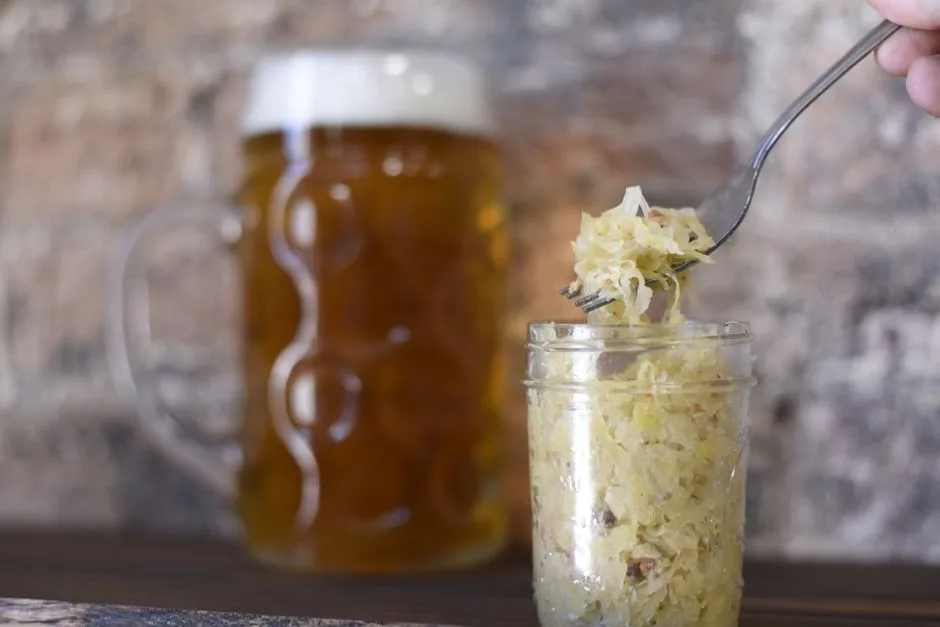
- Include fermented plant foods like kimchi, sauerkraut, miso, or fermented vegetables for extra bacterial diversity.
- Get enough protein at each meal, since your muscles need amino acids no matter how healthy your gut is.
- Stay physically active, especially with resistance exercise, which works alongside gut health to protect muscle.
- Limit ultra-processed foods, which can reduce the diversity of gut bacteria over time.
If you are considering a probiotic supplement, look for products that list specific strain names, not just the species.
Strain matters because, as the sarcopenia research shows, only certain strains carried the bile salt hydrolase activity linked to muscle benefits[1].
Talk with a healthcare provider before starting any supplement, especially if you have an existing health condition.
Who might benefit most?
Older adults may benefit the most from focusing on gut health for muscle support.
This is because muscle loss speeds up with age and gut bacteria diversity tends to drop at the same time.
People recovering from illness, surgery, or long bed rest may also benefit, since these situations can cause fast muscle loss.
Athletes and active adults may find gut supportive habits helpful for recovery, though the direct evidence here is still limited.
Anyone managing a chronic condition linked to inflammation may also see muscle benefits from a healthier gut, since less inflammation appears to mean less muscle breakdown.
Frequently asked questions
Can probiotics actually build muscle?
Current evidence comes mostly from animal studies. Certain probiotic strains helped preserve or improve muscle mass and function in mice, but strong human trials are still needed before we can say the same for people[1][9].
What is bile salt hydrolase and why does it matter for muscle?
It is an enzyme made by some gut bacteria. It changes bile acids in a way that can activate a signaling pathway called FXR-FGF15, which then helps protect muscle from breaking down[1].
Does eating yogurt help prevent muscle loss?
Yogurt and other fermented dairy foods provide live bacteria and protein, both of which may support gut and muscle health. Research on fermented milk shows promising effects on muscle metabolism in animal studies, though more human evidence is needed[5].
Put this to work in your own food log. Track it free with Ration →
Sources
- Bile salt hydrolase-active bifidobacterium animalis improves sarcopenia via the gut microbiota-bile acid-FXR-FGF15 axis and its functional fermented milk preparation · PMID 42531634
- The Short-Chain Fatty Acid Acetate in Body Weight Control and Insulin Sensitivity · PMID 31426593
- Probiotics, prebiotics, and synbiotics to counteract sarcopenia: where are we now and what challenges need to be faced? · PMID 41424069
- Flavonoids, Dairy Foods, and Cardiovascular and Metabolic Health: A Review of Emerging Biologic Pathways · PMID 29348256
- Effects of Bifidobacterium-Fermented Milk on Obesity: Improved Lipid Metabolism through Suppression of Lipogenesis and Enhanced Muscle Metabolism · PMID 39337421
- The effect of synbiotics and probiotics on the growth performance, gastrointestinal function and health status of turkeys · PMID 34459292
- Effect of Bacterial-Enzymatic Synergistic Liquid Fermented Rapeseed Meal on Growth Performance, Intestinal Health, and Muscle Development of Growing Pigs · PMID 41976071
- Lychee Fermented by Mixed Probiotic Strains Alleviates D-Galactose-Induced Skeletal Muscle and Intestinal Aging in Mice · PMID 41227656
- Heat-Treated Lactiplantibacillus plantarum KM2 Fermentation Ameliorate Muscular Atrophy · PMID 41016820
- Lacticaseibacillus paracasei Jlus66 ameliorates hyperuricemia by inhibiting xanthine oxidase activity, modulating uric acid transporter proteins and the gut microbiota · PMID 42530645