Is Peanut Butter Good for You?
Key takeaways
- Peanut butter is rich in protein, unsaturated fat, and fiber, which can support fullness and heart health.
- Plain peanut butter with few added ingredients is the healthiest choice.[4]
- Rare safety concerns include Salmonella and aflatoxin contamination, but modern processing controls these risks.[3][7][8]
- Whole nuts and thick spoonfuls of peanut butter can be a choking risk for young children.[2]
What is peanut butter made of?
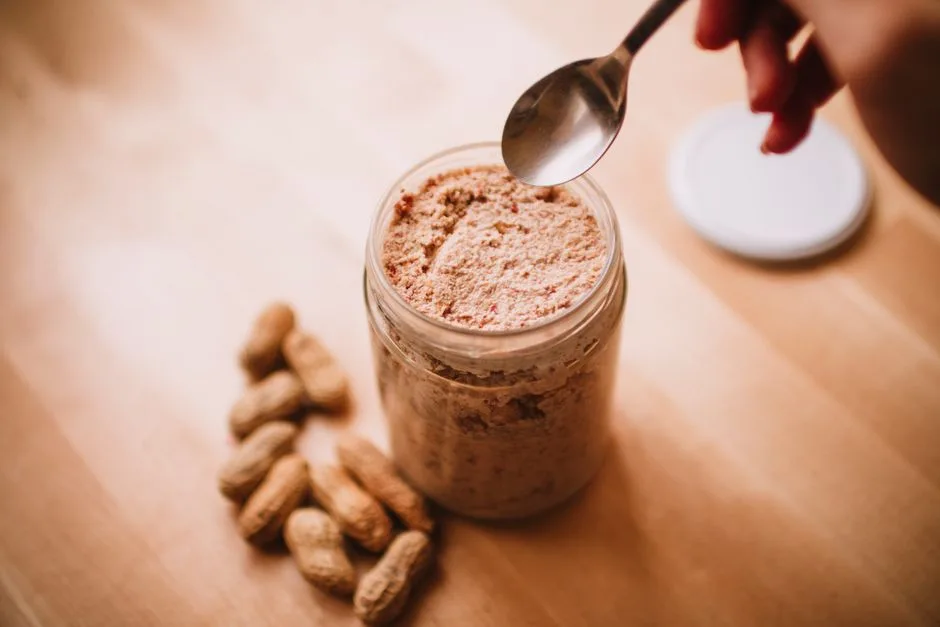
Peanut butter is a paste made from ground, roasted peanuts.
Peanuts are actually legumes, not tree nuts, though most people think of them like nuts.
Plain peanut butter usually has just one or two ingredients, peanuts and maybe salt.
Many store brands add sugar, palm oil, or other fillers to change the texture or taste.[4]
The variety of peanut used can affect the final flavor and quality of the butter.[6]
Some producers add peanut skins back into the paste, which boosts fiber and antioxidant content.[5]
What nutrients does it give you?
A two tablespoon serving of peanut butter has about 190 calories.
That same serving gives roughly 7 to 8 grams of protein.
Most of the fat in peanut butter is unsaturated fat, the type linked to better heart health.
Peanut butter also contains fiber, magnesium, potassium, and vitamin E.
- Protein, which helps build and repair muscle
- Unsaturated fat, mainly monounsaturated fat
- Fiber, which supports digestion and fullness
- Vitamin E, an antioxidant
- Magnesium, needed for muscle and nerve function
- Potassium, which supports healthy blood pressure
- Niacin, a B vitamin involved in energy metabolism
Does peanut butter help with weight or muscle?
Protein helps you feel full after eating, which can support weight management.
The protein in peanut butter can also support muscle repair after exercise.
Research on protein intake shows that spreading protein across meals and snacks, including plant sources like peanut butter, can support muscle maintenance over time.[1]
Peanut butter is not a complete protein on its own, since it lacks enough of some amino acids.
Pairing it with grains, like whole wheat bread, gives your body a fuller amino acid profile.
Because peanut butter is high in calories, portion size still matters if weight loss is your goal.
Excess calorie intake over time can contribute to visceral fat, the fat stored around your organs that raises the risk of metabolic problems, so it helps to fit peanut butter into a balanced calorie budget rather than eating it freely.[9]
Is peanut butter good for your heart?
The fat in peanut butter is mostly monounsaturated and polyunsaturated fat.
These fats are linked to lower LDL cholesterol compared to saturated fat.
Peanut skins, sometimes added back into peanut butter, are rich in antioxidants called polyphenols.[5]
Antioxidants help protect cells from damage caused by free radicals.
Choosing a peanut butter without added palm oil or hydrogenated fats keeps the fat profile healthier.[4]
A large systematic review of randomized controlled trials looked at how different foods change LDL cholesterol levels.[10] It found that nuts and peanuts tended to lower LDL cholesterol, likely because of their unsaturated fat and fiber content.
This supports the idea that peanut butter, when it replaces foods high in saturated fat, can play a helpful role in a heart healthy diet.[10]
Is peanut butter safe to eat?
Peanut butter is generally a safe, shelf stable food.
Its low water content makes it a difficult place for most bacteria to grow.[8]
Still, peanut butter has been linked to rare outbreaks of Salmonella contamination during manufacturing.[7]
Reviews of peanut butter safety point to Salmonella and aflatoxins, a toxin made by mold, as the two main concerns.[3]
Aflatoxins can form when peanuts are stored improperly before processing.
Commercial peanut butter makers test for these risks and follow strict safety controls.[3][8]
Buying from established brands and checking for recalls lowers your risk further.
A thick spoonful of peanut butter can be a choking hazard for infants and young children.[2]
Spreading it thinly on bread or mixing it into other foods is safer for young kids.
People with a peanut allergy should avoid peanut butter completely, since even small amounts can trigger a serious reaction.
How to choose a healthy peanut butter
Reading the ingredient label is the fastest way to judge quality.
- Look for a label that lists only peanuts, or peanuts and salt
- Skip brands with added sugar or corn syrup
- Avoid partially hydrogenated oils, which contain trans fat
- Choose natural peanut butter that separates oil on top, a sign of minimal processing
- Stir well before eating if the oil has separated
- Store opened jars in the fridge to extend freshness
- Stick to a serving size of about two tablespoons
- Pair it with fruit, vegetables, or whole grain bread for a balanced snack
Who should be careful with peanut butter?
People with a peanut allergy need to avoid peanut butter and any foods made with it.
Parents feeding infants and toddlers should serve it in a thin layer, not a thick spoonful, to reduce choking risk.[2]
People watching their calorie intake should measure servings rather than eating straight from the jar.
Anyone with high blood pressure should watch the sodium content in salted or flavored varieties.
Frequently asked questions
Is peanut butter good for weight loss?
Peanut butter's protein and fiber can help you feel full, which may support weight control, but it is calorie dense, so portion size matters.
Is natural peanut butter better than regular peanut butter?
Natural peanut butter with just peanuts and salt is usually the healthier choice, since it skips added sugar and hydrogenated oils.[4]
Put this to work in your own food log. Track it free with Ration →
Sources
- Common questions and misconceptions about protein supplementation: what does the scientific evidence really show? · PMID 38626029
- Risk factors and prevention of choking · PMID 37905785
- Peanut Butter Food Safety Concerns-Prevalence, Mitigation and Control of Salmonella spp., and Aflatoxins in Peanut Butter · PMID 35804689
- Plant based butters · PMID 26139864
- Flavor and antioxidant capacity of peanut paste and peanut butter supplemented with peanut skins · PMID 23057836
- Selection of groundnut variety for making a good quality peanut butter · PMID 23572834
- Laboratory, Environmental, and Epidemiologic Investigation and Regulatory Enforcement Actions in Response to an Outbreak of Salmonella Bredeney Infections Linked to Peanut Butter · PMID 26389125
- Microbial safety of oily, low water activity food products: A review · PMID 32950156
- Pathophysiology of human visceral obesity: an update · PMID 23303913
- The effects of foods on LDL cholesterol levels: A systematic review of the accumulated evidence from systematic reviews and meta-analyses of randomized controlled trials · PMID 33762150