Turmeric and Curcumin for Gut Health: What the Science Says
Key takeaways
- Curcumin is the main active compound in turmeric and has strong anti-inflammatory effects in lab and animal studies.
- On its own, curcumin is poorly absorbed by the body, which limits how well it works.
- New research combines curcumin with resveratrol, a compound in grapes and berries, to target gut healing pathways more effectively.[1]
- Turmeric and curcumin supplements are not a replacement for prescribed treatment of digestive disease.
What is curcumin?
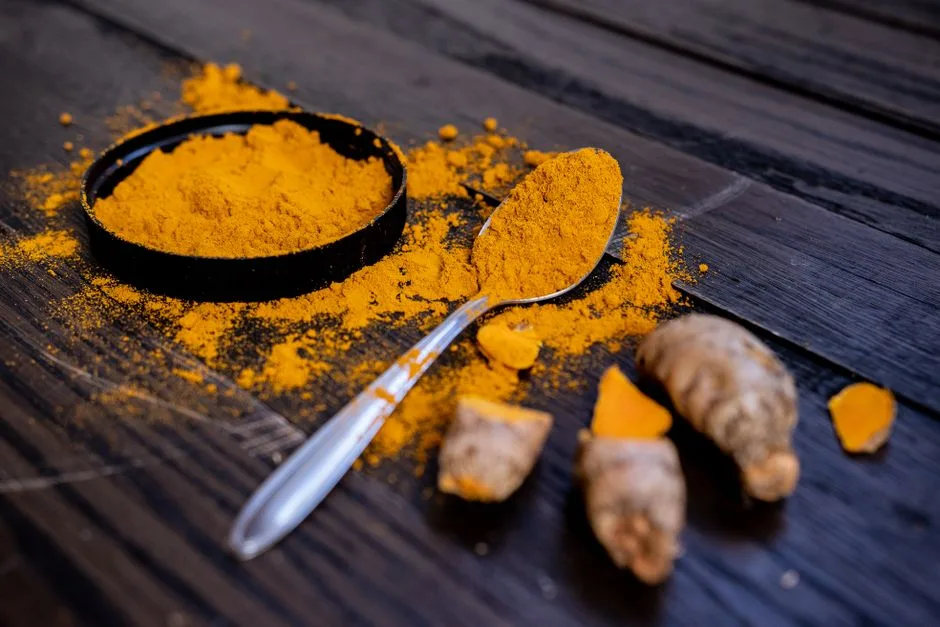
Curcumin is a yellow pigment found in turmeric root.
Turmeric is a spice common in curry dishes and golden milk drinks.
Curcumin belongs to a group of plant compounds called polyphenols.
Polyphenols act as antioxidants in the body.
Antioxidants help neutralize unstable molecules called free radicals.
Curcumin also has anti-inflammatory properties that researchers have studied for decades.
Why does gut health matter so much?
The gut lining acts as a barrier between the inside of your intestines and the rest of your body.
A healthy gut barrier keeps harmful bacteria and toxins from leaking into the bloodstream.
Trillions of bacteria live in your gut, forming what is called the gut microbiome.
These bacteria help digest fiber and produce short-chain fatty acids, or SCFAs.
SCFAs feed the cells lining your colon and help control inflammation.
When the gut barrier breaks down and the microbiome falls out of balance, inflammation can rise.
This process is central to conditions like ulcerative colitis, a form of inflammatory bowel disease.
How might curcumin help the gut?
Researchers have looked closely at an enzyme called cystathionine beta synthase, or CBS.
CBS helps the body process sulfur and supports energy production inside cells.
A recent study found that CBS levels were lower in the colons of people with ulcerative colitis compared to healthy people.[1]
In mice bred without the CBS gene, colitis symptoms got worse.
These mice also had a damaged gut barrier and much lower SCFA production.[1]
This suggests CBS acts as a natural protector of the gut lining.
The same study tested a combination of resveratrol and curcumin in lab models.
This combination bound strongly to the CBS protein and reactivated it.[1]
In mice with colitis, the resveratrol-curcumin combination lowered inflammatory markers and helped restore the gut microbiome.[1]
These protective effects disappeared in mice that lacked the CBS gene.
This confirms CBS was the specific target driving the benefit, not some other pathway.[1]
Does this work in people, not just mice?
The same research team ran a small pilot trial in people with ulcerative colitis.
Patients added resveratrol and curcumin on top of mesalamine, a standard prescription drug for the condition.
Adding the two plant compounds improved clinical outcomes compared to mesalamine alone.[1]
This was a small, early-stage trial, so the results need to be confirmed in larger studies.
It does show that plant compounds may work alongside, not instead of, standard medical treatment.
Turmeric may also help people with irritable bowel syndrome (IBS), a common condition separate from inflammatory bowel disease.
In a randomized crossover trial, just 3 days of turmeric supplementation lowered fasting and post-meal levels of lipopolysaccharide (LPS), a bacterial toxin linked to gut barrier leakiness, along with markers tied to fat absorption after meals.[2] A broader systematic review of turmeric in digestive disorders found generally positive effects on symptoms with a good safety profile, though study quality varied widely.[4] Turmeric has also been studied as a complementary option alongside standard treatments for inflammatory bowel disease, reinforcing that it works best as an add-on rather than a stand-alone therapy.[3]
Why is curcumin hard for the body to absorb?
Curcumin taken alone has low bioavailability, meaning very little of it enters the bloodstream.
The body breaks curcumin down quickly and clears it out fast.
This is a major reason past studies using curcumin by itself for gut disease have shown mixed results.
Pairing curcumin with other compounds, like resveratrol or black pepper's piperine, may help it work better.[1]
Combining compounds is a growing strategy in nutrition research for boosting weak absorption.
What should you actually do?
If you want to add turmeric to your diet for general gut support, food is a reasonable starting point.
- Cook with turmeric in soups, curries, rice, or roasted vegetables.
- Pair turmeric with black pepper, since piperine may improve curcumin absorption.
- Add a source of healthy fat, like olive oil, since curcumin is fat soluble.
- Eat other polyphenol-rich foods, such as berries, grapes, and green tea.
- Support your gut bacteria with fiber from vegetables, legumes, and whole grains.
- Talk with a doctor before starting any curcumin or resveratrol supplement, especially if you take blood thinners or have a digestive disease.
If you have ulcerative colitis or another inflammatory bowel disease, do not stop or replace prescribed medication with supplements.
Instead, ask your gastroenterologist whether a polyphenol supplement could be added safely alongside your current treatment.
Who might benefit most?
- People looking for general antioxidant support from food sources.
- People with mild digestive discomfort who want to try dietary changes first.
- People with diagnosed inflammatory bowel disease, under a doctor's supervision, exploring add-on options.
- Researchers and clinicians interested in host-microbiome interactions as a treatment target.
Curcumin and resveratrol are not appropriate substitutes for diagnosis or treatment of digestive disease.
Are there risks or side effects?
Turmeric used as a spice in food is generally considered safe for most people.
High-dose curcumin supplements can sometimes cause stomach upset, nausea, or diarrhea.
Curcumin may interact with blood thinning medications and other drugs.
People with gallbladder problems should be cautious, since curcumin can stimulate bile production.
Pregnant people and those on medication should check with a doctor before taking concentrated supplements.
Frequently asked questions
Can turmeric cure ulcerative colitis?
No. Turmeric and curcumin are being studied as possible add-on support, not as a cure. Standard medical treatment remains essential.[1]
Is curcumin the same as turmeric?
No. Turmeric is the whole spice, and curcumin is one active compound found inside it, usually in small amounts.
Why combine curcumin with resveratrol?
Early research suggests the combination may target a gut enzyme called CBS more effectively than either compound alone, improving gut barrier and microbiome outcomes in lab models.[1]
Put this to work in your own food log. Track it free with Ration →
Sources
- Targeting cystathionine-β-synthase (CBS)-mediated cell stemness and gut microbiome homeostasis: mechanism and clinical study of combined resveratrol-curcumin treatment for ulcerative colitis · PMID 42497521
- Impact of 3-day turmeric supplementation on fasting and postprandial LPS and chylomicron-related markers in patients with IBS: A randomized crossover trial · PMID 42543530
- Cannabis and Turmeric as Complementary Treatments for IBD and Other Digestive Diseases · PMID 30635796
- A systematic review of the efficacy and safety of turmeric in the treatment of digestive disorders · PMID 38503513