Is Salmon Healthy? Omega-3S, Vitamin D, and the Mercury Question
Key takeaways
- Salmon is one of the best food sources of the marine omega-3s EPA and DHA and of vitamin D.
- It is low in mercury compared with large predatory fish.
- Two servings of oily fish per week is a common evidence-based target.
Omega-3 powerhouse
Salmon is among the richest food sources of EPA and DHA, the marine omega-3 fats tied to heart and brain health.[1] These foods lead the database for EPA:
Vitamin D too
Few foods carry meaningful vitamin D, and fatty fish is one of them. Salmon is a standout among the short list of dietary sources.
The mercury question
Unlike large predators such as swordfish and king mackerel, salmon is low on the mercury scale, which is why it is recommended even during pregnancy.[2] Here is how foods rank on measured mercury tier:
A market survey of fish sold for human consumption found salmon carried much less total mercury than large predatory species, while still supplying strong levels of omega-3 fatty acids, supporting a favorable benefit-risk balance.[9] A separate multivariate analysis across fish types found mercury levels tend to rise with fish weight and protein content, which helps explain why smaller, shorter-lived fish like salmon stay low on the mercury scale.[11] Long-term follow-up from the Seychelles Child Development Study, which tracked children whose mothers ate fish regularly during pregnancy, found no consistent harm to brain development tied to the low mercury exposure from fish like salmon.[10]
Fish like salmon is also a core part of the Mediterranean diet, a pattern linked to better perinatal outcomes when mothers follow it during pregnancy.[14] A systematic review of female reproductive health also links Mediterranean-style eating, rich in fish and omega-3s, to better fertility markers across the lifespan.[12] Diet and metabolic health more broadly play a strong role in fertility for both women and men, which adds another reason to keep low-mercury, omega-3-rich fish like salmon on the plate during pregnancy planning.[13]
A survey of 19 saltwater fish species off New Jersey found mercury levels varied by catch location as well as by species, and salmon stayed on the low end of the scale compared with larger predatory fish.[15] A broader review of toxic element buildup in fish from Serbia backs this up, finding that species higher on the food chain and longer lived tend to carry more mercury, while fish like salmon accumulate far less over their shorter lives.[16] Newer research from Brazil also found that some boneless, filleted fish marketed as safe choices can carry surprisingly high mercury levels depending on species, a reminder to check the specific fish and not just the cut.[17]
Bottom line
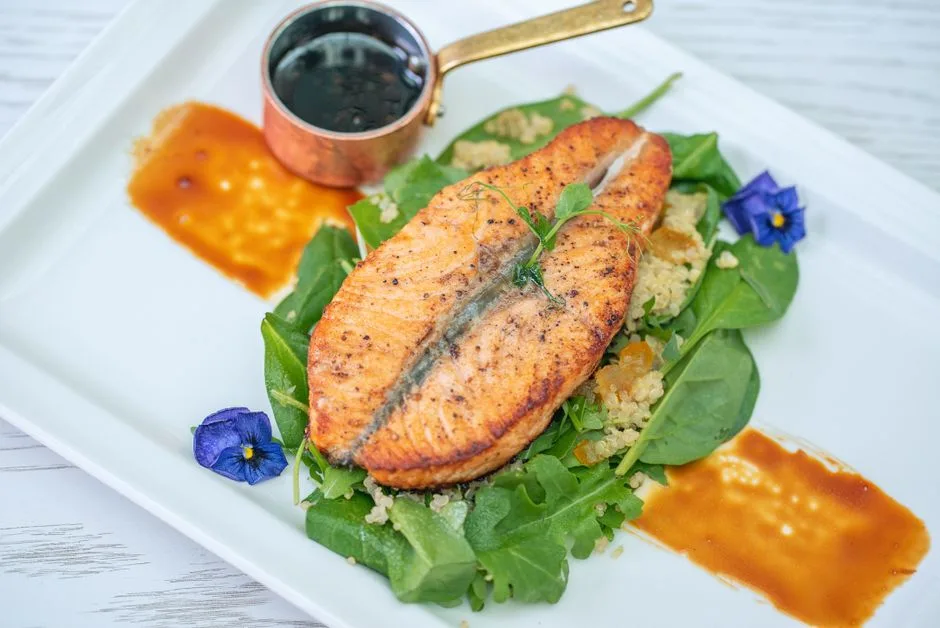
Salmon delivers marine omega-3s and vitamin D with low mercury. Two servings of oily fish a week is a sensible target.
Excess visceral fat, the fat stored deep around the belly organs, is linked to insulin resistance and inflammation, which is part of why doctors encourage omega-3-rich foods like salmon as part of a broader metabolic health plan.[18] Diet patterns that support metabolic health, including approaches studied in conditions like polycystic ovary syndrome and in time-restricted eating schedules, tend to work best when paired with nutrient-dense proteins and fats, the kind salmon supplies.[19] [20]
Salmon's pink color comes from astaxanthin, a carotenoid antioxidant with its own health research.[5] Human trials link astaxanthin to benefits for skin, eye strain, and markers of inflammation.[3] Wild salmon gets its astaxanthin from algae in its diet, and farmed salmon is often supplemented with the same compound.[4]
A small number of people react to fish protein with a true food allergy, which can trigger symptoms ranging from hives to a severe reaction called anaphylaxis.[8] Fish allergy involves immune proteins called TNF and TNF receptors, which drive inflammation in the body.[7] If you have never eaten salmon before or have a known fish allergy, talk to a doctor before adding it to your diet, since researchers also study how fish proteins interact with the gut lining and digestion.[6]
Put this to work in your own food log. Track it free with Ration →
Sources
- Rimm EB et al. Seafood long-chain omega-3 PUFA and cardiovascular disease. Circulation. 2018. · PMID 29610129
- FDA and EPA. Advice about eating fish. 2021.
- "Therapeutic uses of natural astaxanthin: An evidence-based review focused on human clinical trials" · PMID 33549728
- Microalgae Derived Astaxanthin: Research and Consumer Trends and Industrial Use as Food · PMID 34681351
- Carotenoids Production: A Healthy and Profitable Industry · PMID 30109623
- Fish Gastroenterology · PMID 39730211
- Fish TNF and TNF receptors · PMID 32720033
- Fish allergy: in review · PMID 23440653
- Total mercury and fatty acids content in selected fish marketed in Quito - Ecuador. A benefit-risk assessment · PMID 37250532
- Postnatal exposure to methyl mercury from fish consumption: a review and new data from the Seychelles Child Development Study · PMID 19442817
- Total Hg levels distribution in fish and fish products and their relationships with fish types, weights, and protein and lipid contents: A multivariate analysis · PMID 37105119
- Mediterranean diet and female reproductive health over lifespan: a systematic review and meta-analysis · PMID 37506751
- The Influence of Metabolic Factors and Diet on Fertility · PMID 36904180
- Association between the Maternal Mediterranean Diet and Perinatal Outcomes: A Systematic Review and Meta-Analysis · PMID 38042258
- Locational differences in mercury and selenium levels in 19 species of saltwater fish from New Jersey · PMID 21598171
- Bioaccumulation of potentially toxic elements in fish species of Serbia: a review · PMID 36735140
- The tastiest is not always the safest: mercury risks of boneless fish consumption compared to other seafood traded in southeastern Brazil · PMID 40935233
- Pathophysiology of human visceral obesity: an update · PMID 23303913
- Effects of a ketogenic diet in overweight women with polycystic ovary syndrome · PMID 32103756
- Effects of eight weeks of time-restricted feeding (16/8) on basal metabolism, maximal strength, body composition, inflammation, and cardiovascular risk factors in resistance-trained males · PMID 27737674